

Sourdough Troubleshooting: Fix Every Common Problem
You spent two days nursing your starter, mixed your dough, waited out a long cold proof — and the loaf that came out of the oven doesn't look anything like the one you had in mind. It's flat. Or dense. Or gummy in the middle. Or so sour it makes your eyes water.
This happens to almost every sourdough baker at some point, from total beginners to people who have been baking for years. The good news is that sourdough problems are almost always fixable — and more importantly, they're almost always understandable. Once you know why something went wrong, you can correct it on the next bake and the one after that.
This guide is the most thorough sourdough troubleshooting resource we've put together. It covers every common problem, organises them by symptom, and gives you clear causes and practical fixes for each one. Whether your bread didn't rise, came out dense, turned out too sour, or stuck to everything in sight, you'll find the answer below.
Use the section headings to jump straight to your problem, or read through the whole thing if you want a deeper understanding of how sourdough works and why it sometimes doesn't.
Why Sourdough Troubleshooting Feels So Hard
Sourdough is a living process. Unlike baking with commercial yeast — where the variables are tightly controlled and the results are predictable — sourdough involves wild yeast and bacteria that respond to temperature, humidity, flour type, feeding schedule, and timing. Small changes in any of those factors can produce noticeably different results.
That's what makes sourdough endlessly interesting. It's also what makes troubleshooting feel like detective work.
The key principle to hold onto is this: most sourdough problems trace back to one of three root causes.
- Fermentation timing — the dough was under- or over-fermented at some stage
- Starter health — the starter wasn't active enough to leaven the dough
- Process errors — shaping, scoring, hydration, or baking technique went off somewhere
Keep these three in mind as you work through this guide. Most symptoms you'll encounter point back to at least one of them.
Problem 1: My Sourdough Is Too Dense
Dense sourdough is the most common complaint — especially for newer bakers. A tight, heavy crumb that feels like it could stop a bullet is almost always a fermentation problem, though shaping and baking issues can contribute too.
Why Is My Sourdough So Dense?
The most likely cause: under-fermentation.
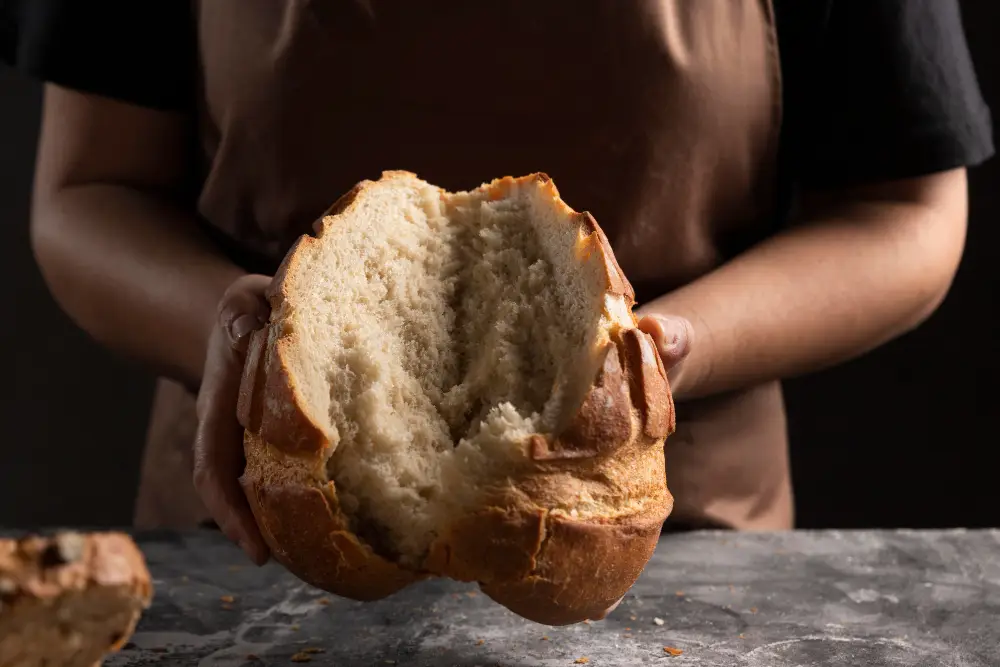
If the dough hasn't fermented long enough during bulk fermentation, the wild yeast won't have produced enough carbon dioxide to expand the crumb. When you cut into the loaf, you'll see a tight, uneven crumb with small, irregular bubbles — or sometimes almost no bubbles at all.
Under-fermentation can happen because:
- Your starter wasn't active when you mixed the dough. If you added starter to your dough before it had reached peak activity — that point where it's at its tallest and most bubbly — the fermentation starts behind the curve and never fully catches up.
- The bulk fermentation was cut short. Many beginners follow a recipe time exactly, but time is only a rough guide. A cool kitchen will slow fermentation significantly. If your kitchen is 18°C, bulk may take 10–14 hours. At 24°C, it might take 4–6. The clock doesn't tell you when bulk fermentation is done; the dough does.
- The dough was too cold throughout. If your dough was sitting on a cold bench or near an air vent, it may not have fermented properly even if you gave it plenty of time.
Signs your dough is under-fermented before baking: it feels tight and dense, hasn't grown noticeably (aim for 50–75% volume increase for most recipes), and the surface looks smooth without the slight doming and wobbliness of a properly fermented dough.
Other causes of dense sourdough:
- Weak or immature starter — if your starter is less than two or three weeks old, it may not yet have a strong enough yeast population to lift a whole loaf. Keep feeding it and give it more time.
- Shaping too tight or too loose — shaping creates surface tension that helps the loaf hold its structure in the oven. A loaf that's shaped with too little tension will spread and collapse; one shaped too roughly may have its gas pushed out and come out flat and dense.
- Oven temperature too low — sourdough needs high heat (typically 220–250°C) to achieve a good oven spring. If your oven runs cool, the loaf sets too slowly and can't lift properly.
For a full breakdown of every cause and fix, read our dedicated guide: Why Is My Sourdough So Dense?
How to Fix Dense Sourdough
- Check your starter first. Drop a teaspoon of starter into a glass of water before mixing your dough. If it floats, it's ready. If it sinks, give it another feed and wait. Learn more in How to Know When Your Sourdough Starter Is Ready to Bake With.
- Learn to read the dough, not the clock. At the end of bulk fermentation, your dough should have grown visibly, feel airy and jiggly when you shake the container, and have a slightly domed surface. If it's still dense and smooth, it's not ready.
- Raise the ambient temperature. If your kitchen is cool, try proofing in the oven with just the light on (which typically holds around 24–27°C), or near a warm appliance.
- Handle more gently during shaping. Watch for the surface tension cues — a smooth, taut surface that doesn't tear — and avoid pressing or squeezing the dough.
Problem 2: My Sourdough Didn't Rise
A flat loaf is disheartening, especially when you've put the time in. But "didn't rise" can mean several different things, each with a different cause.
Did the Dough Not Rise During Bulk Fermentation?
If the dough sat on your bench for hours and barely moved, the problem is almost certainly your starter.
A starter needs to be active and at or near peak activity when you add it to your dough. If you fed your starter and used it straight away, before fermentation had time to build up, you may have introduced very little live yeast into the dough. The same applies if your starter has been sitting in the fridge, unfed, for several weeks.
Other reasons a dough might not rise during bulk:
- The dough was mixed at the wrong temperature. Water that's too hot (above 40°C) can kill wild yeast; water that's too cold will slow activity to a crawl.
- The ratio of starter to flour was too low. Most recipes use 15–25% starter relative to flour weight. Below that, fermentation can be extremely slow.
- The salt came into direct contact with the starter before mixing. Salt inhibits yeast — always dissolve it separately or add it after the starter is incorporated.
Did the Loaf Not Rise in the Oven (No Oven Spring)?
This is a different problem. The dough may have risen well during bulk and proof, but then emerged from the oven flat and without the dramatic burst through the score lines that makes sourdough so distinctive.
Causes of poor oven spring include:
- Over-proofing — the dough exhausted its fermentable sugars during the proof. When it hit the oven, there was nothing left to drive a final rise. Over-proofed dough often spreads sideways rather than lifting up.
- Scoring too shallow or not at all — without a score, the loaf can't direct its expansion. Gas builds up and bursts through the weakest point, or the loaf just doesn't expand at all.
- Baking without steam — the crust sets too quickly, trapping the loaf before it can rise fully. A Dutch oven solves this by trapping the steam released from the dough itself.
- Loading cold dough into a cold oven — always preheat your Dutch oven inside the oven, and bake straight from the fridge for best results.
Read more in our detailed guide: My Sourdough Didn't Rise: What Went Wrong
How to Fix Sourdough That Won't Rise
- Build a healthier, more active starter. Feed it daily for a week, keep it warm, and use it at peak. If you've neglected it, follow our How to Revive a Neglected Sourdough Starter guide.
- Use warm water (around 26–28°C) when mixing your dough to create a good fermentation environment.
- Score confidently and deeply — at least 1–1.5cm at a 30–45° angle to the surface.
- Preheat your Dutch oven in the oven for at least 30–45 minutes before baking.
Problem 3: My Sourdough Is Too Sour (Or Not Sour Enough)
Flavour is one of sourdough's greatest assets. But getting it right is a matter of control — and control requires understanding what's driving the acidity in the first place.
Why Is My Sourdough Too Sour?
Sourdough's characteristic tang comes from lactic and acetic acids produced by Lactobacillus bacteria in the starter. These bacteria work alongside the wild yeast, but they produce acid on their own timetable. Tip the balance, and the bread gets too sharp.
Causes of overly sour sourdough:
- Long, cold fermentation with a highly active starter. A cold overnight proof is excellent for flavour development — but if your starter is very strong and your bulk fermentation went a bit long, you're setting up for a sharp-tasting loaf.
- Warm, prolonged fermentation. This is where many people go wrong. Warmer temperatures favour acetic acid production, which has a sharper, more vinegary quality than lactic acid (which is milder and more yoghurt-like). A bulk fermentation that runs too long in a warm kitchen will produce a noticeably sour bread.
- Using rye flour. Rye naturally ferments faster and more aggressively than wheat. If you've added rye to your recipe, expect a tangier loaf — and adjust your timing accordingly.
- Starter that's been left too long between feedings. A starter fed infrequently becomes more acidic over time. That excess acid carries into the dough.
Why Doesn't My Sourdough Taste Sour Enough?
The opposite problem is just as common, particularly in warmer climates or with newer starters.
- Lactic fermentation at warm temperatures produces a milder, creamier flavour. If your kitchen is very warm (above 27°C), your bread may taste more like yeast bread than sourdough.
- Bulk fermentation cut short. The longer the fermentation, within reason, the more complex and developed the flavour.
- Using a very mild, white-flour starter with no rye or wholemeal component produces a subtler flavour profile.
- Baking too soon after a fridge proof. The cold retard develops flavour — but you need to give it enough time (typically 8–16 hours) for the acids to build.
For a full breakdown of how to dial in your flavour, read Why Does My Sourdough Taste Too Sour?
How to Control Sourdough Sourness
To make your bread less sour:
- Shorten the cold proof — try 8 hours instead of 16
- Keep bulk fermentation at room temperature and don't let it go too long
- Use a higher proportion of white flour, which ferments more gently
- Use your starter at peak, rather than slightly past it
To make your bread more sour:
- Extend the cold retard in the fridge
- Use a small percentage of rye flour in your dough (even 5–10% makes a difference)
- Let bulk go a little longer, or at a slightly warmer temperature
- Use a starter that's been fed on wholemeal or rye flour
Problem 4: My Sourdough Is Sticky and Hard to Shape
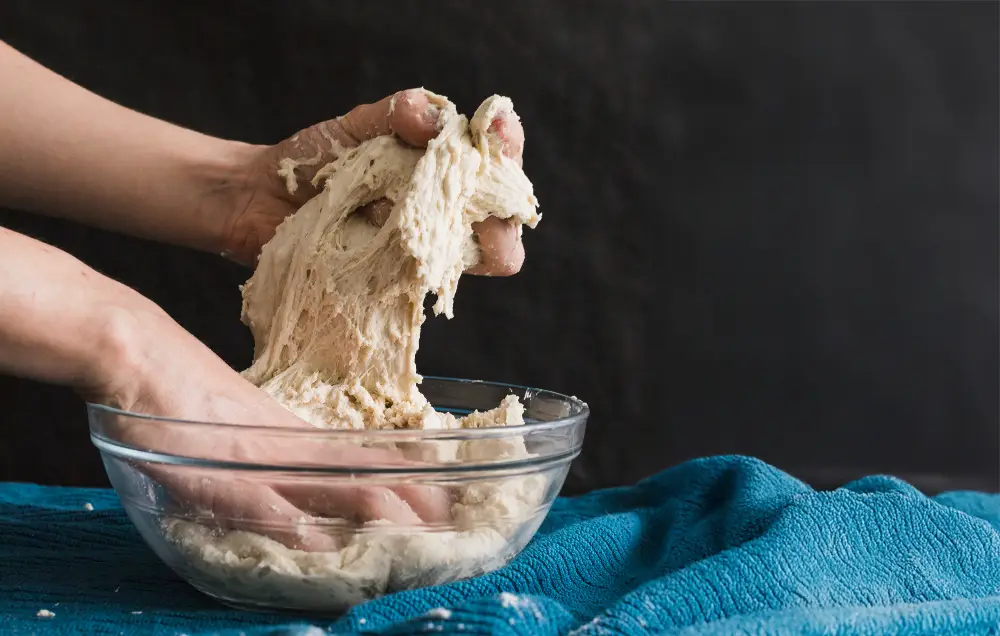
Sticky sourdough is one of the most frustrating hands-on problems. You're trying to build tension, but the dough keeps sticking to your hands, the bench, and itself.
Why Is My Sourdough Dough So Sticky?
High hydration is the most obvious culprit. Many popular sourdough recipes use hydrations of 75% or above — meaning for every 100g of flour, there's 75g or more of water. This makes for an open, airy crumb, but the dough handles very differently from a lower hydration bread dough. Understanding hydration in sourdough is key to troubleshooting this issue.
But stickiness isn't always about hydration. Other common causes include:
- Under-fermented dough. Dough that hasn't had enough time to develop its gluten network properly will be sticky and unworkable. The gluten structure is what gives the dough enough strength to hold together and release from surfaces.
- Flour type. Wholemeal and rye flours absorb water differently from white flour. A recipe developed for white flour may feel much wetter if you substitute in wholemeal without adjusting the water.
- Warm dough temperature. If your kitchen is warm and the dough has been sitting out for a long time, it can become very soft and sticky. Cold dough is much easier to shape — this is one reason many bakers shape straight from the fridge for retarded proofing.
- Insufficient bench flour. Lightly flouring the bench and your hands reduces sticking without affecting the dough significantly. Don't be afraid to use it.
How to Fix Sticky Sourdough
- Reduce hydration gradually. If you're following a 80% hydration recipe and struggling, drop it to 70% for your next bake and build up as your technique improves.
- Use the right shaping technique. Rather than pressing and squeezing, use your bench scraper and the drag-and-rotate method to build tension without handling the dough excessively.
- Shape cold. If your dough has been in the fridge, shape it straight from cold. It will be much firmer and easier to handle.
- Wet your hands rather than flouring them. Some bakers find damp hands stick less than floured hands, particularly with very wet doughs.
- Work quickly. The longer you spend shaping, the more the dough warms up and softens. Aim to complete shaping in under two minutes.
For a detailed shaping walkthrough and more sticky-dough fixes, see How to Fix Sourdough That's Sticky and Hard to Shape.
Problem 5: My Sourdough Has No Oven Spring
Oven spring — that dramatic burst of expansion when cold dough hits a blazing hot oven — is one of sourdough's most satisfying moments. When it doesn't happen, the loaf comes out flat, dense, and often with a thick, pale crust that hasn't fully opened.
What Causes Poor Oven Spring?
Oven spring is driven by the rapid expansion of gases in the dough as it heats up. Several things can prevent it:
1. Over-proofing This is the most common cause. When dough over-proofs, the yeast consumes all available sugars. By the time the loaf hits the oven, there's nothing left to fuel further expansion. Over-proofed dough also has a weakened gluten structure — it can't hold gas effectively even if some is present.
How to tell if your dough is over-proofed: press a floured finger gently into the surface. If the indent springs back slowly and partially, the dough is well-proofed. If it doesn't spring back at all, it's over-proofed.
2. Inadequate steam The crust sets early if there's no steam in the oven. A crust that has already hardened can't expand as the interior rises. Baking inside a preheated Dutch oven is the most reliable way to trap steam and delay crust formation. Read more about why steam matters in Dutch Oven Sourdough: Why Steam Matters.
3. Under-scoring or no scoring A well-placed score line is a release valve. It tells the loaf where to open and allows the interior to expand upward. A loaf that's not scored (or scored too shallowly) will bulge through weak points in the dough rather than rising cleanly.
4. Oven not hot enough Most sourdough recipes call for 230–250°C. If your oven runs cool — which is common — the loaf won't get that rapid initial heat shock. Use an oven thermometer to verify your actual temperature. Many home ovens are 10–20°C cooler than the dial suggests.
5. Cold Dutch oven If you put your dough into a Dutch oven that hasn't been preheated, the initial temperature won't be high enough. Always preheat the Dutch oven inside the oven for at least 30–45 minutes before loading the dough.
For a complete explanation of this process, see Sourdough Oven Spring: Why It Happens (And Why It Doesn't).
How to Improve Oven Spring
- Nail your proofing time. Use the poke test, not the clock. Bake at the right moment — not too early, not too late.
- Preheat your Dutch oven for the full 45 minutes before baking.
- Score confidently — hold your lame or sharp knife at 30–45° and make a single swift cut rather than multiple hesitant ones.
- Check your oven temperature with a thermometer and dial it up if needed.
- Bake your loaf straight from the fridge (cold proof). Cold dough transferred directly to a screaming hot Dutch oven tends to spring better than room-temperature dough.
Problem 6: My Sourdough Has a Gummy or Wet Interior
You've waited. The loaf looks beautiful from the outside. You cut it open and the inside is gummy, wet, or rubbery — nothing like the open, chewy crumb you were hoping for.
Why Is My Sourdough Gummy Inside?
1. Cut too soon This is, by far, the most common cause. Sourdough needs to cool completely before cutting — ideally for at least two hours, and up to four for larger loaves. The crumb continues to set as the loaf cools. Cut it too early and the steam escaping the bread makes the interior appear gummy even when the bread itself is fine. Be patient.
2. Under-baking If the loaf didn't spend long enough in the oven, the interior won't have reached the temperature needed to fully gelatinise the starches and set the crumb. The internal temperature of a fully baked sourdough should be 93–96°C. An instant-read thermometer takes the guesswork out of this.
Remove the lid of your Dutch oven for the last 15–20 minutes of baking to allow the crust to crisp up and colour. A pale, soft crust is a sign the loaf was removed too early.
3. Over-hydration relative to your technique If you're working with a very high hydration dough but your fermentation or shaping wasn't quite right, you can end up with a gummy loaf even when fully baked. High hydration requires precise fermentation timing and careful shaping to work properly.
4. Under-fermentation Again, fermentation is at the root of many sourdough problems. A dough that wasn't fermented long enough can produce a gummy crumb even after proper baking. The starches don't gelatinise correctly if the fermentation hasn't done its job.
How to Fix a Gummy Sourdough Crumb
- Always let the loaf cool completely — minimum two hours on a wire rack, never on a flat surface (trapped steam underneath makes the bottom soggy).
- Check the internal temperature before removing from the oven. If it hasn't hit 93°C, put it back.
- Extend the bake time slightly and open the Dutch oven for the final 15–20 minutes so the crust can properly form and colour.
- Revisit your fermentation — if gumminess persists, the issue may be at the bulk or proof stage rather than the baking stage.
Problem 7: My Sourdough Has a Thick, Hard Crust
A crackling, chewy crust is part of what makes sourdough so good. But a crust that's so hard and thick it's difficult to slice — or that shatters completely when you cut it — is a different matter.
What Makes a Sourdough Crust Too Thick?
- Overbaking, particularly with the lid off. If your loaf spends too long uncovered in the oven, the crust can become very thick and hard. Start checking the internal temperature from 35–40 minutes in total.
- Very dry oven environment. If you're not baking in a Dutch oven, a lack of steam causes the crust to form and harden too early, before the loaf has fully expanded.
- Low hydration dough. Doughs with less water produce thicker, harder crusts. This can be intentional — many rustic European breads are made this way — but if you want a thinner crust, raise the hydration slightly.
How to Get a Thinner Sourdough Crust
- Once baked, wrap the loaf in a clean tea towel while it cools. The trapped steam softens the crust slightly.
- Reduce uncovered bake time by 5 minutes and see if that helps.
- Store the bread in a paper bag or bread box rather than plastic (which makes the crust soggy) or open air (which makes it rock hard).
Problem 8: My Sourdough Has Big Holes in the Wrong Places
An open, irregular crumb is generally desirable in sourdough — but large tunnels or holes concentrated near the top or base of the loaf are a shaping or fermentation problem.
Why Are There Holes Near the Top or Bottom of the Loaf?
- Large air pockets near the top are usually caused by folding air into the dough during shaping. When you pre-shape or final shape, try not to fold the dough too aggressively — stretching rather than folding helps preserve the existing gas structure without creating pockets.
- Large holes near the base often indicate an issue with the seam of the loaf. If the seam on the bottom of your boule or batard hasn't closed properly, gas collects there during baking.
- Uneven crumb throughout usually points to inconsistent bulk fermentation — some parts of the dough fermented more than others due to temperature variation or uneven hydration.
How to Fix Uneven Holes in Sourdough
- Be deliberate and gentle during shaping. Pull and stretch the dough rather than folding it. Build tension through surface movement.
- Make sure your seam is placed firmly face-down in the banneton and holds together during proofing.
- During bulk fermentation, use a clear container so you can monitor the fermentation evenly throughout the dough.
Problem 9: My Sourdough Starter Isn't Doing Anything
Before any loaf troubleshooting, you need a strong starter. If your starter isn't rising, bubbling, or showing signs of activity, the rest of the process won't work.
Why Is My Sourdough Starter Not Activating?
- It's too cold. Wild yeast is sluggish below 20°C. Keep your starter somewhere warm — ideally 22–26°C. An oven with just the light on is a good option.
- It's too new. A brand new starter can take 7–14 days to establish a stable colony of wild yeast and bacteria. Keep feeding and be patient.
- Chlorinated tap water. Chlorine and chloramine in tap water can inhibit microbial activity. Switch to filtered or bottled water, or let tap water sit out overnight. Read more in Sourdough and Water: Does Water Quality Actually Matter?
- Flour quality. Bleached white flour has fewer natural yeasts and bacteria than unbleached. Stone-ground wholemeal or adding a tablespoon of rye to your starter can help kick-start it. See The Best Flour for Sourdough Bread for guidance.
- Feeding ratio too aggressive. If you're discarding too much and refreshing with too high a ratio (say, 1:10:10), the yeast population gets diluted too quickly. Try a 1:2:2 ratio until the starter is more established.
How to Get a Sourdough Starter Going Again
- Feed with a 50/50 blend of white flour and wholemeal flour for more microbial diversity.
- Keep it at a consistent warm temperature.
- If there's no activity after 14 days, try adding a small amount (1 teaspoon) of unsulphured raisins or organic apple to the mix — the wild yeast on their skin can help seed the culture.
- For neglected starters that have been dormant in the fridge, follow the revival process in How to Revive a Neglected Sourdough Starter.
For a complete guide to getting started from scratch, see How to Make a Sourdough Starter from Scratch.
Problem 10: My Sourdough Has a Pale Crust That Doesn't Colour
Sourdough should come out of the oven deep brown — almost mahogany — with a crackling crust. If yours looks pale, soft, and underdeveloped, something went wrong at the baking stage.
Why Doesn't My Sourdough Brown?
- Oven too cool. Caramelisation and the Maillard reaction (the browning process) require high heat. At 200°C or below, the crust may not colour properly. Crank your oven up to at least 230°C.
- Dutch oven lid left on too long. The lid traps steam, which is essential for oven spring — but if you leave it on for the entire bake, the crust can't dry out and colour. Typically, remove the lid after 20–25 minutes.
- Over-proofed dough. Over-fermented dough has exhausted its sugars. Since browning requires sugars in the dough, an over-proofed loaf will often come out pale.
- Low-sugar flour. Highly refined white flour produces less browning than wholemeal or flour with a higher bran content. Adding a small amount of wholemeal flour can improve crust colour.
How to Get a Better Sourdough Crust Colour
- Preheat the oven to 250°C if possible, and let it run for at least 45 minutes before baking.
- Remove the Dutch oven lid after 20 minutes and continue baking uncovered for another 15–20 minutes or until the crust is deep brown.
- If you're concerned about the bottom burning, slip a second baking tray onto the rack below for the final stage.
Problem 11: My Sourdough Smells Strange
Sourdough has a distinctive sour, yeasty smell — but certain unusual odours can indicate problems with your starter or your dough.
What Do Different Starter Smells Mean?
- Vinegary or sharp smell — this is normal for a mature, well-established starter, particularly if it's been fed recently on a high rye or wholemeal mix. It's acetic acid. Not a problem.
- Smell of nail polish remover (acetone) — this is a sign of a very hungry, over-acidified starter. It needs feeding immediately. Discard most of it and feed with a 1:2:2 ratio.
- Cheesy or vomit-like smell — this is butyric acid, which is produced when fermentation goes significantly wrong, often from a contaminated starter or dough that's been left in very warm conditions for too long. If the smell is mild, try refreshing the starter several times in a row. If it persists, it may be worth starting again from scratch.
- Pink or orange streaks — discard immediately and start a new starter. This indicates contamination by a potentially harmful bacterium, not wild yeast.
- Alcohol smell — the starter has gone past peak and is very hungry. Feed it more frequently.
The Most Important Sourdough Troubleshooting Principle
If there's one thing to take away from this guide, it's this: almost every sourdough problem connects back to fermentation.
Too dense? Likely under-fermented. Too sour? Likely over-fermented, or fermented at the wrong temperature. No oven spring? Possibly over-proofed, or the starter wasn't active enough to drive proper bulk fermentation in the first place.
Developing a feel for fermentation is the single most valuable skill you can build as a sourdough baker. That means watching the dough, not the clock. It means understanding what a properly bulked dough looks and feels like. It means learning to read your starter and knowing when it's at its peak.
This is exactly what the Bulk Fermentation Explained guide covers in detail — if you want to go deeper on the most critical phase of the process, that's the next thing to read.
A Quick-Reference Sourdough Troubleshooting Table
| Problem | Most Likely Cause | First Fix to Try |
|---|---|---|
| Dense crumb | Under-fermentation | Extend bulk; ensure starter is at peak |
| No rise at all | Weak or inactive starter | Feed starter daily for a week before next bake |
| No oven spring | Over-proofing or no steam | Bake from cold, preheat Dutch oven |
| Too sour | Over-fermentation or acetic conditions | Shorten cold proof; use at peak activity |
| Not sour enough | Under-fermentation or warm temperatures | Extend fridge proof; add rye to recipe |
| Sticky, hard to shape | High hydration + under-fermented | Reduce hydration; shape cold |
| Gummy interior | Cut too soon, or under-baked | Wait 2+ hours; check internal temp |
| Pale crust | Oven too cool; lid on too long | Increase heat; remove lid after 20 min |
| Holes in wrong places | Shaping issue; air folded in | Handle more gently; close seam firmly |
| Starter not activating | Too cold; chlorinated water | Move to warm spot; use filtered water |
Putting It All Together: How to Approach a Bad Bake
When a loaf doesn't turn out, it's tempting to change everything at once. Resist that urge. Sourdough troubleshooting works best when you change one variable at a time — otherwise you don't know what fixed it (or made it worse).
A good approach:
- Identify the primary symptom (dense, flat, gummy, too sour, etc.)
- Trace it back to the most likely root cause (fermentation, starter, technique)
- Change one variable on your next bake
- Keep notes — even rough ones. A simple note of your room temperature, bulk time, and how the dough felt before shaping is worth more than any recipe.
Over time, this builds intuition. You'll start recognising what your dough should look, feel, and smell like at every stage — and you'll catch problems before they make it into the oven.
Go Deeper: Explore Each Problem in Full
This guide is designed to give you a solid foundation for diagnosing and fixing sourdough problems. Each section links to a dedicated cluster article that goes much further:
- Why Is My Sourdough So Dense? — a full breakdown of every cause of a tight crumb
- My Sourdough Didn't Rise: What Went Wrong — a decision-tree guide to diagnosing a flat loaf
- Why Does My Sourdough Taste Too Sour? — how to dial in your flavour and control acidity
- How to Fix Sourdough That's Sticky and Hard to Shape — technique and hydration advice for tricky doughs
- Sourdough Oven Spring: Why It Happens (And Why It Doesn't) — everything about that final, critical rise
New to Sourdough? Start With the Fundamentals
If you're finding that your troubleshooting keeps circling back to the same issues — particularly around starter health or fermentation timing — it may be worth stepping back and building a stronger foundation before your next bake.
Our Complete Beginner's Guide to Sourdough Bread walks you through the full process from scratch, including what equipment you actually need, how fermentation works, and what a healthy bake looks like at every stage. Pair that with Sourdough Terminology Decoded to make sure you're working from the same definitions as the recipes you're following.
Want to Skip the Learning Curve?
Reading about sourdough is valuable. But there's a reason so many bakers describe their first workshop as the moment everything clicked.
At The Sourdough Code, our hands-on workshops give you direct, in-person guidance through every stage — mixing, folding, shaping, scoring, and baking. You leave with a loaf you made yourself, a live starter to take home, and the knowledge to troubleshoot your own bakes confidently.
Whether you're a complete beginner or someone who's been getting inconsistent results at home, our Classic, Rye, and Gluten-Free workshops are designed to fill the exact gaps that home baking by recipe alone can't. Find out what to expect at one of our workshops — and why so many of our students say three hours changed their whole approach to bread.
Baking is a practice. Every loaf — good or imperfect — teaches you something. Keep notes, keep baking, and don't be afraid of the odd dense loaf. That's how the good ones get made.