
Bulk Fermentation Explained: Timing, Temperature, and Signs to Watch
If there is one stage that separates a great sourdough loaf from a disappointing one, it is bulk fermentation. This is where your dough transforms from a shaggy, sticky mass into something smooth, airy, and alive. Get it right and you will be rewarded with an open crumb, good oven spring, and that deeply satisfying tang. Get it wrong and you are left wondering what went sideways.
The tricky part? There is no single answer to "how long should bulk fermentation take?" It depends on your starter, your flour, and — more than anything — the temperature in your kitchen. That is why learning to read the dough matters far more than watching the clock.
This guide breaks down everything you need to know about bulk fermentation so you can approach this stage with confidence, not guesswork.
What Is Bulk Fermentation?
Bulk fermentation is the first and longest rise your sourdough goes through after you mix the dough. It is called "bulk" because the entire batch of dough ferments together in one mass, before you divide and shape it into individual loaves.
During this stage, two important things happen at the same time:
- Fermentation — The wild yeast and bacteria in your sourdough starter feed on the sugars in the flour. They produce carbon dioxide (the gas that makes your bread rise) and organic acids (which give sourdough its flavour).
- Gluten development — Through a combination of time and gentle folds, the gluten network strengthens. This network traps those gas bubbles and gives the loaf its structure.
Think of bulk fermentation as the engine room of the entire sourdough process. Everything that follows — shaping, proofing, scoring, baking — depends on what happens here.
Why Bulk Fermentation Matters So Much
Many sourdough problems trace back to bulk fermentation. A loaf that is dense and heavy? Likely under-fermented. A loaf that didn't rise in the oven? Possibly over-fermented, meaning the yeast exhausted itself before baking.
Getting bulk fermentation right affects:
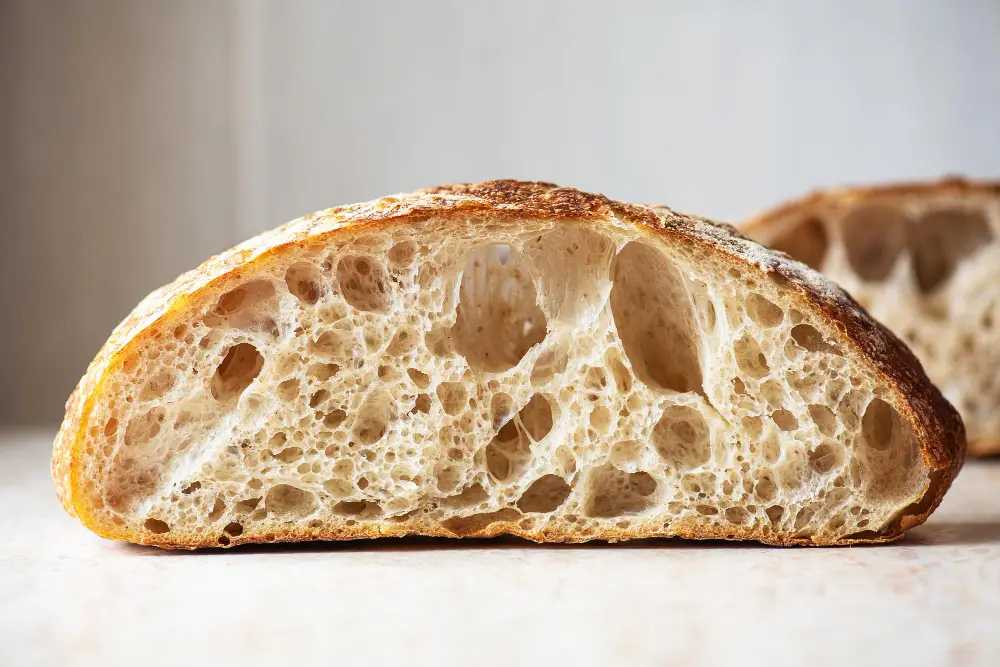
- Crumb structure — Proper fermentation creates the gas bubbles that lead to an open, airy crumb.
- Flavour — Longer, cooler fermentation develops more complex, mildly sour flavours. Shorter, warmer fermentation produces a milder, more wheaty taste.
- Dough handling — Well-fermented dough holds its shape, is easier to work with, and does not spread into a flat disc on the bench.
- Oven spring — The dough needs enough remaining yeast activity to expand in the oven's heat. Over-fermented dough has little left to give.
How Temperature Controls Everything
Temperature is the single biggest factor in how long bulk fermentation takes. Yeast and bacteria are living organisms, and they speed up or slow down based on their environment.
Here is a rough guide to how temperature affects timing:
| Dough Temperature | Approximate Bulk Fermentation Time | Character |
|---|---|---|
| 20–22 °C (68–72 °F) | 6–8 hours | Slow, mild flavour, forgiving |
| 24–26 °C (75–79 °F) | 4–5 hours | The "sweet spot" for most bakers |
| 27–29 °C (80–84 °F) | 3–4 hours | Faster, more sour, less room for error |
These times assume a moderate starter quantity relative to the flour weight. More starter speeds things up; less slows them down.
How to measure dough temperature
Stick an instant-read thermometer into the centre of your dough right after mixing. This is your desired dough temperature (DDT), and it is far more useful than ambient room temperature. The dough itself might be warmer or cooler than the room depending on your water temperature, flour temperature, and how much you mixed.
Most bakers aim for a DDT of around 25 °C (77 °F) as a starting point. If your kitchen is cold, use warmer water. If it is a hot summer day, use cooler water.
Workshop tip: Learning to manage dough temperature is one of the practical skills we cover hands-on in our sourdough bread-making workshops. It is much easier to grasp when you can feel the dough and see the changes in real time.
The Role of Stretch and Folds
During bulk fermentation, you do not just leave the dough sitting untouched for hours. Instead, you perform a series of stretch and folds — a gentle technique that builds strength in the dough without heavy kneading.
The principle is simple: you reach under the dough, stretch it upward without tearing, and fold it over itself. Rotating the bowl and repeating this on all sides completes one set. The technique takes about 30 seconds per set and is done several times during the first half of bulk fermentation, with the dough left to rest undisturbed for the remainder.
You will notice the dough change with each set. Early folds feel slack and extensible. Later folds feel tighter and more resistant. The dough starts to hold its shape in the bowl rather than pooling flat. That increasing tension is a sign the gluten network is developing nicely.
Alternatives to stretch and folds
Some bakers prefer coil folds, where you lift the dough from underneath and let the edges fold under themselves. The effect is similar. Choose whichever method feels more natural — what matters is that you are gently building structure without degassing the dough.
The timing and number of sets is something every baker calibrates to their dough and environment. It is one of those tactile skills that develops with practice and is genuinely easier to learn in person than from a written description.
How to Tell When Bulk Fermentation Is Done
This is the crucial skill. Rather than relying on a timer, train yourself to look for these signs:
1. Volume increase
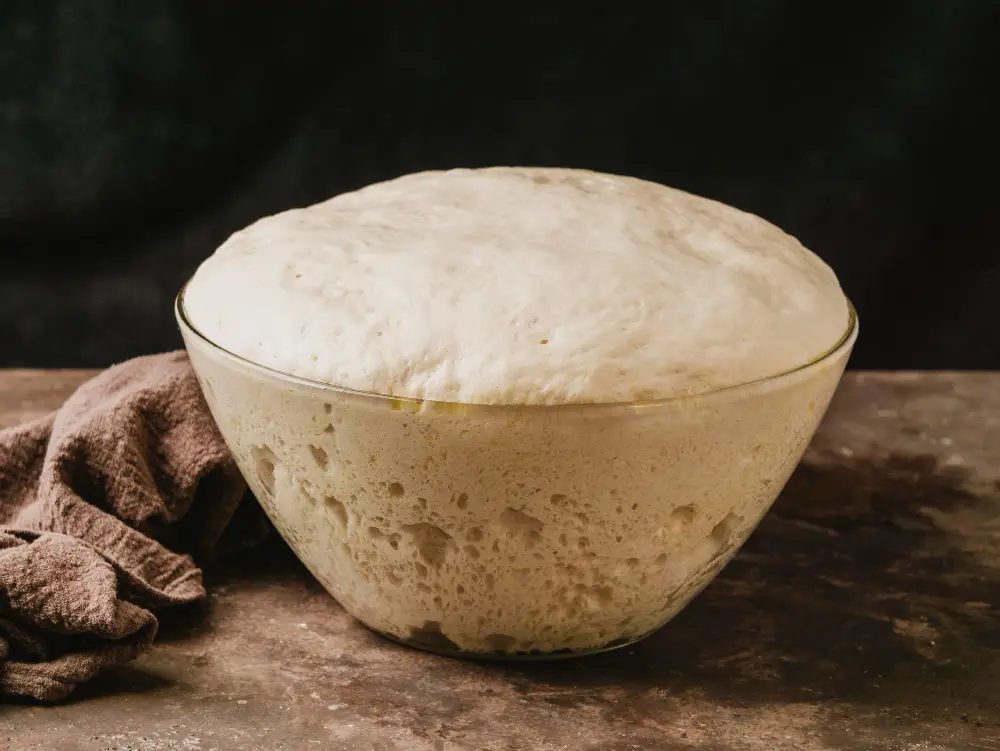
The dough should increase in volume noticeably — commonly cited as 50–75%. Using a clear, straight-sided container makes this much easier to judge — mark the starting level with a rubber band or a piece of tape.
2. Domed surface with bubbles
The top of the dough should look slightly domed (convex), not flat or sunken. You should see small and medium bubbles across the surface and around the edges where the dough meets the container. A few larger bubbles are fine, but the surface should not look like a sponge full of enormous holes — that suggests over-fermentation.
3. Jiggly, airy texture
Give the container a gentle shake or wobble. Well-fermented dough has a distinctive jiggle — it moves like a soft jelly rather than a dense lump. This wobble tells you the dough is full of gas and has a well-developed gluten network holding it together.
4. Smooth and pillowy feel
When you gently pull the dough away from the side of the container, it should feel light, smooth, and slightly pillowy. If it still feels dense, tight, or overly sticky, it likely needs more time.
5. The dough holds its shape
After the final fold, well-fermented dough should hold a slight dome shape in the bowl rather than immediately flattening out. When you turn it out onto the bench for shaping, it should spread slowly, not rush outward like a pancake.
Under-Fermentation vs Over-Fermentation
Learning to spot these two extremes will save you a lot of frustration.
Signs of under-fermentation
- The dough has barely risen (less than 30% volume increase).
- The surface looks flat with very few bubbles.
- The dough feels dense and tight when handled.
- After baking, the crumb is tight, gummy, or has a dense core.
The fix: Give the dough more time, or increase your dough temperature next time. Ensure your starter is active and ready before you begin.
Signs of over-fermentation
- The dough surface is flat or concave (collapsed), with many large, irregular bubbles.
- The dough feels very loose, soupy, or difficult to handle.
- It spreads rapidly on the bench and will not hold shape.
- After baking, the loaf is flat with a dense, uneven crumb and excessive sourness.
The fix: Reduce bulk fermentation time, lower your dough temperature, or reduce the amount of starter in your recipe. Over-fermented dough has used up most of its food, so the yeast cannot produce enough gas during baking to give you a good oven spring.
Tips for Consistent Bulk Fermentation
Keep a baking log
Write down your dough temperature, the ambient temperature, how much starter you used, and how long bulk fermentation took. Note the result. Over a few bakes, you will start to see patterns that are specific to your kitchen, your flour, and your starter.
Use a clear container
A round, straight-sided, clear plastic or glass container is your best friend during bulk fermentation. It lets you see bubble activity on the sides and bottom, and makes judging volume increase far more accurate than a mixing bowl.
Control temperature, not time
If your kitchen swings between 18 °C in winter and 30 °C in summer, your bulk fermentation time will vary hugely. Rather than following a fixed schedule, focus on controlling the dough temperature. Some methods for doing this include:
- Oven with the light on — The bulb alone can raise the temperature inside a closed oven to around 25–27 °C.
- Microwave trick — Heat a cup of water in the microwave for a minute, then place your covered dough container inside (with the hot water) and close the door. This creates a warm, humid chamber.
- Cooler water in summer — If your kitchen is hot, mix with cooler water to bring the DDT down and slow fermentation.
Do not rush it
It can be tempting to push the dough into shaping before it is ready, especially if you are on a tight schedule. Resist this. Under-fermented dough is one of the most common mistakes in home sourdough baking. If the signs above are not there yet, give it more time.
Bulk Fermentation and Your Bread's Flavour
The length and temperature of bulk fermentation directly shape how your sourdough tastes. This is because the two main types of bacteria in a sourdough culture — Lactobacillus and Acetobacter — behave differently at different temperatures.
- Warmer fermentation (above 26 °C) favours lactic acid production, which gives a milder, yoghurt-like tang.
- Cooler fermentation (below 22 °C) allows more acetic acid to develop, creating a sharper, more vinegary sourness.
If your bread tastes too sour, try a slightly warmer and shorter bulk fermentation. If you want more tang, slow things down with a cooler environment.
This interplay between time, temperature, and flavour is one of the things that makes sourdough endlessly interesting — and why no two loaves are ever quite the same.
Frequently Asked Questions
Can I do bulk fermentation in the fridge?
You can, but it is not standard practice. Most bakers do bulk fermentation at room temperature and then use the fridge for the cold retard during the final proof (after shaping). Cold bulk fermentation is very slow and can make it harder to judge when the dough is ready.
Does the type of flour change bulk fermentation time?
Yes. Wholemeal and rye flours ferment faster than white bread flour because they contain more sugars, minerals, and microbial activity. If you are using a high percentage of wholemeal flour, expect a shorter bulk fermentation.
What if I need to pause or go out?
If you need to slow things down, pop the dough in the fridge. Cold temperatures dramatically reduce yeast activity. When you return, bring the dough back to room temperature and continue monitoring for the signs of readiness.
How does hydration affect bulk fermentation?
Higher hydration doughs tend to ferment slightly faster because water makes it easier for the yeast to access sugars. They also feel more jiggly and open during bulk, which can make judging readiness trickier until you get used to it.
The Bottom Line
Bulk fermentation is not a set-it-and-forget-it step. It is a conversation with your dough. The more you practise reading the signs — the rise, the bubbles, the jiggle, the feel — the more confident you will become. And confidence in this one stage will improve everything that follows, from shaping to scoring to the final bake in your dutch oven.
If you are just getting started on your sourdough journey, our complete guide to classic sourdough bread walks you through the full process from start to finish, with bulk fermentation as a key chapter.
Ready to learn hands-on? In our sourdough bread-making workshops, you will work through every stage of the process — including bulk fermentation — with an experienced baker guiding you in real time. It is the fastest way to build the instincts that make great sourdough second nature. Find out which workshop suits you best.