
Sourdough and Water: Does Water Quality Matter?
Water is easy to overlook. You pour it in, mix it through, and get on with the bake. But for sourdough — where living bacteria and wild yeast do all the heavy lifting — the water you use can quietly make things harder than they need to be.
You don't need to obsess over it. You don't need a filter jug on every bench or a mineral analysis of your local supply. But understanding what's actually in your tap water, and how it can affect your starter and your dough, will help you troubleshoot problems and bake with more consistency.
Here's what you actually need to know.
Why Water Matters More in Sourdough Than in Other Baking
In commercial yeast baking, a small amount of chlorine in tap water won't cause a noticeable problem. The yeast is robust, added in large quantities, and works quickly.
Sourdough is different. Your starter is a living ecosystem of wild yeast and lactic acid bacteria. These microorganisms are sensitive to their environment — including the water you feed them with. When something is off with the water, you may notice:
- A starter that's sluggish or slow to peak
- Fermentation that stalls or behaves inconsistently
- A finished loaf that's denser than expected
- Off flavours you can't trace back to anything else
This doesn't mean tap water is bad. Most bakers use it without any issues. But if you're experiencing unexplained problems, water is worth looking at.
What's Actually in Tap Water?
Tap water quality varies significantly depending on where you live. Water authorities treat municipal supplies to make them safe to drink, which typically involves adding one or more of the following:
Chlorine
Chlorine is the most common disinfectant used in water treatment. It kills harmful bacteria — which sounds reassuring until you remember that your sourdough starter is full of bacteria you very much want to keep alive.
In small amounts, chlorine won't kill a healthy starter outright. But it can slow fermentation, particularly in younger starters that haven't yet built up a strong, dominant culture. If you're building a starter from scratch and struggling to get it going, chlorinated tap water could be part of the problem.
Chloramine
Chloramine is a combination of chlorine and ammonia. Many water suppliers have moved towards chloramine over straight chlorine because it's more stable — it doesn't evaporate as easily and provides longer-lasting disinfection through the pipe network.
The catch? Unlike chlorine, chloramine doesn't simply off-gas if you leave water in an open container overnight. It requires either a carbon filter or a campden tablet (potassium metabisulphite) to neutralise it.
If you're in an area that uses chloramine and you've been trying to solve a sluggish starter by leaving water out overnight — that won't work.
Fluoride
Fluoride is added to many water supplies for dental health. At the levels used in municipal treatment, it's generally considered harmless to sourdough fermentation. Unlike chlorine or chloramine, fluoride doesn't have antimicrobial properties that would inhibit your starter.
Hardness (Mineral Content)
Hard water contains higher levels of calcium and magnesium. Soft water contains very little. Both extremes can affect dough behaviour.
Research into bread-baking suggests that moderately hard water (around 100–150 mg/L) can actually strengthen gluten and support fermentation. Very soft water can make dough slack and sticky, while extremely hard water can tighten gluten too much and slow fermentation.
For most bakers, water hardness won't be the root cause of a problem. But if you move to a new area and notice your dough handling differently, it's worth considering.
How to Tell What's in Your Water
You don't need to test your water at home. The easiest approach is to look up your local water authority's annual water quality report, which is typically published online and will tell you:
- Whether your supply uses chlorine or chloramine
- Fluoride levels
- Water hardness (measured in mg/L or ppm of calcium carbonate)
In Australia, water quality reports are published by each state's water authority — for example, Sydney Water and Urban Utilities in South-East Queensland.
Does Water Quality Actually Ruin Sourdough?
For most experienced bakers, tap water works perfectly well. A healthy, mature starter is resilient. It has a strong enough culture to power through mild chlorine or slightly off mineral balance without missing a beat.
The cases where water quality causes real problems tend to be:
- A new or young starter — still building its microbial community and more vulnerable to disruption
- Water that's heavily chlorinated — some older pipe networks or smaller supply systems use higher doses
- Chloramine in the supply — which, as noted above, doesn't simply evaporate away
If your starter is established, active, and doubling reliably, your water is almost certainly fine.
Simple Fixes for Water That Might Be Causing Problems
You don't need to spend money on expensive filtration. Here are the most practical solutions, in order of effort.
1. Leave It Out Overnight (for Chlorine Only)
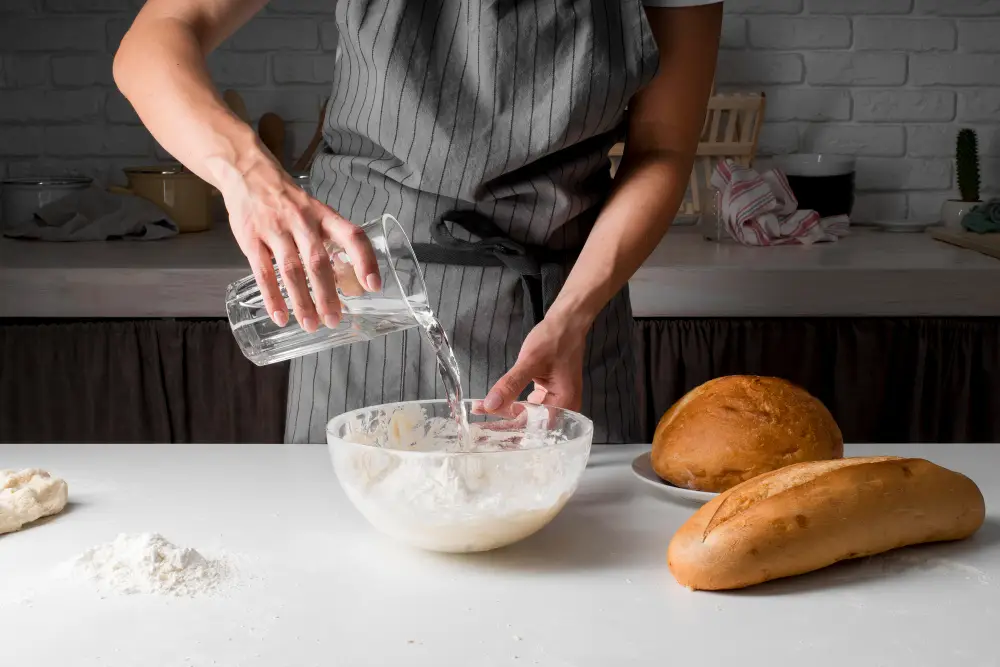
If your water supply uses chlorine (not chloramine), simply fill a jug or glass and leave it uncovered on the bench for several hours — ideally overnight. Chlorine is volatile and will off-gas into the air.
This is free, requires no equipment, and works well for chlorine-treated supplies. It won't work for chloramine.
2. Use a Carbon Filter
A jug filter with an activated carbon cartridge (such as a Brita or similar) removes both chlorine and chloramine effectively. It also reduces some heavy metals and improves taste. If you already have one for drinking water, use it for your starter and dough too.
3. Use a Campden Tablet
Campden tablets (potassium metabisulphite) are used in home brewing to neutralise chlorine and chloramine instantly. A tiny amount — a quarter of a tablet per 20 litres — is all that's needed. They're inexpensive and widely available from brewing suppliers.
This is the most reliable method for chloramine, and it's the approach many serious sourdough bakers use when they want total control.
4. Use Bottled Still Water
If you're troubleshooting a problem and want to rule out water as a variable, grab a cheap bottle of still mineral water and use it for a few feeds. If your starter immediately perks up, you have your answer.
Bottled water isn't a long-term solution — it's expensive and wasteful — but it's a useful diagnostic tool.
5. Use Rainwater (If Available)
Collected rainwater is naturally soft, free of chlorine and chloramine, and works well for sourdough. Just make sure the collection system is clean and the water hasn't been sitting long enough to develop problems of its own.
What Temperature Should Your Water Be?
Water temperature matters more than water quality for most bakers. The temperature of your water directly affects dough temperature, which controls the speed of fermentation.
- Cold water (under 18°C) slows fermentation — useful for overnight cold retards
- Room temperature water (20–24°C) is suitable for standard same-day baking schedules
- Warm water (26–30°C) speeds fermentation — helpful in winter or when your kitchen is cool
The ideal dough temperature for most sourdough recipes is between 24°C and 26°C. Professional bakers use a formula called "desired dough temperature" to calculate exactly how warm their water needs to be, based on ambient temperature and flour temperature. It's not essential for home baking, but it's worth understanding if you want to bake consistently across seasons.
Water and Hydration: The Bigger Picture
Understanding water quality is just one piece of the puzzle. The amount of water in your dough — your hydration percentage — has a far bigger impact on the finished loaf than whether you filtered it or not.
If you're still getting to grips with what hydration means and why it matters, our guide on Understanding Hydration in Sourdough covers it clearly, including how different flour types absorb water differently.
And if you're choosing between tools for your bake day, it's also worth reading about Baking Steel vs Dutch Oven for Sourdough — the vessel you bake in affects steam retention, which changes your crust and oven spring significantly.
This article is part of our broader guide, Sourdough Ingredients and Equipment: Getting Started, which covers everything from flour and salt to proofing baskets and baking vessels.
The Short Answer
Here's the honest summary:
- Chlorine can slow fermentation, particularly in young starters. Leaving water out overnight solves it.
- Chloramine won't off-gas on its own. Use a carbon filter or campden tablet.
- Fluoride is not a problem for sourdough.
- Mineral content has a minor effect on gluten and fermentation. Moderate hardness is ideal.
- For a healthy, mature starter, tap water usually works fine.
- If you're troubleshooting, water is worth ruling out — but check your starter health and fermentation timing first.
The best water for sourdough is water that works. That's often just what comes out of the tap.
Want to Learn in Person?
Understanding how variables like water, flour, and temperature interact is much easier when someone walks you through it hands-on. In our sourdough workshops, we cover exactly this kind of practical knowledge — the stuff that helps you bake with confidence rather than just following a recipe and hoping for the best.
Not sure which workshop suits you? Our guide to Classic vs Rye vs Gluten-Free: Which Workshop Is Right for You? lays out the differences clearly.