
Sourdough Oven Spring: Why It Happens (And Why It Doesn't)
You slide your loaf into the oven and close the door. Twenty minutes later, you peek through the glass and see… not much. The dough looks roughly the same size it did going in. No dramatic puff. No satisfying bloom along the score. Just a flat, pale loaf sitting there like it gave up.
That dramatic rise in the first ten to fifteen minutes of baking is called oven spring — and when it works, it's one of the most satisfying moments in sourdough baking. When it doesn't, it's one of the most frustrating.
This guide explains exactly what oven spring is, what causes it, and — most importantly — what's going wrong when you're not getting it.
What Is Oven Spring?
Oven spring is the rapid rise that happens in the early stages of baking, before the crust sets. When the dough hits the heat, a few things happen simultaneously:
- The gases produced by fermentation expand quickly as the temperature rises
- The yeast has one final burst of activity before the heat kills it (around 60°C / 140°F)
- Water in the dough turns to steam, pushing the structure outward
- The gluten network, still pliable before crust formation, stretches to accommodate all of that expansion
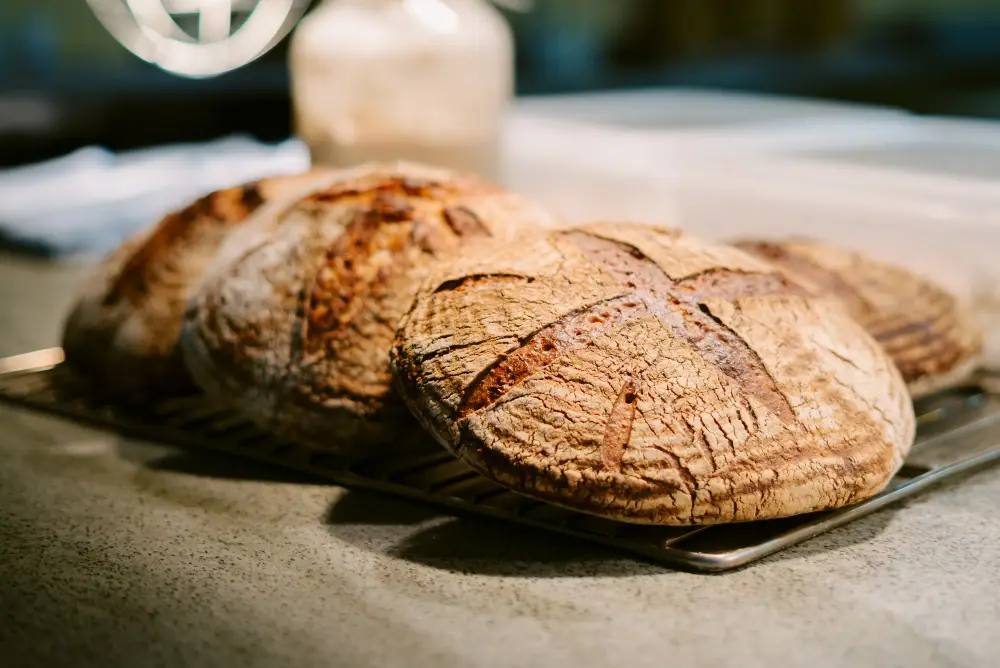
The result, when everything is working correctly, is a loaf that rises dramatically, opens beautifully along the score lines, and develops an ear — that raised flap of crust along the slash that's the hallmark of a well-baked sourdough.
According to research published in the journal Food Chemistry, the Maillard reaction and caramelisation that give sourdough its colour and flavour begin at around the same time that oven spring is occurring, which is part of why the first fifteen minutes of baking are so critical to the final result.
What Causes Good Oven Spring?
Getting great oven spring isn't luck. It's the result of several factors working together. Understanding each one helps you diagnose what's going wrong when things don't go to plan.
Proper Fermentation (Not Too Much, Not Too Little)
This is the single biggest factor. Oven spring depends on there being enough gas trapped in the dough structure when it hits the oven — which means fermentation needs to have done its job without going too far.
Under-fermented dough doesn't have enough gas bubbles or a strong enough gluten network to hold them. Spring will be minimal.
Over-fermented dough has used up most of its sugars and weakened the gluten to the point where it can't hold structure. You'll see flat, spreading loaves with little to no rise.
The sweet spot is a dough that has roughly doubled, shows visible bubbles on the surface and sides, passes the poke test (a gentle indent springs back slowly), and feels airy but still has tension. If you're struggling to read the signs, our guide to sourdough troubleshooting covers fermentation problems in depth.
Strong Gluten Development
The gluten network is what traps the gas and allows the dough to expand without tearing. A weak or underdeveloped gluten structure will let gas escape rather than holding it, which kills oven spring before it can start.
Strong gluten comes from:
- Using a flour with adequate protein content (ideally 11–13% for bread flour)
- Thorough stretch-and-fold sets during bulk fermentation
- Good shaping tension — the dough surface should feel taut, not slack
A Strong, Active Starter
Your starter is the engine driving fermentation. If it's sluggish, your dough won't build up enough gas for a strong oven spring. Your starter should be doubling predictably within four to eight hours of feeding and showing plenty of bubbles before you use it.
If you're not sure whether your starter is performing as it should, see our article on how to know when your sourdough starter is ready to bake with.
Steam in the First Phase of Baking
Steam is essential to oven spring. Without it, the surface of the dough dries out and sets too quickly, forming a crust before the interior has had a chance to expand. That crust acts like a cage — the loaf can't grow.
Steam keeps the surface moist and pliable during the critical first fifteen minutes, allowing the dough to stretch and expand freely. It also contributes to the glossy, blistered crust that's characteristic of good sourdough.
The most reliable way to generate steam at home is to bake in a preheated Dutch oven with the lid on for the first 20 minutes, then remove the lid to finish. The dough's own moisture creates the steamy environment it needs.
High, Consistent Oven Temperature
Oven spring happens fast. You need a hot oven — 230–250°C (450–480°F) — ready to go the moment the dough hits it. A cold or under-heated oven won't generate the rapid temperature increase needed to drive that initial burst of expansion.
Always preheat your oven and Dutch oven (or baking surface) for at least 45–60 minutes before baking. Most domestic ovens take longer to fully come up to temperature than the display suggests.
Proper Scoring
The score on your loaf isn't decorative — it's structural. It gives the dough a controlled weak point to expand through, directing oven spring upward and outward in a predictable way. Without scoring (or with shallow, hesitant scoring), the dough will burst unpredictably at the weakest point of the crust, usually resulting in poor shape and uneven spring.
Score with confidence, at a slight angle (around 30–45 degrees to the surface), and at sufficient depth — around 1–1.5 cm. A dull blade drags and tears rather than cuts cleanly. Use a sharp lame or a fresh single-edge razor blade.
Why Is My Sourdough Not Getting Oven Spring?
If you're consistently seeing flat, dense loaves with little to no rise in the oven, one or more of these factors is out of alignment. Work through them systematically rather than changing everything at once.
Is the dough over-proofed?
This is the most common cause of poor oven spring in home bakers who have been baking for a while. Once you've solved the "starter isn't active enough" problem, it's easy to swing too far the other way and let the dough go too long.
An over-proofed dough has used up its fermentation energy. There's nothing left to drive rise in the oven. The gluten has also started to break down, so the structure can't hold shape.
Signs of over-proofing: the dough feels very soft and fragile, almost soupy; it spreads sideways rather than holding its shape after shaping; it doesn't spring back at all when poked; the scored surface tears rather than opening cleanly in the oven.
The fix is to either shorten bulk fermentation, reduce the proofing time after shaping, or move to a cooler environment. If you're bulk fermenting at room temperature in summer, you may need to move to the fridge for the final proof.
Is the dough under-proofed?
An under-proofed loaf hasn't had enough time to build up sufficient gas. It will often feel tight and dense when you handle it, and may spring back very quickly (rather than slowly) when poked.
In the oven, an under-proofed loaf may get some spring but often bursts irregularly, particularly at the bottom or sides, because the gluten is tense rather than relaxed. For more detail on this problem, see why is my sourdough so dense?
Is the starter strong enough?
If your oven spring is consistently poor regardless of fermentation time, go back to basics and check the health of your starter. Feed it regularly, keep it in a warm spot (around 24–26°C / 75–79°F), and only bake with it when it's at or just past its peak.
A starter that was recently neglected or stored in the fridge for a long time may need several days of regular feeding to come back to full strength. For help reviving a struggling starter, see our guide to how to revive a neglected sourdough starter.
Is your oven hot enough, and is it really at temperature?
Domestic oven thermostats are notoriously unreliable. Your oven may say 240°C but actually be running at 210°C. An inexpensive oven thermometer is one of the most useful tools you can own as a bread baker — it takes the guesswork out entirely.
If you're using a Dutch oven, make sure it's been preheating inside the oven for at least 45–60 minutes. Baking in a cold Dutch oven will significantly reduce oven spring.
Are you generating enough steam?
If you're not using a Dutch oven, you need to find another way to create steam. Options include:
- A covered roasting tin
- A cast iron skillet with lava rocks or metal chains, with a tray of boiling water on the shelf below
- A steam injection oven
Of these, the Dutch oven method is the most reliable and consistent for home bakers, and the one we recommend without hesitation. If you're baking on a stone or steel without a lid, steam management becomes significantly harder.
For more on the role of steam and baking surfaces, see our comparison of baking steel vs Dutch oven for sourdough.
Is your scoring technique holding the loaf back?
Poor scoring is an underrated cause of weak oven spring. If the blade is dragging, the score isn't deep enough, or you're cutting straight down rather than at an angle, the dough won't open properly.
Practice scoring quickly and with confidence. Hesitation shows in the cut. A wet blade (briefly dipping it in water before scoring) can help it glide through the dough more smoothly.
How to Maximise Oven Spring: A Checklist
Use this before every bake to give your loaf the best chance of a strong spring:
Starter
- Fed within the past 4–8 hours and at or just past peak activity
- Doubling consistently and showing plenty of bubbles
Fermentation
- Bulk fermented to roughly 50–75% increase in volume (not doubled)
- Dough passes the poke test — indent springs back slowly over 2–3 seconds
- Shaped with good surface tension
Proofing
- Final proof long enough that the dough has relaxed but not over-proofed
- If retarding in the fridge overnight, bake straight from cold for better ear development
Baking setup
- Oven preheated to 240–250°C (460–480°F) for at least 45–60 minutes
- Dutch oven (or baking vessel) preheating in the oven
- Oven thermometer confirmed temperature is accurate
Scoring
- Sharp lame or fresh razor blade
- Score at 30–45 degrees to the surface
- 1–1.5 cm depth, confident and swift
Steam
- Lid on Dutch oven for first 20–25 minutes
- Remove lid for remaining bake time to develop colour and crust
Why Oven Spring Varies Between Loaves
Even experienced bakers find that their oven spring varies from one bake to the next. This is often down to small differences in:
- Room temperature — a warmer kitchen speeds up fermentation, so your bulk time needs to shorten accordingly
- Flour — different batches or brands of flour behave differently, especially after storage
- Starter activity — a starter that was fed on a different schedule will be at a different stage of activity
The key is to read the dough rather than the clock. Time-based recipes are a starting point, but learning to judge fermentation by the dough's appearance and feel is what separates consistently good bakers from those who get random results. For a deeper look at one of the trickiest stages of the process, see our guide to bulk fermentation explained.
Oven Spring and Bread Structure
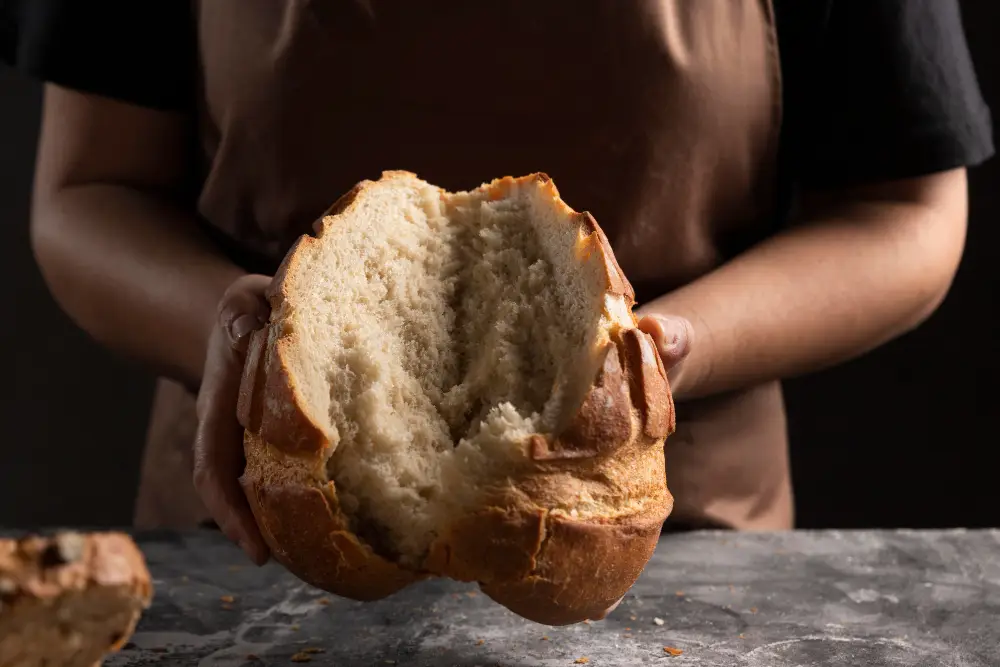
It's worth understanding that oven spring isn't just cosmetic. The rise that happens in those first fifteen minutes directly influences the crumb structure of your finished loaf. A strong oven spring means the gas bubbles have expanded fully, creating an open, airy crumb. A weak oven spring means a tighter, denser crumb — the kind that prompts the question why is my sourdough not rising?
The two problems are closely related. If you're consistently getting dense loaves with a tight crumb, poor oven spring is almost always part of the story.
The Fastest Way to Learn What Good Oven Spring Looks Like
Reading about oven spring is helpful. Watching it happen in person — and learning to read the signs in real dough — is a different level of understanding altogether.
At our hands-on sourdough workshops, you'll bake alongside an experienced instructor who can watch your process in real time, catch mistakes before they compound, and show you exactly what well-fermented, well-shaped dough feels like before it goes in the oven. That tactile knowledge is genuinely difficult to get from a recipe alone.
If you've been struggling with flat loaves, weak oven spring, or inconsistent results, a workshop could be the turning point. Three hours of hands-on baking with expert guidance covers more ground than months of solo trial and error.
Not sure which workshop suits you? Our guide to Classic vs Rye vs Gluten-Free workshops will help you choose.
For a full overview of common sourdough problems and how to fix them, visit our sourdough troubleshooting guide.