
Dutch Oven Sourdough: Why Steam Matters
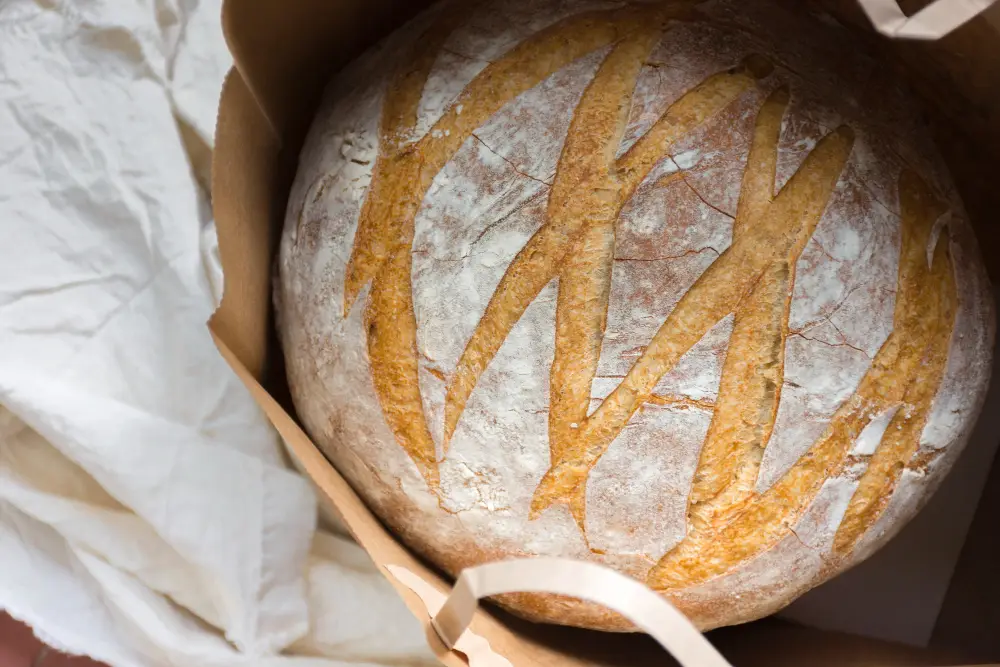
You have shaped your dough. You have scored it beautifully. Now comes the moment everything either comes together — or doesn't. The oven. And if you are baking sourdough without a dutch oven, there is a good chance your loaf is being held back.
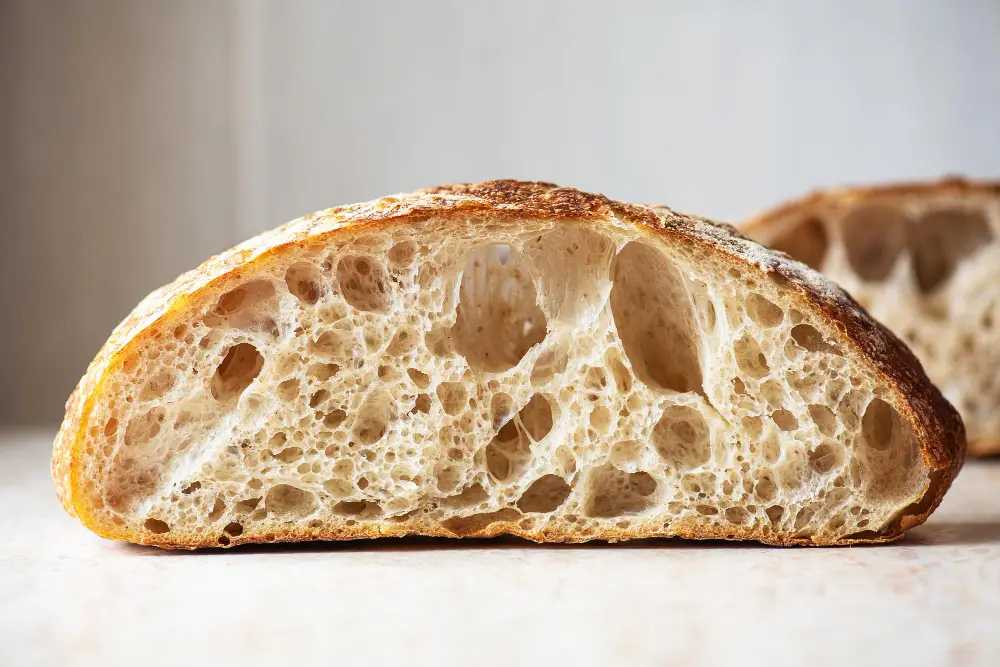
A dutch oven is not just a heavy pot. It is a steam trap. And steam, in those first critical minutes of baking, is what separates a pale, tight loaf from one with a crackly crust, dramatic oven spring, and an open crumb worth showing off.
This article explains exactly why steam matters, how a dutch oven creates it, how to use one correctly, and what to do if you do not own one.
Why Steam Is the Secret to Great Sourdough Crust
When your dough goes into the oven, the surface starts to dry out almost immediately. If the crust sets too quickly, it hardens before the loaf has had a chance to fully expand. The result is a dense, constrained loaf — sometimes with ugly blowouts on the side where the bread forced its way out through the path of least resistance.
Steam delays crust formation. It keeps the outer surface of the dough moist and pliable during the first 15 to 20 minutes of baking, which allows:
- Oven spring — the rapid final rise triggered by the heat — to happen freely
- Your score lines to open up fully, giving the loaf both structure and appearance
- The surface to gelatinise, which later becomes the glossy, blistered crust that sourdough is known for
This is well understood in professional bread baking. Commercial deck ovens have built-in steam injection systems for exactly this reason. At home, the dutch oven mimics that effect in a simple, reliable way.
How a Dutch Oven Creates the Right Steam Environment
The logic is straightforward. When you place your cold or room-temperature dough into a preheated dutch oven and put the lid on, moisture from the dough itself escapes as steam. Because the lid traps that steam, it creates a small, humid baking chamber right around your loaf.
You are not adding water. The dough provides the steam. The dutch oven just keeps it where it needs to be.
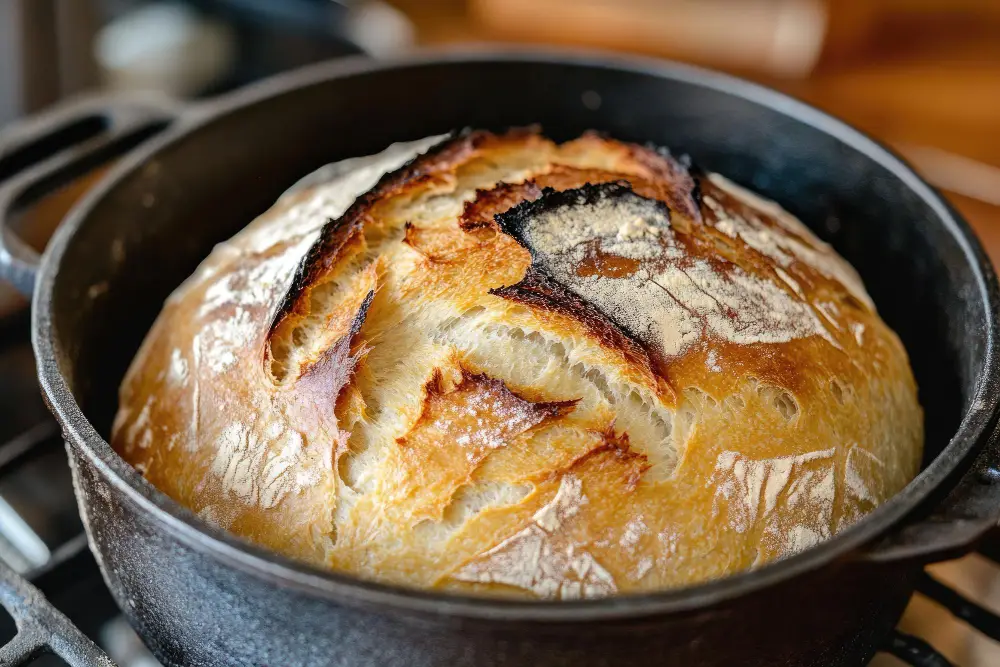
After roughly 20 minutes, you remove the lid. The steam escapes, the surface can now dry and brown, and the Maillard reaction — the chemical process responsible for colour and flavour in a browned crust — kicks in. The result is a loaf with a thick, shattering crust and a fully developed interior.
This two-phase bake (lid on, then lid off) is one of the most important techniques in home sourdough baking. It is also one of the simplest.
How to Use a Dutch Oven for Sourdough: Step by Step
Choosing Your Dutch Oven
A cast iron dutch oven is the most popular choice, and for good reason. Cast iron retains heat extremely well, which means the base of your pot stays scorching hot when the dough goes in — giving you great bottom crust and strong oven spring from below.
Enamelled cast iron (such as Le Creuset or Staub) works just as well, though you should check the manufacturer's maximum temperature rating. Most are safe up to 230–260°C. A plain cast iron combo cooker (where the shallow lid acts as the base) is also excellent and often easier to load your dough into without burning yourself.
What you want to avoid is a pot with plastic handles or a lid knob that cannot handle high heat. Everything going into the oven needs to be entirely oven-safe at baking temperatures.
A 4–5 litre (roughly 4–5 quart) pot suits most standard sourdough loaves. Any smaller and the loaf may touch the sides. Any larger and the steam does not build up as effectively.
Preheating the Dutch Oven
This step matters more than most people realise. Place your empty dutch oven (with lid) in the oven while it preheats. You want the pot to reach the same temperature as the oven — typically 230–250°C (450–480°F).
Preheating usually takes at least 45 minutes. The oven itself may reach temperature in 20 minutes, but the cast iron takes longer to fully saturate with heat. Skipping or rushing this step leads to weak bottom crust and sluggish oven spring.
Loading the Dough
This is the step most home bakers find nerve-wracking, because you are working quickly with a very hot, heavy pot. A few approaches help:
Score first, then load. Have your dough on a piece of baking parchment in the fridge or on the bench. Score it, then use the parchment as a sling to lower it into the hot pot. The parchment handles the heat and protects the dough's shape.
Work fast. The goal is to have the lid back on within 30 seconds of opening the oven. Every second the pot is open, you lose heat from the base.
Use oven gloves rated for high heat. Standard oven mitts can fail at dutch oven temperatures. Silicone gloves with good grip are worth the investment.
The Two-Phase Bake
| Phase | Lid | Temp | Duration | Purpose |
|---|---|---|---|---|
| Phase 1 | On | 230–250°C | 20 minutes | Trap steam, allow oven spring |
| Phase 2 | Off | 210–230°C | 20–25 minutes | Develop colour and crust |
After removing the lid, keep a close eye on the colour. Every oven runs differently. You are looking for a deep, even golden-brown — not pale, not burnt.
Internal temperature is a reliable guide to doneness. A fully baked sourdough loaf should read 95–99°C (205–210°F) at the centre. Use an instant-read thermometer if you are unsure.
Cooling
Do not skip this. Sourdough needs at least one hour on a wire rack before slicing. The interior is still setting as it cools. Cut into it too early and the crumb will be gummy and underdeveloped, even if the outside looks perfect.
Common Dutch Oven Mistakes (and How to Fix Them)
Pale, Soft Crust After Phase 2
Usually means the oven temperature dropped too low, the pot was not preheated long enough, or the bread came out too soon. Check your oven runs at the temperature it claims — many domestic ovens are off by 10–20°C. An oven thermometer is a cheap fix.
Burnt Bottom Crust
Cast iron holds heat intensely. If your bottom crust is consistently burning before the top browns, try placing the dutch oven on a higher rack, or put a baking tray on the shelf below to deflect some of the direct heat.
Bread Sticking to the Pot
Always use a piece of baking parchment. Even a well-seasoned cast iron pot can stick when dough is involved.
Lid Will Not Come Off Easily
Steam pressure can create a slight vacuum. Hold the pot firmly with one hand and twist the lid with the other — it will release. Do not panic or yank.
No Oven Spring
This is rarely the dutch oven's fault. Weak oven spring usually points to under or over-proofing, or a starter that was not at peak activity. Check your bulk fermentation timing first before blaming the equipment.
Alternatives If You Do Not Own a Dutch Oven
A dutch oven is the easiest route to good steam at home, but it is not the only one.
Covered Casserole Dish or Roasting Tin
Any oven-safe dish with a tight-fitting lid will work to some degree. The trade-off is that ceramic and lighter metals do not hold or transfer heat the way cast iron does, so your bottom crust may be weaker.
Steam Injection Using a Tray
Place your loaf on a preheated baking tray or baking steel. Put a separate roasting tray on the shelf below. When you load the bread, pour boiling water into the lower tray to generate steam, then close the oven quickly. Remove the tray after 20 minutes. This method works, though it is harder to control than a dutch oven and creates a higher risk of burning yourself.
Baking Under a Stainless Steel Bowl
Some bakers place the dough on a hot baking surface and invert a large stainless steel mixing bowl over it as a makeshift lid for the first phase of baking. Not ideal for heat retention, but it traps steam reasonably well. Check that your bowl is oven-safe first.
None of these alternatives are as consistent or foolproof as a dutch oven. If you are serious about sourdough, a basic cast iron pot is one of the best investments you can make. You do not need an expensive brand — a simple, oven-safe cast iron casserole does the same job.
Does the Shape of the Dutch Oven Matter?
A round dutch oven suits a boule (round loaf). An oval one suits a batard (oval loaf). Both work for either shape, though a well-matched pairing gives you slightly better spring and scoring because the loaf has room to expand evenly.
The depth of the pot matters more than the exact shape. You want enough clearance above the dough that the lid is not sitting on the loaf during baking — roughly 10–12 cm (4–5 inches) above where the dough sits is ideal.
Putting It All Together
The dutch oven solves one of the hardest problems in home sourdough baking: recreating the steam environment of a professional bakery oven without any special equipment. It is not complicated once you understand what it is doing and why.
Get the preheat right. Work quickly when loading. Trust the two-phase bake. And remember that everything before the oven — shaping, scoring, fermentation — still matters enormously. The dutch oven cannot fix an under-proofed loaf. But it will give a well-made loaf the best possible chance of living up to its potential.
If you are still working through the full process from start to finish, our Complete Guide to Classic Sourdough Bread walks you through every stage in detail, including how the dutch oven fits into the wider bake.
Ready to Bake With Expert Guidance?
Learning the fundamentals on your own takes time, and it can be hard to know when something has gone wrong — or right. In our hands-on sourdough workshops, you will bake a full loaf from scratch in three hours, with real-time feedback at every stage, including the bake itself.