
The Complete Beginner's Guide to Sourdough Bread
There is something quietly extraordinary about sourdough bread. The crust shatters when you press it. The crumb is open and chewy. The flavour — that gentle tang — is unlike anything you get from a supermarket loaf. And the whole thing is made with nothing more than flour, water, salt, and wild microorganisms you cultivated yourself.
If that sounds complicated, it isn't. Not really. Sourdough has a reputation for being fussy and difficult, and while it does ask for your attention and patience, the actual skills involved are well within reach for anyone who wants to learn them.
This guide covers everything you need to know as a complete beginner. By the time you finish reading, you will understand what sourdough actually is, why it behaves the way it does, what equipment you need, how the process works from start to finish, and what to do when things don't go quite to plan.
Let's start from the very beginning.
What Is Sourdough Bread, Exactly?
Sourdough bread is leavened — made to rise — not by commercial yeast from a packet, but by a living culture of wild yeast and bacteria that you maintain yourself. That culture is called a sourdough starter, and it is the heart of every sourdough loaf you will ever bake.
The term "sourdough" refers to the sour flavour produced by lactic acid bacteria (LAB) — specifically species from the Lactobacillus family — that live in your starter alongside the wild yeast. These bacteria produce lactic and acetic acid as they ferment the flour, which gives sourdough its characteristic tang. The balance between those two acids determines whether your bread tastes mildly complex or sharply sour.
This is different from most other breads. A typical sandwich loaf uses commercial baker's yeast (Saccharomyces cerevisiae), which produces carbon dioxide to make the bread rise but contributes very little to flavour. Sourdough uses wild yeast strains, which work more slowly and produce a far more complex flavour profile as a result.
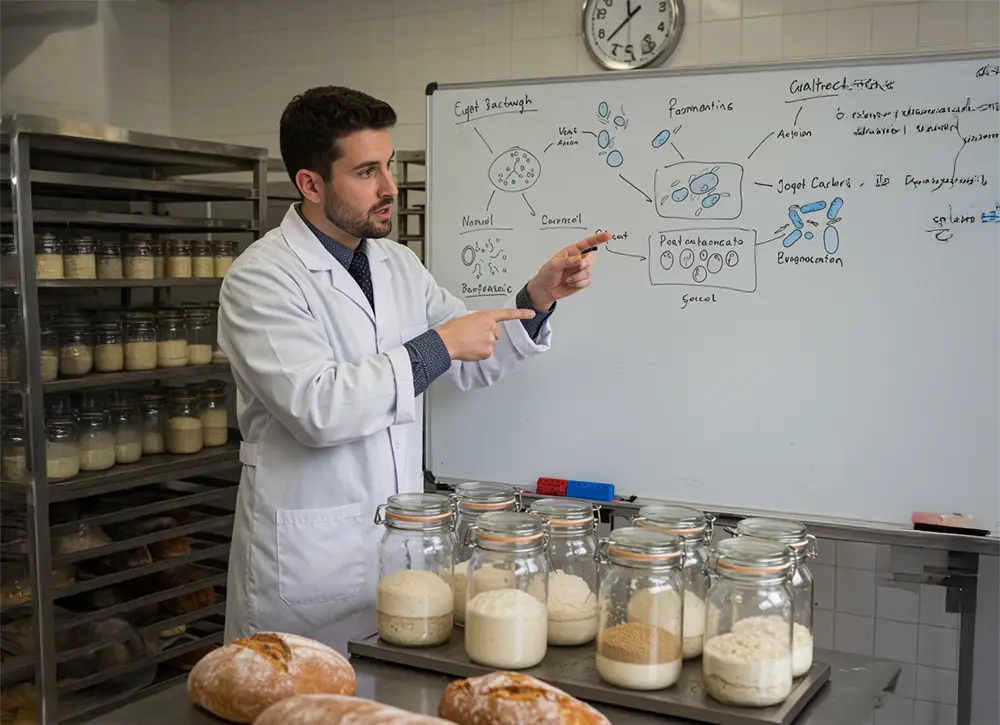
According to research published in the journal Frontiers in Microbiology, a healthy sourdough starter can contain dozens of different wild yeast and bacterial species, and the specific community that develops in your starter will be shaped by your local environment, your flour, and even your hands. That's partly why sourdough made in San Francisco tastes different from sourdough made in London — or in your own kitchen.
A Brief History of Sourdough
Before commercial yeast was developed in the 19th century, all leavened bread was sourdough. Bakers kept a piece of fermented dough from one bake to start the next — a practice that stretches back to ancient Egypt, roughly 4,000 years ago. For most of human history, sourdough wasn't a trend. It was simply bread.
The industrialisation of bread-making largely displaced sourdough from everyday kitchens, but it never disappeared. Artisan bakers kept the traditions alive, and over the past two decades sourdough has experienced a genuine revival — driven partly by a growing interest in fermented foods, partly by concerns about heavily processed bread, and partly because people find the craft genuinely satisfying.
The lockdowns of 2020 brought a huge wave of new sourdough bakers into the fold. Many of them are still baking today.
Why Bake Sourdough? The Real Reasons It's Worth Learning
Before you commit to making a starter and clearing a corner of your kitchen bench, it helps to know what you're actually getting in return.
The Flavour Is Genuinely Different
Commercial bread is designed to be fast, consistent, and broadly inoffensive. Sourdough is the opposite. The extended fermentation develops a depth of flavour — earthy, nutty, tangy, slightly sweet — that varies from loaf to loaf depending on your starter, your timing, and your flour. Once you've eaten good sourdough regularly, standard bread starts to taste flat.
The Texture Sets It Apart
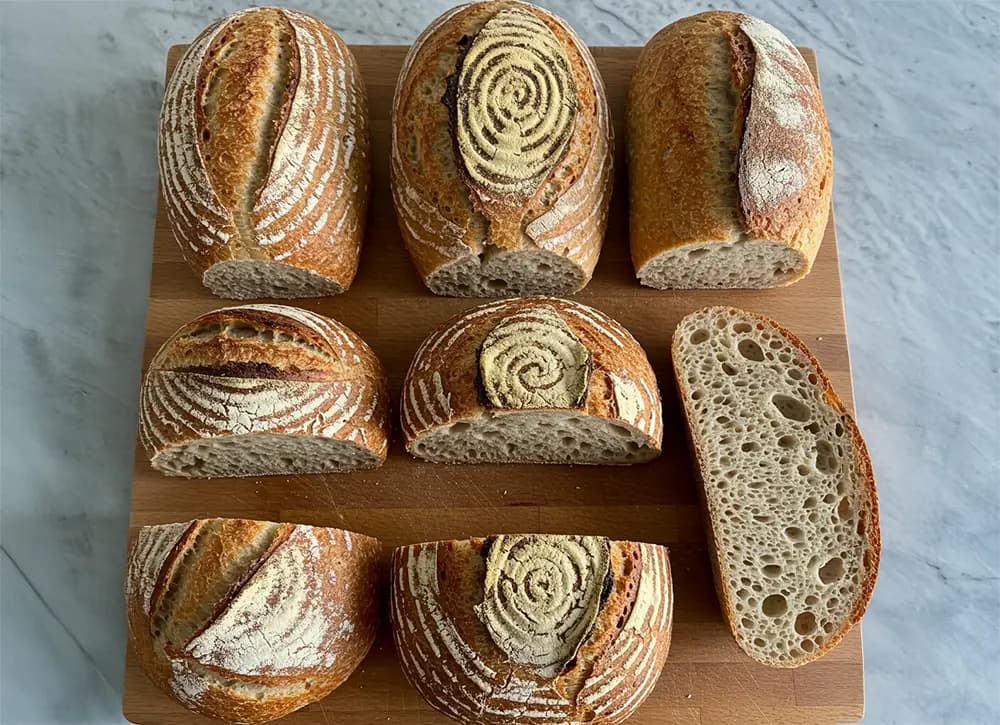
A well-made sourdough has a crust that is genuinely crisp and a crumb with structure — chewy but not dense, with irregular holes that hold butter and olive oil better than a factory loaf ever could. That texture comes from the long fermentation and the high-temperature baking, not from additives or improvers.
It May Be Easier to Digest
The long fermentation process does something interesting to the bread. Research suggests that the acids produced during sourdough fermentation partially break down gluten and reduce the levels of fermentable carbohydrates known as FODMAPs, which are often responsible for digestive discomfort in people who find standard wheat bread hard to tolerate. This doesn't mean sourdough is gluten-free — it isn't — but many people who struggle with commercial bread find they handle sourdough much better. (We explore this in more detail in our guide to whether sourdough is easier to digest.)
The Process Is Deeply Satisfying
There is something meditative about working with a living culture, reading the dough rather than the clock, and pulling a finished loaf from the oven. Many bakers describe sourdough as the hobby that became a weekly ritual. The learning curve is part of the appeal — there is always something new to understand, always a result to improve.
You Know Exactly What's In It
A typical sourdough loaf contains three ingredients: flour, water, and salt. That's it. Compare that to the ingredient list on most supermarket bread, which often includes emulsifiers, preservatives, and dough conditioners. Sourdough is as clean as food gets.
Understanding the Sourdough Starter
Everything in sourdough begins with the starter. If the starter isn't healthy and active, the bread won't rise, won't develop flavour, and won't have the right texture. Getting to know your starter is the single most important skill in sourdough baking.
What a Starter Actually Is
A sourdough starter is a mixture of flour and water that you feed regularly to maintain a living ecosystem of wild yeast and bacteria. Over time — usually around a week from scratch — the wild yeast and bacteria from your flour and environment colonise the mixture, begin to ferment it, and produce the carbon dioxide that will eventually leaven your bread.
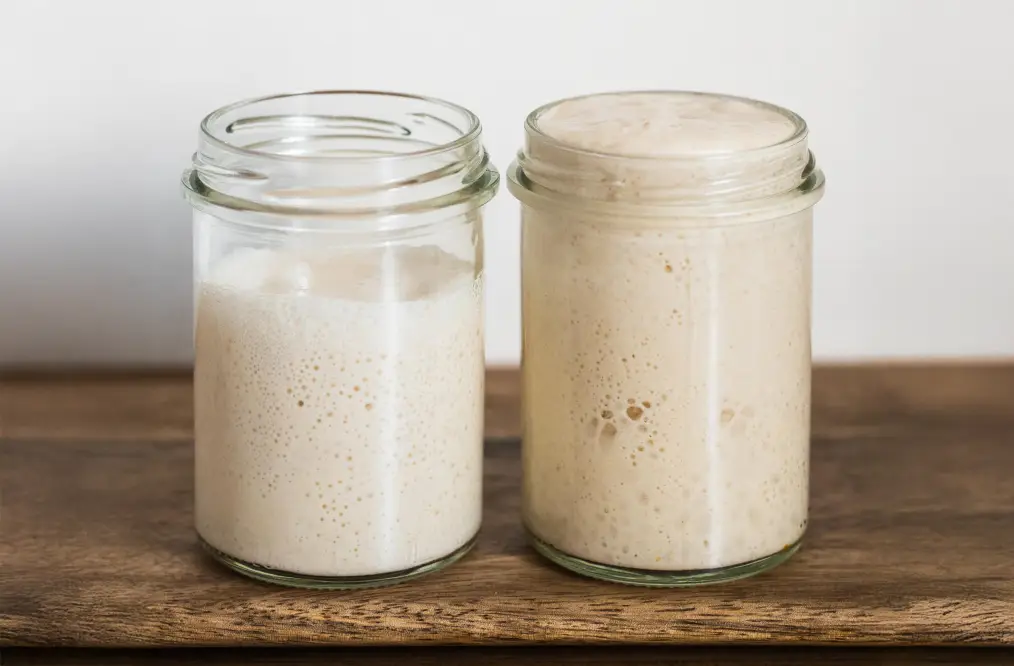
A healthy starter looks bubbly and active, smells pleasantly sour or yeasty (think yoghurt or mild vinegar), and roughly doubles in size within a few hours of being fed. When you add it to a dough, it releases carbon dioxide during fermentation, which gets trapped by the gluten network in the dough and causes it to rise.
How to Know If Your Starter Is Ready
The most commonly used test is the float test: drop a small spoonful of starter into a glass of water. If it floats, the starter has trapped enough gas to be considered active. If it sinks, it needs more time or another feeding. However, a starter that floats isn't always at its peak, and a starter that sinks isn't always inactive — the float test is a useful guide, not a guarantee. We cover the float test, visual cues, and timing in much more detail in our guide to knowing when your sourdough starter is ready to bake with.
How to Make a Starter from Scratch
Making a starter from scratch takes about five to seven days and requires only flour and water. You begin by mixing whole wheat or rye flour with water, then feeding the mixture daily — discarding some and adding fresh flour and water — until the wild yeast and bacteria establish themselves and the starter becomes reliably active.
The full process, including a day-by-day breakdown, feeding ratios, and troubleshooting tips, is covered in our complete guide to making a sourdough starter from scratch.
How to Keep Your Starter Alive Long-Term
Once your starter is established, maintaining it is straightforward. If you bake regularly — say, once or twice a week — you can keep it at room temperature and feed it daily. If you bake less frequently, store it in the fridge and feed it once a week to keep it ticking along without requiring your constant attention.
Starters are more resilient than they look. A starter that has been neglected in the fridge for weeks or even months can usually be revived with a few days of regular feedings. For everything you need to know about keeping a starter healthy for months and years, see our guide to maintaining a sourdough starter long-term.
The Science in Plain English
You don't need a degree in microbiology to bake great sourdough. But understanding a few basic principles will help you make better decisions at every stage of the process — particularly when things don't behave as expected.
Wild Yeast and Fermentation
Wild yeast — primarily from the genus Kazachstania and Wickerhamomyces in most sourdough starters, according to ongoing microbiome research — consumes the sugars in flour and produces carbon dioxide and alcohol as by-products. The carbon dioxide gets trapped in the gluten network of the dough, forming bubbles that cause it to rise. The alcohol evaporates during baking.
Bacteria and Flavour
The lactic acid bacteria in your starter ferment the sugars alongside the yeast, but instead of producing carbon dioxide, they produce acids — lactic acid, which gives a mild, yoghurt-like sourness, and acetic acid (the same acid found in vinegar), which gives a sharper, more pronounced tang. The balance between the two acids is influenced primarily by temperature: warmer fermentation favours lactic acid and a milder flavour; cooler fermentation favours acetic acid and a more assertive tang.
Gluten and Structure
Gluten is the protein network that forms when wheat flour is mixed with water and worked. It gives dough its elasticity and strength, trapping the gas produced by fermentation so the dough can rise without collapsing. Good gluten development is essential for a well-structured loaf — which is why most sourdough recipes include techniques like stretching and folding the dough during bulk fermentation rather than kneading it hard upfront.
Why Time and Temperature Matter So Much
The microorganisms in your starter and your dough are sensitive to temperature. In warm conditions the fermentation speeds up considerably; in cool conditions it slows right down. This is why sourdough recipes give time ranges rather than fixed times, and why baking in summer requires different timing than baking in winter. Learning to read your dough — looking at its volume, its texture, and the bubbles on its surface — rather than following the clock rigidly, is one of the most important skills a sourdough baker develops.
Our guide to the science behind sourdough fermentation goes deeper into the microbiology for anyone who wants to understand exactly what's happening at each stage.
Key Sourdough Concepts You Need to Know
Before we walk through the full process, here are the essential terms and concepts you'll encounter in almost every sourdough recipe. (For a full glossary covering every piece of sourdough jargon, see our Sourdough Terminology Decoded guide.)
Hydration
Hydration refers to the ratio of water to flour in a dough, expressed as a percentage. Higher hydration doughs tend to produce a more open crumb and a lighter texture, but they are also stickier and more challenging to handle. Most beginner recipes sit in a range that strikes a reasonable balance between workability and a good result. Our guide to sourdough hydration explains how to adjust this based on your flour and your goals.
Bulk Fermentation
This is the first rise — the period after you've mixed your dough but before you shape it. During bulk fermentation, the wild yeast works through the dough, producing carbon dioxide that causes it to expand. You'll typically do a series of stretch-and-fold sets during this phase to develop strength in the dough. Knowing when bulk fermentation is complete is one of the most important — and most commonly misunderstood — skills in sourdough baking.
Proofing (Final Proof)
After shaping, the dough goes through a final proof — a second period of fermentation that gives the loaf its final rise before baking. This can be done at room temperature for a few hours or in the fridge overnight (called a cold retard), which slows fermentation, develops more flavour, and makes the dough easier to score before baking.
Autolyse
Autolyse is a technique where you mix flour and water and let them rest before adding your starter and salt. During this rest, the flour absorbs the water fully and gluten begins to develop without any effort on your part. Autolysing makes the dough easier to handle and generally improves the final texture of the crumb.
Stretch and Fold
Rather than kneading sourdough dough hard at the start, most recipes use a technique called stretch and fold during bulk fermentation. You wet your hand, reach under the dough, stretch it up and fold it over itself, then rotate and repeat. Doing several sets during the early part of bulk fermentation builds the gluten network gently and evenly without overworking the dough.
Scoring
Before you put your shaped loaf in the oven, you cut the surface with a sharp blade — a lame (pronounced "lahm"), a razor blade, or a very sharp knife. This is called scoring. Scoring controls where the bread expands during baking. Without it, the bread will burst unpredictably as the steam and gas inside it expand rapidly in the hot oven. Scoring also gives you the opportunity to create decorative patterns on the surface of the loaf.
Equipment: What You Actually Need
One of the most common questions from beginners is whether you need a lot of expensive equipment. The honest answer is no. You can bake excellent sourdough with very basic kit.
The Essentials
A kitchen scale. Sourdough baking is done by weight, not volume. A scale that measures in single grams is a genuinely essential tool. Cup measurements are not reliable enough for bread.
A large mixing bowl. Wide and deep enough to accommodate the dough as it expands during bulk fermentation.
A Dutch oven. A lidded cast iron pot is the closest thing to a professional steam-injected bread oven that most home bakers have access to. The lid traps steam from the dough during the early part of baking, which keeps the crust soft enough to allow oven spring — that dramatic final rise in the hot oven — before it sets and crisps.
A banneton or proving basket. A banneton is a coiled rattan basket that supports the shaped dough during its final proof and gives the finished loaf its characteristic spiral pattern. If you don't have one, a bowl lined with a floured cloth works as a substitute. Our banneton guide covers care, sizing, and alternatives in full.
A bench scraper. A simple metal or plastic tool that is invaluable for handling sticky dough, dividing dough on the bench, and cleaning your work surface.
A sharp blade. A lame is the purpose-built tool, but a razor blade or a sharp serrated knife does the job for scoring.
Useful but Not Essential
A dough thermometer takes the guesswork out of water temperature and helps you understand how your kitchen temperature is affecting fermentation. A banneton liner helps prevent sticking. A spray bottle of water is useful for managing sticky dough without adding extra flour.
You do not need a stand mixer for sourdough. The stretch-and-fold technique does the work of kneading, and it's done entirely by hand.
The Sourdough Process: An Overview
Understanding the stages of sourdough baking — and what each one is actually doing — is more useful than memorising a recipe. Here is a walkthrough of the process from start to finish, so you know what to expect before you begin.
Preparing Your Starter
The night before you plan to bake, you feed your starter — discarding most of what you have, then adding fresh flour and water. By morning, it should have peaked: doubled in size, bubbly throughout, and domed on top. This is the moment it's most active and ready to raise dough. Using a starter that isn't at peak activity is the most common reason first loaves disappoint.
Mixing the Dough
Most sourdough recipes use a technique called autolyse — mixing flour and water first and letting them rest before adding the starter and salt. This allows the flour to fully hydrate and gluten to begin developing passively, which makes the dough easier to work with later. Once the starter and salt are incorporated, the dough won't look impressive — it'll be rough and sticky — but that's completely normal.
The ratio of starter to flour, the hydration level, and the flour blend are all variables that significantly affect the final loaf. Finding the balance that works with your flour and your kitchen environment is a large part of the learning process.
Bulk Fermentation and Stretch and Fold
After mixing, the dough enters bulk fermentation — the main rise. During the first couple of hours you'll perform several sets of stretch and fold, a technique that builds gluten strength without traditional kneading. Each set takes about 30 seconds: you stretch the dough upwards from beneath, fold it over itself, rotate the bowl, and repeat.
After the stretch-and-fold sets, you leave the dough undisturbed to continue rising. Bulk fermentation is complete when the dough has grown noticeably in volume, feels lighter and more aerated, and has visible bubbles on the surface and sides.
Knowing when to stop bulk fermentation — not going by the clock but by reading the dough — is one of the most important skills in sourdough baking. Over-fermented dough collapses in the oven; under-fermented dough produces a dense, gummy crumb. Getting this right consistently takes practice.
Pre-Shaping and Shaping
After bulk fermentation, the dough is gently turned out and pre-shaped — a quick fold-and-tighten that begins building surface tension. After a short rest to let the gluten relax, the dough is final-shaped into either a round boule or an oval batard.
Good shaping is one of the tactile skills that is genuinely hard to learn from words alone. The goal is a smooth, taut outer surface that gives the loaf structure in the oven. Too loose and the loaf spreads sideways; too rough and the surface tears. Feeling what "right tension" means in your hands is something that clicks with practice — and is one of the things our workshop is specifically designed to teach.
Final Proof
The shaped dough goes into a floured banneton for its final proof. You can proof at room temperature for a few hours or — highly recommended for beginners — place it in the fridge overnight. A cold proof slows fermentation right down, develops more flavour, and produces a firmer dough that's much easier to score confidently.
The poke test is your guide: gently press the dough with a floured finger. If the indent springs back quickly, it needs more time. A slow, partial spring-back means it's ready. No spring-back at all suggests over-proofing.
Scoring and Baking
Just before the dough goes into the oven, you score the surface with a lame or razor blade. This controls where the bread bursts open during baking — giving it a defined ear and a dramatic bloom rather than random cracking.
Sourdough is baked at high heat, usually in a preheated Dutch oven. The lid goes on for the first part of baking to trap the steam released by the dough, which keeps the crust pliable long enough for the loaf to fully expand. The lid then comes off to let the crust develop colour and crunch.
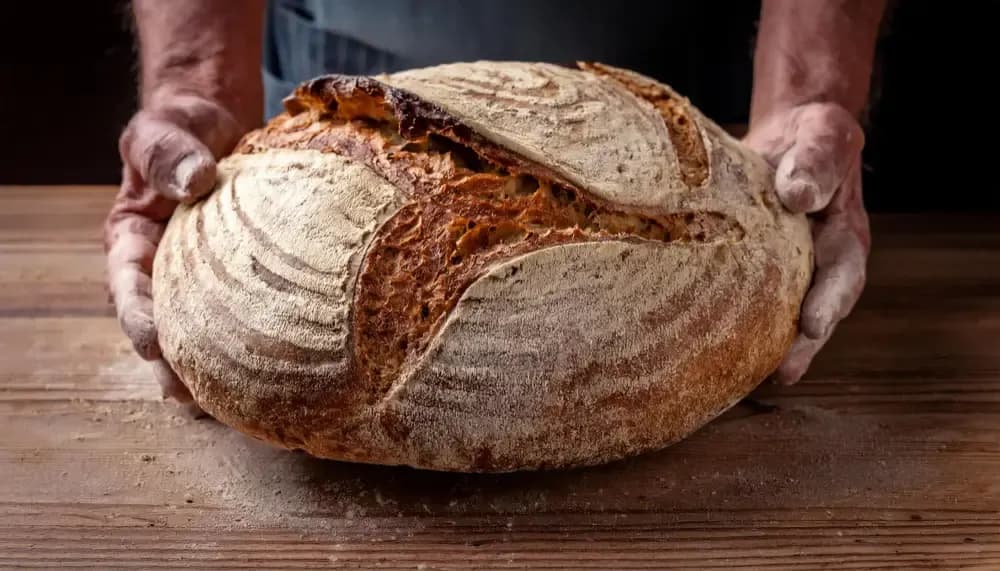
A well-baked sourdough is much darker than most beginners expect — deep, rich brown, almost mahogany. Pale bread is underbaked. The colour is where the flavour lives.
Cooling
Once out of the oven, the loaf needs at least an hour — ideally two — before you cut into it. The crumb is still setting as the loaf cools, and cutting it early produces a gummy interior that never recovers.
The wait is genuinely the hardest part.
What to Expect on Your First Few Bakes
Your first loaf almost certainly will not be your best loaf. That's not a warning — it's just true of almost every baker, regardless of how carefully they follow a recipe. Sourdough involves a living culture, and working with living cultures involves variability.
Here is what's realistic to expect:
First bake: You'll probably produce a loaf that is more dense than you'd like, perhaps with a somewhat pale crust and not much oven spring. It will still taste good. You will learn an enormous amount just from the process.
Third to fifth bake: You'll start reading the dough better. You'll recognise when bulk fermentation is done, you'll handle the shaping with less anxiety, and your scores will start to open up.
Tenth bake and beyond: You'll have a rhythm. You'll be adjusting instinctively. You'll start troubleshooting in real time rather than after the fact.
Progress in sourdough is real, but it's incremental. Every loaf teaches you something. Keep a simple baking journal — just a note of the date, the temperature, your timing, and what the result looked like — and patterns will emerge quickly.
Common Beginner Mistakes and How to Avoid Them
Using an Inactive Starter
If your starter isn't properly active, nothing else in the process will compensate for it. Make sure your starter has peaked — doubled in size and is bubbly throughout — before you use it.
Rushing Bulk Fermentation
Under-fermentation is the most common cause of dense, gummy sourdough. Don't go by the clock alone. Go by the dough. If the dough hasn't expanded properly and doesn't feel aerated and alive, give it more time.
Shaping Too Loosely
A loaf that isn't shaped with enough tension will spread out sideways in the oven rather than rising upward. It takes practice to feel what adequate tension is, but aim for a surface that looks smooth and feels slightly taut under your hands.
Not Preheating the Dutch Oven for Long Enough
The bottom heat from the Dutch oven is critical for good oven spring and a properly set base. Preheat it for a full 45–60 minutes at your oven's highest temperature.
Underbaking
Many beginners pull the loaf too early because the crust looks done. A well-baked sourdough is deep brown — almost mahogany — on the outside. If in doubt, give it another five minutes. An overbaked crust is far more forgiving than a gummy crumb.
Sourdough Variations to Explore as You Progress
Once you're comfortable with the basic white loaf, the world of sourdough opens up considerably.
Rye Sourdough
Rye flour behaves very differently from wheat flour due to the absence of gluten-forming proteins and the presence of starches called pentosans that absorb large amounts of water and create a sticky, dense dough. Rye sourdough has a distinctive earthy, slightly bitter flavour and keeps exceptionally well. We cover everything about rye baking in our Complete Guide to Sourdough Rye Bread, including how rye starters work and the traditions behind Scandinavian and German baking.
Gluten-Free Sourdough
Sourdough can also be made entirely without wheat — using blends of rice flour, buckwheat, sorghum, and teff. Gluten-free sourdough has its own techniques and challenges (the lack of gluten means a fundamentally different structure), but the results can be genuinely excellent. Our Complete Guide to Gluten-Free Sourdough covers flour blends, gluten-free starters, and the most common problems and how to solve them.
Higher Hydration
Once you're confident with a standard dough, try increasing the water content gradually. Higher hydration produces a more open crumb and a more complex texture, but the dough becomes significantly more difficult to handle and shape. It's a natural next challenge once the fundamentals are solid.
Inclusions and Flavour Additions
Seeds, nuts, dried fruit, cheese, olives, roasted garlic — all of these can be folded into the dough during bulk fermentation to create flavoured loaves. Sunflower and sesame seeds are a classic starting point. A little experimentation quickly makes sourdough baking feel genuinely creative.
When to Ask for Help — and Where to Get It
Learning sourdough from written instructions alone has its limits. The tactile skills — feeling when a dough has enough tension, reading fermentation by sight rather than by the clock, scoring with confidence — are genuinely easier to learn in person than from a page.
This is exactly what our sourdough workshops are designed for. In three hours, you'll make a real loaf from scratch alongside an experienced baker who can show you what properly fermented dough looks and feels like, how to handle a sticky dough without adding too much flour, and how to score without hesitation. You'll leave with a loaf you made yourself, a jar of active starter, and the skills to keep going at home.
If you'd like to find out what the experience is like, take a look at our guide to what to expect at a sourdough workshop. And if you're not sure which workshop — Classic, Rye, or Gluten-Free — is the right fit, our workshop comparison guide walks through the differences.
Frequently Asked Questions
How long does it take to make sourdough bread?
The hands-on time is surprisingly short — perhaps 30–40 minutes spread across a day. The total elapsed time, including fermentation and proofing, is typically around 24 hours when using an overnight cold proof. Most of that time is waiting, not working.
Can I make sourdough without a Dutch oven?
Yes. A covered casserole dish works as a substitute. You can also bake directly on a baking stone or steel and generate steam by placing a tray of boiling water in the bottom of the oven, though results are typically less consistent than with a Dutch oven.
My starter smells strange. Is it still usable?
A healthy starter smells pleasantly sour — like yoghurt, vinegar, or overripe fruit. A pinkish or orange tint, or a genuinely unpleasant smell (not just sour), can indicate contamination, and you should discard it and start fresh. Liquid on top (called hooch) is normal — just stir it back in or pour it off and feed as usual.
Does sourdough bread go stale quickly?
Not as quickly as commercial bread, actually. The acidity of sourdough inhibits mould and the crumb structure retains moisture well. A sourdough loaf kept in a paper bag or bread box (not a plastic bag, which makes the crust soft) will stay good for three to four days. Slice and freeze anything you don't expect to eat within that time — it defrosts beautifully.
How do I stop my dough spreading instead of rising?
Spreading is usually caused by insufficient gluten development, over-fermentation, or weak shaping. Check that your starter is healthy, be precise about bulk fermentation timing, and practise shaping with firm but gentle tension.
Glossary: Key Terms at a Glance
Autolyse — Resting the flour-water mixture before adding starter and salt, to allow gluten to develop passively.
Banneton — A proofing basket, usually made from rattan, that supports the shaped dough during its final rise.
Bench rest — A short rest after pre-shaping that relaxes the gluten before final shaping.
Bulk fermentation — The first, main rise of the dough after mixing.
Cold retard — Slowing fermentation by placing the dough in the fridge, typically overnight.
Crumb — The interior texture of the baked bread.
Hydration — The ratio of water to flour in a recipe, expressed as a percentage.
Lame — A razor blade on a curved handle, used to score dough before baking.
Oven spring — The rapid final rise that happens in the first minutes of baking, driven by heat and steam.
Proofing — The final fermentation stage after shaping.
Scoring — Cutting the surface of the dough before baking to control expansion.
Sourdough starter — The living culture of wild yeast and bacteria that leavens sourdough bread.
For the complete glossary with every sourdough term explained in plain language, see our Sourdough Terminology Decoded guide.
What to Read Next
This guide has given you a solid foundation, but there's much more to explore. Here are the natural next steps depending on where you are:
- Making your starter: How to Make a Sourdough Starter from Scratch
- Understanding the microbiology: The Science Behind Sourdough Fermentation
- Getting your hydration right: Understanding Hydration in Sourdough
- Checking your starter is ready: How to Know When Your Sourdough Starter Is Ready to Bake With
- Learning the language: Sourdough Terminology Decoded: A Glossary for New Bakers
- Keeping your starter long-term: Maintaining a Sourdough Starter: The Long-Term Care Guide
Final Thoughts
Sourdough is not a recipe. It's a skill — and like all skills, it develops with practice, attention, and a willingness to learn from what goes wrong as much as what goes right.
The basics are genuinely simple: flour, water, salt, and a living culture. The refinement can go as deep as you want to take it. That's what makes sourdough such an enduring and rewarding craft. You can bake a serviceable loaf in your first week. You can still be discovering new nuances years later.
Start your starter. Make your first loaf. Don't worry about perfection. Just pay attention, keep notes, and bake again.
Ready to fast-track your skills? Our hands-on sourdough workshops give you the experience of making a full loaf from start to finish with expert guidance — so you leave with both the bread and the confidence to keep going. Find out what to expect at a workshop, or compare our Classic, Rye, and Gluten-Free options to find the right fit.