
My Sourdough Didn't Rise: What Went Wrong
You mixed your dough, followed the timing, shaped it carefully — and then your sourdough came out flat. It barely grew in the oven, and now you're staring at a dense, disappointing loaf wondering where it all went wrong.
The good news? A sourdough that doesn't rise almost always has a clear, fixable cause. This guide walks through every likely reason — from a weak starter to a cold kitchen to over-proofing — so you can diagnose the problem and get it right next time.
If you want a broader overview of common sourdough problems, start with our complete sourdough troubleshooting guide. For this article, we're focusing specifically on rise failure at every stage of the bake.
Why Sourdough Rise Matters at Every Stage
Unlike commercial yeast breads, sourdough rises in two main stages:
- Bulk fermentation — the long first rise after mixing, where the dough more than doubles in size
- Final proof — a shorter rest after shaping, before baking
Then there's a third moment: oven spring — the burst of rise that happens in the first 10–15 minutes in the oven.
A flat sourdough can fail at any one of these three points, and each has its own set of causes. The fix depends entirely on when the rise failed, so let's work through them one by one.
Step 1: Was Your Starter Actually Ready?
This is the most common reason a sourdough doesn't rise, especially for newer bakers. If your starter isn't active and healthy, no amount of technique will save your loaf.
How do you know if your starter is the problem?
Ask yourself:
- Did your starter at least double in size between feedings in the 4–8 hours before you baked?
- Was it bubbly and domed at its peak?
- Did it smell pleasantly sour and yeasty — not like acetone or nail polish remover?
If the answer to any of these is no, your starter likely wasn't ready to leaven a loaf.
What causes a weak starter?
- It's too young. A new starter needs at least 7–14 days of consistent feeding before it's reliably active. Early activity can be misleading — you may see bubbles from bacteria that aren't yet producing enough gas to raise bread. The Wild Yeast Project has excellent guidance on starter development timelines.
- Infrequent or irregular feeding. A starter that hasn't been fed recently — especially one stored in the fridge for weeks — may be sluggish. It needs several refreshes at room temperature before it's strong enough to bake with.
- Wrong water. Heavily chlorinated tap water can inhibit yeast and bacteria. Using filtered or room-temperature water that's been left out for an hour can make a real difference. See sourdough and water quality for more detail.
- Whole-grain starters in transition. If you recently switched your starter to a new flour (say, from white flour to rye), it may take a few feedings to adjust.
The float test — is it reliable?
The float test (dropping a small piece of starter into water to see if it floats) is widely cited, but it's not the most reliable indicator. A starter can float and still be past its peak, or sink and still be perfectly capable of leavening bread. Better to watch the rise and fall cycle directly — read our full guide on how to know when your sourdough starter is ready to bake with.
Step 2: Did Your Dough Rise During Bulk Fermentation?
Assuming your starter was active, the next place to look is bulk fermentation. This is the long rise after mixing — typically 4–12 hours at room temperature — and it's the most misunderstood phase of sourdough baking.
What should dough do during bulk fermentation?
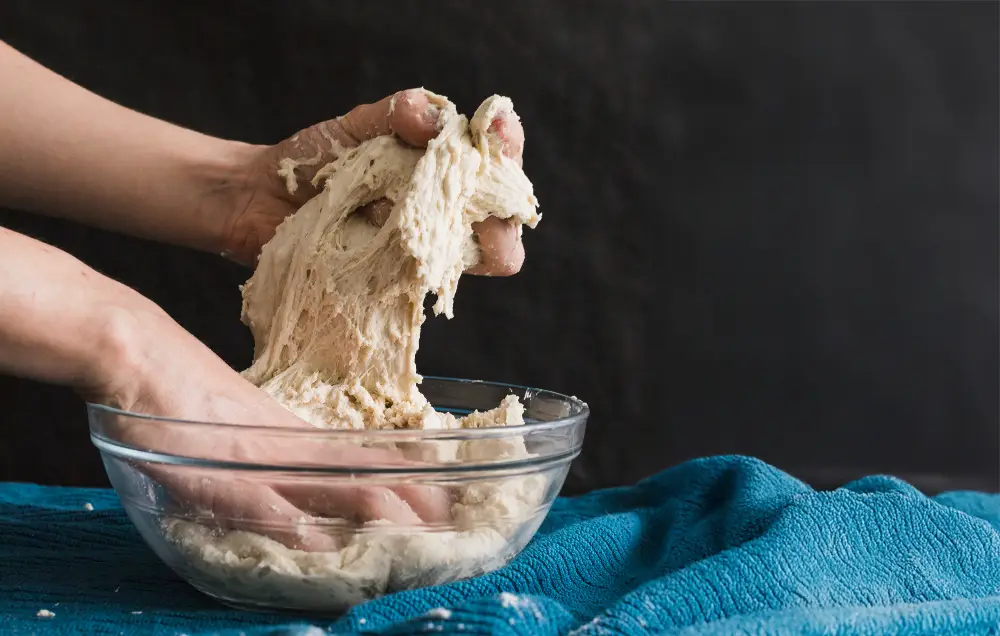
By the end of bulk fermentation, your dough should have grown noticeably — often by 50–75% for a moderate-hydration dough, or closer to double for a high-hydration one. It should feel lighter, airy, and slightly jiggly when you move the container. The surface may show some bubbles.
Why didn't the dough rise enough during bulk fermentation?
Your kitchen was too cold
Temperature is the single biggest variable in sourdough fermentation. Wild yeast and bacteria slow down dramatically in cold conditions. Below about 18°C (64°F), fermentation can become so slow that your dough barely moves over 8–10 hours.
Sourdough ferments best between 24°C and 28°C (75°F and 82°F). If your kitchen is on the cooler side — especially in winter — you have a few options:
- Place your dough in an oven with just the light on (can add 5–8°C)
- Use a proofing box or a purpose-built bread proofer (Brod & Taylor make a popular folding model)
- Use slightly warmer water when mixing — aim for a final dough temperature of around 25°C (77°F)
Remember: cooler isn't always a problem — it just means fermentation takes longer. If you're bulk-fermenting overnight in a cold kitchen, your dough might need 12–16 hours instead of 4–6.
You relied on the clock rather than the dough
Recipe timings are guides, not rules. A recipe that says "bulk ferment for 5 hours" is written for a specific starter percentage, temperature, and flour. If any of those differ in your kitchen, your timing will too.
The only reliable way to judge bulk fermentation is to watch the dough, not the clock. Look for:
- A clear increase in volume
- A domed (slightly convex) surface
- Bubbles visible through the sides of your container
- Dough that wobbles like jelly when you shake the container
Read our full breakdown of bulk fermentation for a deep dive into how to read the dough at every stage.
Your starter percentage was too low
If you used a smaller amount of starter (say, 10–15% of flour weight), the fermentation process starts more slowly. This is deliberate for long, slow overnight bakes — but if you're expecting a 4-hour bulk at room temperature, you'll likely be disappointed. Most room-temperature recipes use 15–20% starter.
Your flour had low protein content
Strong flour (typically 12–13% protein or higher) creates a better gluten network, which traps more gas and gives a more obvious rise. Very low-protein plain flour can make the dough feel flat and heavy even when fermentation is technically working.
Step 3: Did the Dough Rise After Shaping?
After bulk fermentation, you shape the dough and then give it a final proof — either at room temperature for 1–3 hours, or in the fridge overnight (called a cold retard).
Why doesn't the dough rise much during the final proof?
If bulk fermentation went well but the shaped loaf feels dense and doesn't seem to grow, the most common causes are:
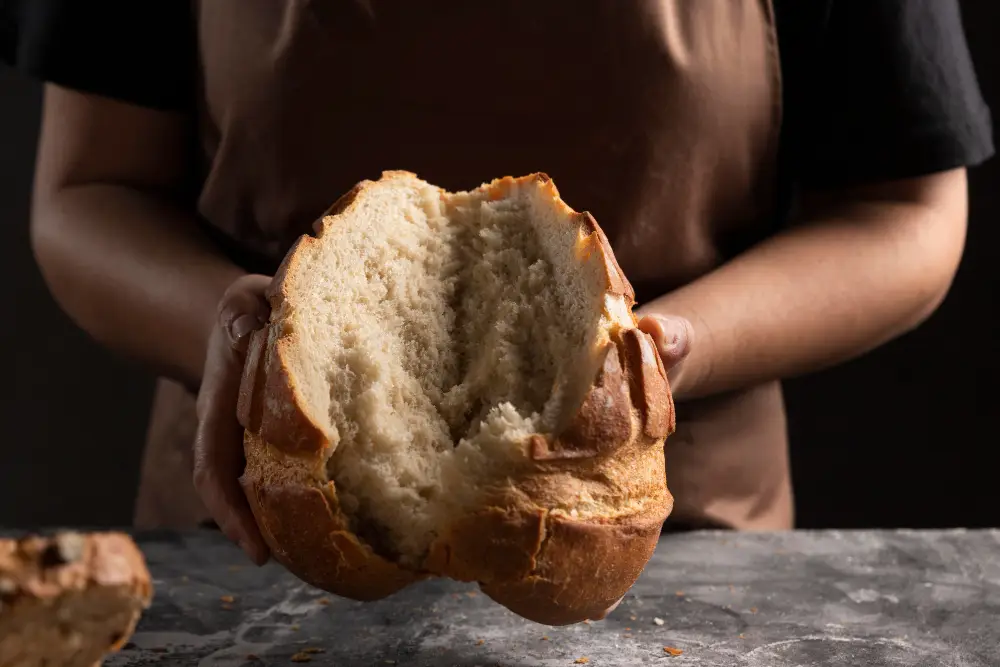
- Over-proofing during bulk fermentation. If the dough went too far during bulk, it may have already exhausted most of its gas-producing capacity. By the time you shape it, the yeast has little left to give. This is a tricky one — dough that's over-fermented often feels very slack and sticky, loses its shape quickly, and collapses rather than springs in the oven.
- Degassing during shaping. Heavy-handed shaping that pushes out too much gas can leave the dough starting from scratch for the final proof. Aim for gentle, confident movements that build surface tension without compressing the interior.
- Too cold during the final proof. Same principle as bulk — if the dough is sitting in a very cold spot, it will proof very slowly. If using a fridge retard, 8–14 hours is usually sufficient. Longer than 16–18 hours in the fridge can sometimes lead to over-proofing even at cold temperatures.
Step 4: Did the Loaf Rise in the Oven?
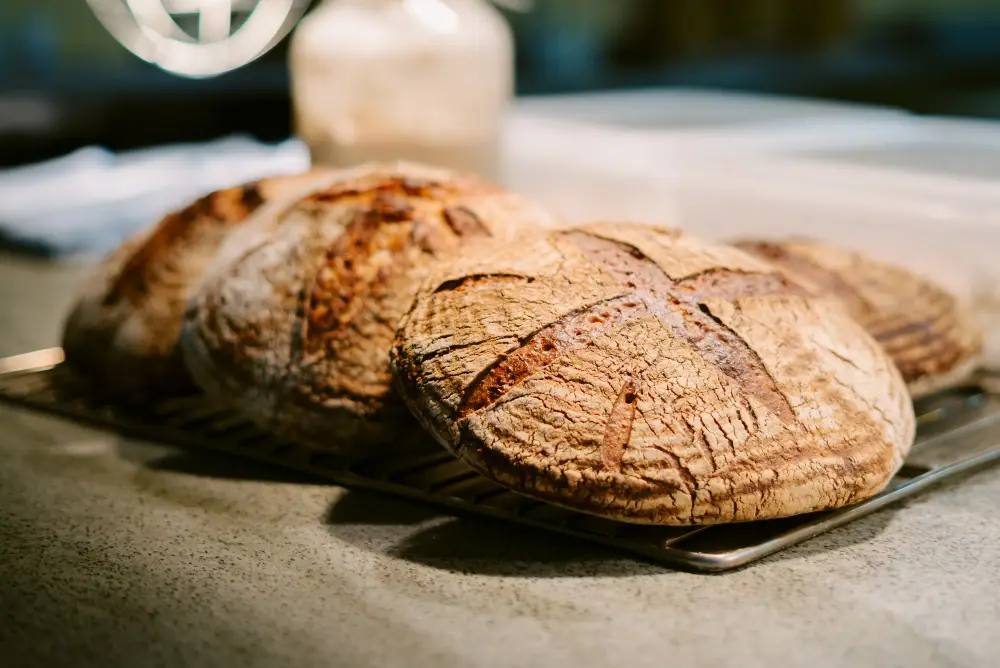
Even if your dough proofed well, a poorly baked sourdough can still come out flat. Oven spring — that dramatic final rise in the first 10–15 minutes of baking — is essential to a good loaf.
Why does sourdough fail to spring in the oven?
- No steam in the early bake. Steam is what keeps the crust soft and extensible during oven spring. Without it, the outer crust sets too quickly and physically prevents the loaf from expanding. Baking in a Dutch oven traps steam automatically — this is why it's so popular for home bakers.
- Oven not hot enough. Sourdough needs a hot oven — typically 230–250°C (450–480°F). If your oven hasn't fully preheated, or runs cool, the dough won't get the burst of heat it needs.
- Over-proofed dough. A loaf that's been proofed too long often has very little oven spring. The yeast has already done most of its work, and the gluten structure may be weakened. For more on the role of oven spring in diagnosing your loaf, see sourdough oven spring: why it happens.
- Poorly scored dough. Scoring creates a weak point in the crust that allows the loaf to expand upward rather than tearing randomly. If you didn't score deeply or confidently enough, or if you missed the right spot, the loaf may resist rising. Read more about sourdough scoring techniques.
Quick Diagnosis: Find Your Problem Fast
Use this decision tree to narrow down where your rise failed:
Did your starter double within 4–8 hours of feeding?
- No → Your starter needs more development before baking. Feed it daily at room temperature for 3–5 days and watch it carefully.
- Yes → Move to the next question.
Did your dough noticeably increase in volume during bulk fermentation?
- No → Likely a temperature or timing issue. Check your kitchen temp and extend bulk if needed.
- Yes → Move to the next question.
Did your dough feel airy and light after shaping?
- No, it felt dense and tight → The dough may have been under-fermented. Allow a longer bulk next time.
- No, it felt slack and sticky → The dough may have over-fermented. Shorten bulk time next time.
- Yes → Move to the next question.
Did the loaf spring visibly in the oven?
- No → Focus on oven temperature, steam, and scoring.
- Yes, but the loaf is still dense → You may have a shaping or gluten development issue — see our guide on why sourdough is so dense.
The Most Common Scenario: It Was the Starter
If you're reading this after your very first or second loaf, the most likely explanation is simply that your starter wasn't ready. A starter that's still maturing, freshly taken out of the fridge, or not fed at the right ratio will produce a flat loaf almost every time.
The fix isn't complicated — it just takes patience. Feed your starter at a 1:1:1 ratio (starter:flour:water) once or twice a day at room temperature for a week. Watch it double. Let it peak. Then bake.
For everything you need to know about keeping your starter in top condition, read maintaining a sourdough starter: the long-term care guide.
Preventing Rise Failure: Key Habits
Once you understand what went wrong, a few habits will help you avoid the problem in future:
- Always use an active starter — bake within 1–2 hours of peak rise, when the starter is domed and bubbly
- Track your dough temperature — a simple probe thermometer makes a huge difference
- Use a clear container for bulk fermentation — so you can see the rise rather than guessing
- Mark the starting volume — put a rubber band around the container at the start of bulk so you can track progress objectively
- Preheat your Dutch oven thoroughly — at least 45–60 minutes at full temperature before you bake
Learn Sourdough With Hands-On Help
Understanding the theory is one thing — but there's nothing quite like having an experienced baker watch your technique and give real-time feedback.
At our sourdough workshops, we cover every stage of the process, including bulk fermentation, shaping, and scoring, so you leave with both a loaf and the confidence to replicate it at home. If you've been struggling with rise problems, a workshop can often resolve in three hours what would take weeks to troubleshoot alone.
Find out what to expect at a sourdough bread-making workshop, or if you're not sure which session suits you best, read classic vs rye vs gluten-free: which workshop is right for you.