
How to Make a Sourdough Starter from Scratch
Making your own sourdough starter feels a little like magic the first time you do it. You mix flour and water, leave it on your bench, and within a few days something alive begins to grow. No packets of yeast. No shortcuts. Just wild microorganisms from the air and the flour itself, waking up and getting to work.
If you're new to sourdough, this guide is the right place to start. We'll walk you through every stage — from Day 1 to your first successful bake — with clear explanations of what's happening at each step, what to look for, and what to do when things don't behave as expected.
Already have a starter but wondering what to do with it long-term? Head to our guide on maintaining a sourdough starter, or read our complete beginner's guide to sourdough bread for the full picture.
What Is a Sourdough Starter?
A sourdough starter is a live culture made from flour and water. It contains wild yeast and lactic acid bacteria (LAB) — specifically strains like Lactobacillus — that ferment the sugars in flour and produce carbon dioxide gas (which makes your bread rise) and organic acids (which give sourdough its characteristic tang).
Unlike commercial yeast, which is a single strain grown in a lab, a sourdough starter is a community of microorganisms that you cultivate over time. This is what makes every starter — and every loaf — slightly different.
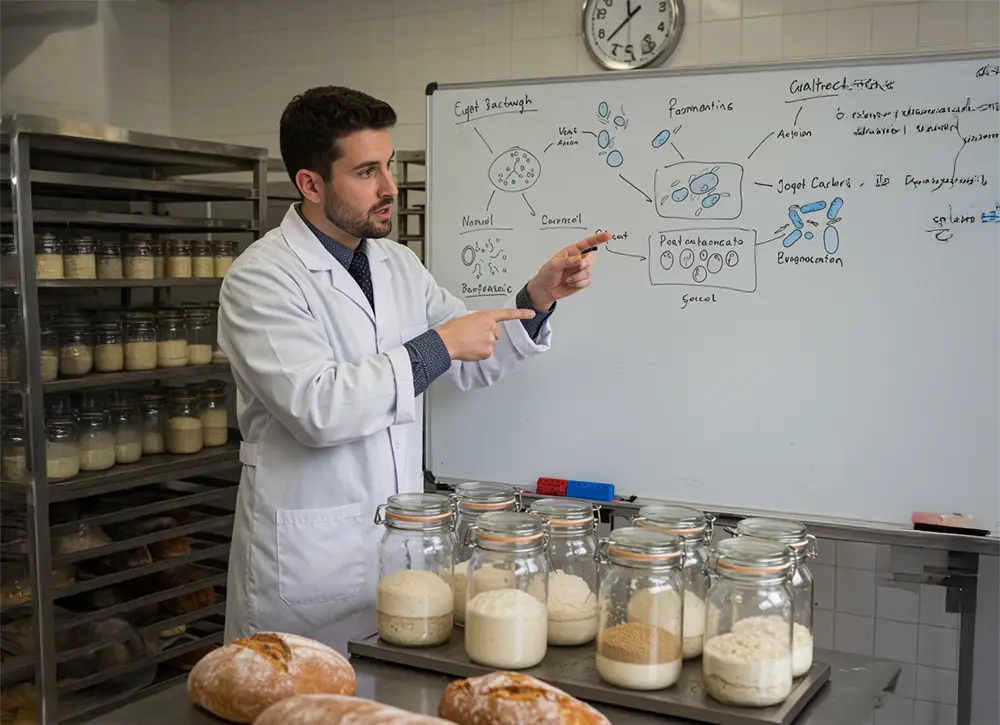
You can read more about the fascinating science behind this process in our article on sourdough fermentation science.
What You'll Need
Ingredients
- Flour — Plain white flour (also called all-purpose flour) is the easiest place to start. Using at least some wholemeal or rye flour speeds things up, because whole grain flours carry more wild yeast and bacteria. A blend of the two works brilliantly.
- Water — Tap water is fine in most cases. If your water is heavily chlorinated, leave it in an open glass for 30 minutes before using it, or use filtered water. Chlorine can slow fermentation. Learn more in our guide to water quality for sourdough.
Equipment
- A clean glass jar (at least 500ml capacity)
- A kitchen scale (grams are far more reliable than cups)
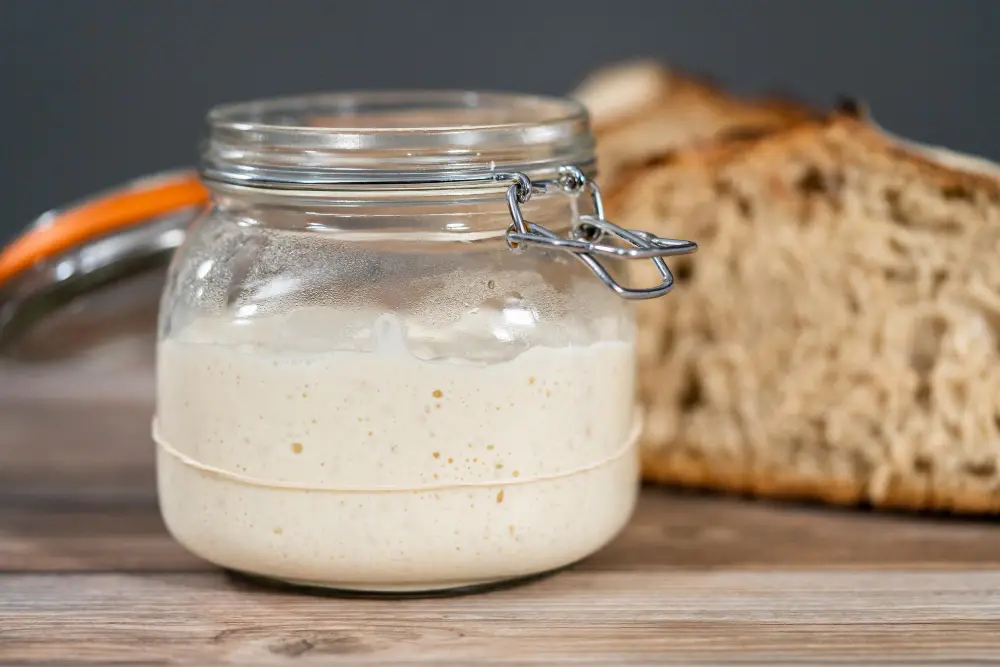
- A rubber band or piece of tape to mark the rise
- A dough scraper or spatula
- A loose lid or cloth cover — the starter needs airflow, not an airtight seal
How the Process Works
Creating a sourdough starter takes 5 to 7 days for most people, though cooler kitchens can extend this to 10–14 days. Temperatures between 21°C and 26°C are ideal. The process is the same each day: you discard most of what you have, then add fresh flour and water. This daily feeding dilutes acids that have built up, replenishes food for the microorganisms, and gradually shifts the microbial balance toward the wild yeast and lactic acid bacteria you want.
The key to success is equal weights of flour and water — a 1:1 ratio by weight. This gives a thick, paste-like consistency that ferments reliably. Volume measurements are not accurate enough for this.
The Day-by-Day Sourdough Starter Guide
Day 1: Mix and Wait
In your clean jar, combine equal weights of flour and water (using a blend of plain white and wholemeal is a great start). Stir vigorously until no dry flour remains and the mixture looks like a thick, smooth paste. Loosely cover the jar, leave it at room temperature, and mark the level on the outside with a rubber band.
What to expect: Not much yet. The mixture may smell like raw flour or nothing at all. You've created the environment — now you wait for the wild microorganisms to establish themselves.
Day 2: Signs of Life (Maybe)
Discard most of your starter, keeping only a small amount in the jar. Add fresh flour and water in equal weights and stir well. Cover loosely and leave at room temperature.
What to expect: You may see a few small bubbles beginning to form. A slightly sour, almost cheesy smell is common — this is early bacterial activity, not the good kind yet, but a sign the process has begun. No visible change is also completely normal at this stage.
Day 3: The Funky Phase
Repeat the same process — discard most of the mixture, add fresh flour and water in equal weights, stir, and cover.
What to expect: Day 3 is often when things get a little odd. Your starter may smell unpleasant — somewhere between gym socks, nail polish remover, or very strong cheese. This happens because certain bacteria get going before the more desirable lactic acid bacteria take over.
This phase is completely normal. Do not throw it out.
You might also see a layer of dark, watery liquid sitting on top or pooling at the bottom. This is called hooch — a sign your starter is hungry and has metabolised everything available. Pour or stir it off and proceed with your feeding.
Day 4: Things Start to Change
Discard, feed with equal weights of flour and water, stir, cover, and leave.
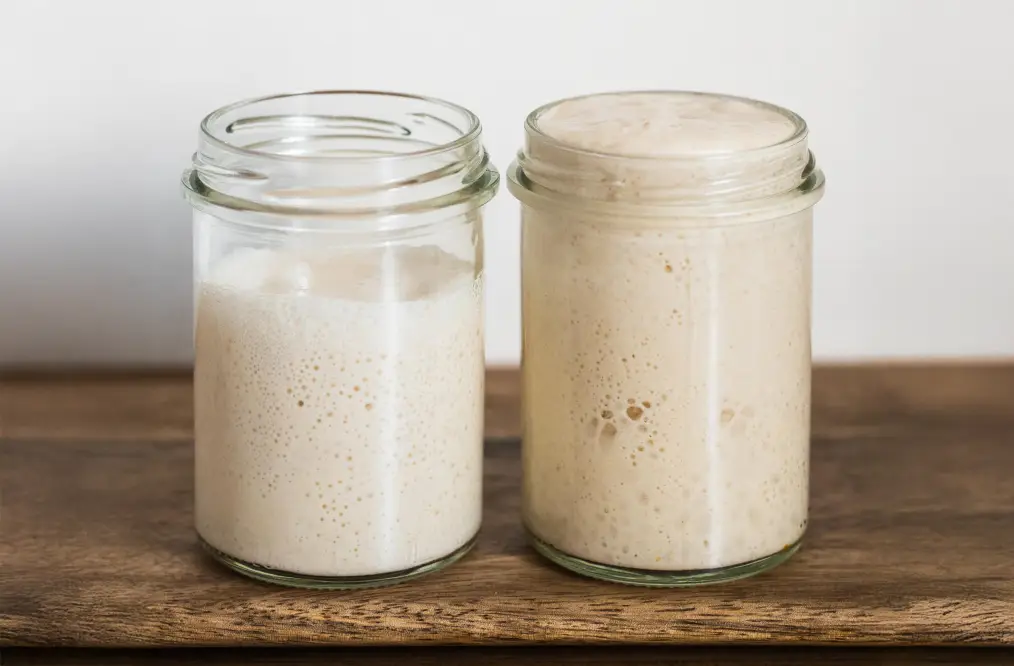
What to expect: The smell should begin to shift — less funky, more pleasantly sour or yeasty. You should start to see more consistent bubbling throughout the mixture. The texture may look more airy and sponge-like after a few hours. If you marked your jar, you may notice the starter rising above the line before falling back down. This rise-and-fall cycle is the key pattern to track from here.
Day 5: Getting Active
From Day 5, consider feeding twice a day if your kitchen is warm and the starter is showing strong activity (lots of bubbles, clearly rising within a few hours of each feed). If it's still sluggish, once a day is fine.
What to expect: A healthy starter at this stage will rise predictably, have a pleasant sour smell (think natural yoghurt or mild vinegar), and be full of bubbles throughout the mass — not just on the surface. The texture when you stir it should feel almost elastic.
Day 6–7: Approaching Readiness
Continue twice-daily feedings. At each feeding, note the time and how long it takes to reach its peak height.
What to expect: By Day 6 or 7, a starter that's ready to bake with will:
- Double (or more) in size within 4–8 hours of being fed
- Smell pleasantly sour — not harsh, not rotten
- Show bubbles throughout the entire mixture, not just on top
- Pass the float test (see below)
How to Know When Your Starter Is Ready
This is the question every new baker asks. Knowing the answer takes a little practice — which is why we've written a full guide on how to know when your sourdough starter is ready to bake with.
The short version:
The Float Test
Drop a small spoonful of starter into a glass of water. If it floats, it has enough gas production to leaven bread. If it sinks, it needs more time.
Important caveat: The float test is a useful starting point, but it's not foolproof. A starter can pass the float test and still produce an underperforming loaf. Visual and sensory cues — doubling in size, active bubbling, a pleasant sour smell — are just as important.
The Doubling Test
Feed your starter and mark the jar. If it reliably doubles or more within 4–8 hours and then begins to fall, it's ready.
Common Problems (And How to Fix Them)
My starter smells terrible
Very strong, unpleasant smells in the first few days are normal. If the smell hasn't shifted to something pleasantly sour by Day 5 or 6, check your feeding frequency and temperature. A warmer spot in your kitchen (near the oven or on top of the fridge) can help.
There's a liquid layer on top
This is hooch — a harmless byproduct of fermentation. It forms when your starter is hungry. Stir or pour it off and feed your starter. If this keeps happening, try feeding more frequently.
My starter has pink, orange, or fuzzy patches
This is mould. It's caused by contamination, usually from unclean equipment or airborne spores. A mouldy starter should be discarded and started again with a very clean jar.
It's been 7 days and nothing is happening
Don't give up. Some starters take 10–14 days, particularly in cooler kitchens or when using heavily processed white flour. Try:
- Swapping some of your plain flour for wholemeal or rye (rye is especially effective at kickstarting activity)
- Moving the jar somewhere warmer
- Using water that has been left to sit for 30 minutes to allow chlorine to dissipate
Maintaining Your Starter After It's Active
Once your starter is reliably doubling and smelling great, you have two options:
- Bake every day or two — keep the starter at room temperature and feed it once or twice daily.
- Store it in the fridge — feed it once a week and pull it out 12–24 hours before baking. This is the low-maintenance approach most home bakers use.
Read our full guide to storing your sourdough starter in the fridge for everything you need to know about the long-term routine.
If you ever neglect your starter and it seems to have gone dormant, don't panic — most starters can be revived. Our guide on how to revive a neglected sourdough starter walks you through the rescue process step by step.
What to Do with the Discard
Every time you feed your starter, you'll discard most of it. This might feel wasteful, but it doesn't have to be. Sourdough discard is a genuinely useful ingredient — slightly sour, full of flavour, and perfect for pancakes, crackers, flatbreads, and more. We've rounded up the best ideas in our guide on what to do with sourdough discard.
Ready to Take It Further?
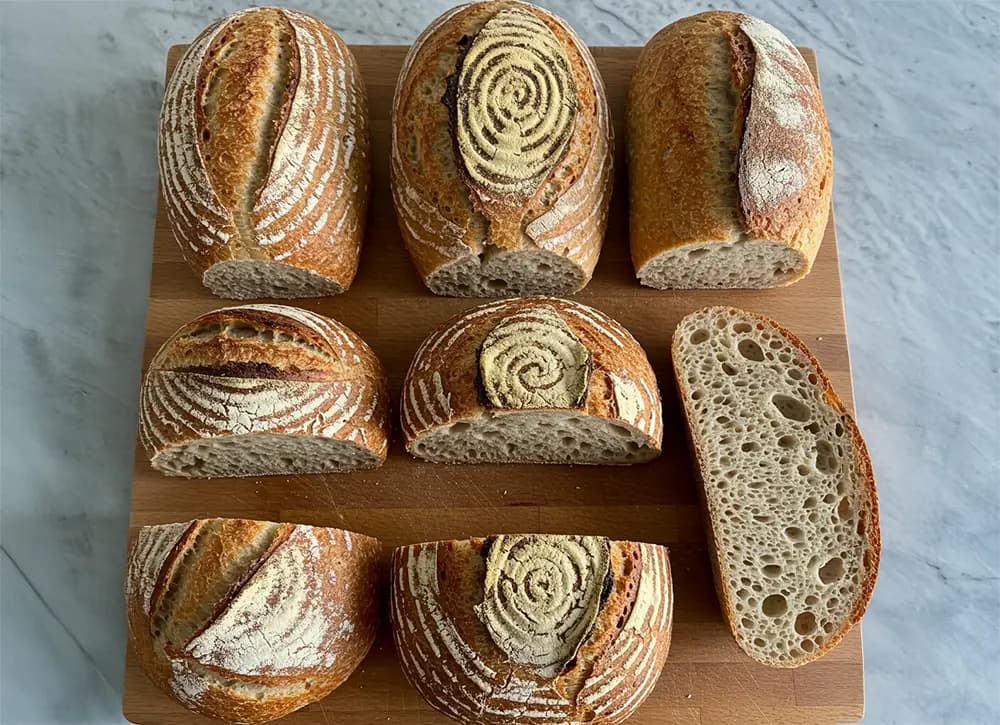
Making a starter is the first step. Baking your first loaf — knowing how to shape it, score it, and get that open, blistered crust — is the next one. Our complete beginner's guide to sourdough bread covers everything that comes after.
Or, if you'd rather learn hands-on with expert guidance alongside you, our sourdough workshops are designed exactly for that. In three hours, you'll go from raw ingredients to a finished loaf — and you'll take it home. Find out what to expect at a sourdough workshop and book your spot.
Further reading: King Arthur Baking's sourdough starter guide offers additional tips on flour choices and troubleshooting, and the Wikipedia entry on sourdough has a solid overview of the microbiology involved if you want to dig deeper.