
Maintaining a Sourdough Starter: The Long-Term Care Guide
You did it. You mixed flour and water, watched bubbles appear out of nowhere, and coaxed a wild culture to life. Your sourdough starter is active, healthy, and ready to bake with.
Now comes the part nobody talks about enough: keeping it that way.
A sourdough starter is a living ecosystem — a carefully balanced community of wild yeasts and lactic acid bacteria that needs consistent care to stay strong. The good news is that long-term sourdough starter maintenance is much simpler than most people expect. With the right routine, your starter can last for years — even decades. (Bakers around the world maintain starters that are generations old, and some of the oldest documented cultures have been kept alive for over a century.)
This guide covers everything you need to know: feeding schedules, fridge storage, what to do when life gets in the way, how to revive a neglected culture, and how to reduce waste with sourdough discard. Whether you bake every week or only a few times a year, there is a maintenance routine that fits your life.
If you are just getting started, read our Complete Beginner's Guide to Sourdough Bread first, then come back here when you are ready to think about the long game.
What Is a Sourdough Starter, and Why Does It Need Maintenance?
Before getting into the how, it helps to understand the why.
A sourdough starter is a fermented mixture of flour and water that contains wild yeast and lactic acid bacteria (LAB). These two groups of microorganisms live in balance and feed on the carbohydrates in flour. The wild yeast produces carbon dioxide (which makes your bread rise), while the bacteria produce lactic and acetic acids (which give sourdough its flavour and help preserve the loaf).
The problem is that these organisms eat constantly. Left without fresh food, they exhaust the available sugars, the environment becomes too acidic, and the culture weakens. Regular feeding replenishes the food supply, dilutes the acids, and keeps the population thriving.
The frequency of feeding — and the method you use — depends entirely on where you store your starter and how often you bake.
Two Approaches to Sourdough Starter Maintenance
There are two main ways to maintain a sourdough starter, and choosing between them comes down to one question: how often do you bake?
Counter Maintenance (Room Temperature)
If you bake every day or every couple of days, keeping your starter on the kitchen bench at room temperature is the most practical approach. An active, room-temperature starter typically needs feeding once or twice a day — sometimes more in warm weather.
When it works well:
- You bake frequently (at least 2–3 times per week)
- Your kitchen stays between 18°C and 24°C
- You enjoy the daily ritual of checking and feeding your starter
The downside: A room-temperature starter demands consistent attention. Miss a feed or two and it will become over-fermented and acidic, which weakens the culture and affects the flavour of your bread.
Fridge Maintenance (Cold Storage)
For most home bakers, storing the starter in the fridge is the smarter long-term strategy. Cold temperatures (around 3–5°C) dramatically slow the metabolism of the microorganisms, reducing feeding frequency to roughly once a week.
This is the approach we recommend for the majority of people who bake on weekends or a few times a month. It dramatically reduces waste, saves flour, and takes the pressure off your schedule without harming the starter.
For a full walkthrough of cold storage technique, see our dedicated guide: How to Store Your Sourdough Starter in the Fridge.
Understanding Feeding Ratios
One of the most confusing parts of sourdough starter maintenance is making sense of feeding ratios. You will see notation like 1:1:1 or 1:5:5 in recipes and guides. Here is what it means.
How Feeding Ratios Work
A feeding ratio describes the relative weights of three components:
[starter] : [flour] : [water]
So a 1:1:1 ratio means you take 1 part existing starter and feed it with 1 part flour and 1 part water by weight. A 1:5:5 ratio means 1 part starter is fed with 5 parts flour and 5 parts water.
The higher the ratio (more flour and water relative to starter), the longer the starter takes to reach peak activity — but it will also stay at peak for longer before declining. This matters because you want your starter at peak activity when you use it to bake.
How Much Starter Do You Need to Maintain?
Many bakers maintain far more starter than they actually need, which leads to a lot of waste. For most home bakers, keeping a small, modest quantity is plenty — enough to feed regularly and have sufficient active starter for a bake, without discarding large amounts each time.
The key is to match your maintained quantity to your typical recipe needs. If you regularly use a large amount of active starter, maintain enough to produce that comfortably after a feed. If you bake smaller batches, you can maintain much less. Working out the right quantity for your baking rhythm is one of those practical calibrations that becomes intuitive quickly.
Flour Choices for Feeding
Strong white bread flour is the standard choice for feeding and gives a reliable, consistent result. However, you can also use wholemeal, rye, or a blend — these contain more nutrients and wild yeast food, which can produce a more vigorous culture.
Many experienced bakers keep a small amount of rye in their feeding flour to maintain a lively, well-flavoured starter. For more detail on how different flours behave, see The Best Flour for Sourdough Bread in our ingredients guide.
How to Feed Your Sourdough Starter
Whether you are feeding a counter starter or preparing a fridge starter to bake with, the process is the same.
What You Need
- Digital kitchen scales (essential — volume measurements are not accurate enough)
- A clean glass jar or container with a loose-fitting lid
- Strong white bread flour (or your preferred feeding flour)
- Unchlorinated water at room temperature (filtered or left to sit overnight)
- A rubber spatula or chopstick for stirring
The Feeding Process
Step 1: Discard. Remove your starter from the fridge (if stored cold) and keep only a small amount of the existing culture. Discard the rest, or save it as discard for recipes (more on this below).
Step 2: Add flour and water. Add your flour and water directly to the jar with the retained starter. Use a ratio appropriate to your needs and timeline — a smaller proportion of starter to fresh flour and water means a slower rise and more time before it peaks; a higher proportion means a faster rise.
Step 3: Mix well. Stir thoroughly until no dry flour remains. A clean, homogenous mixture ensures even fermentation.
Step 4: Mark and cover. Use a rubber band or marker to note the height of the mixture on the outside of the jar. This lets you track how much it rises. Cover loosely — the culture needs to breathe and off-gas carbon dioxide.
Step 5: Store. Leave at room temperature until your starter reaches peak activity (it should double or more in size and show a domed surface), then use it for baking or return it to the fridge.
Sourdough Starter Maintenance When You Bake on Weekends
This is the routine that suits most home bakers. It balances minimal effort with a consistently healthy culture.
The Weekly Rhythm
Mid-week maintenance feed: Take the starter out of the fridge, discard down to a small amount, and give it a fresh feed. Leave at room temperature for a few hours until active and bubbly, then return to the fridge. This is purely a health feed — you are keeping the culture strong, not preparing to bake.
Day before baking: Remove the starter from the fridge and feed it again, this time calculating the ratio so that by the following morning you will have enough active starter at peak for your recipe. Leave at room temperature overnight (typically 8–12 hours) so it reaches peak activity by baking time.
Baking day: Use your active starter at or just past its peak. After baking, retain a small amount and return it to the fridge to start the cycle again.
The exact amounts, ratios, and timings vary with your flour, your kitchen temperature, and your schedule. Finding the rhythm that works in your specific environment is part of the craft — and something that hands-on experience develops quickly.
How to Know When Your Starter Is Ready to Bake With
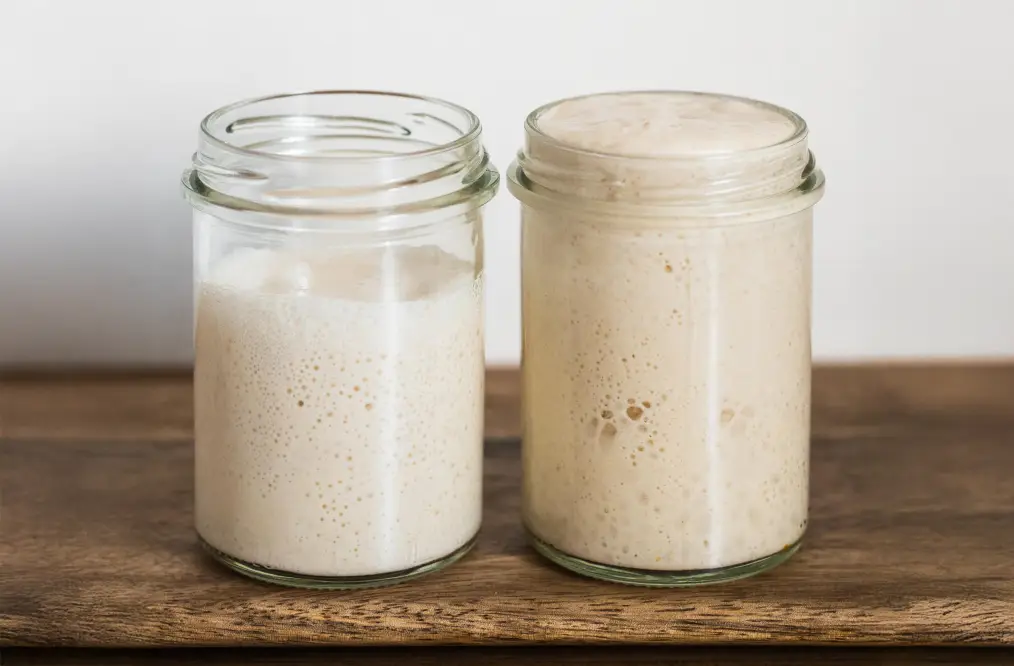
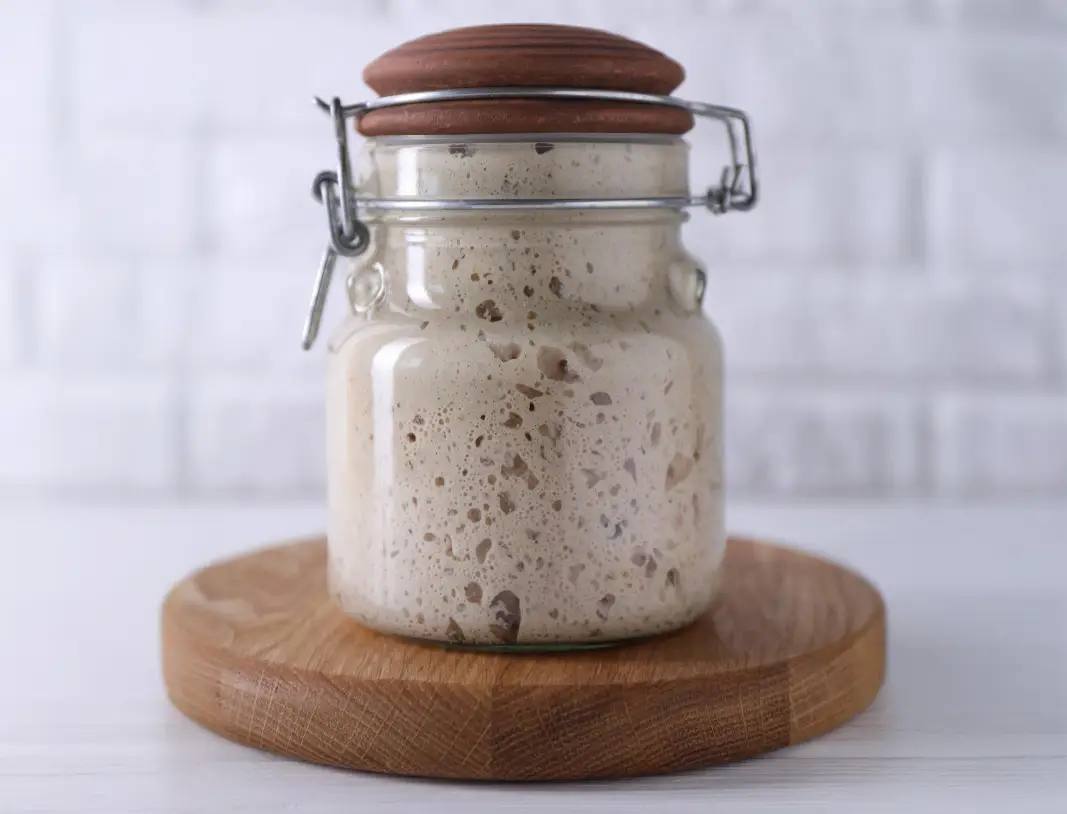
Your starter is at peak activity when it has roughly doubled in size, the surface is domed (not yet collapsed), and it looks visibly bubbly throughout. If you tap the jar, the mixture should wobble and look aerated rather than dense.
The classic "float test" — dropping a small spoonful into water to see if it floats — is a quick check that works reasonably well. A starter that floats is full of carbon dioxide and ready to use. One that sinks needs more time.
For a much more detailed breakdown of all the visual and tactile cues, see How to Know When Your Sourdough Starter Is Ready to Bake With.
Sourdough Starter Maintenance When You Bake Daily
If you bake every day or several times a week, a counter-based routine will suit you better than fridge storage.
Room Temperature Feeding Schedule
At typical UK kitchen temperatures (around 18–22°C), a starter on the counter generally needs feeding once every 12–24 hours. In summer, when kitchens can exceed 24°C, feeding twice a day may be necessary.
Each feed follows the same pattern: discard the majority of your starter down to a small retained amount, feed with fresh flour and water at an appropriate ratio, mark the jar, and allow it to rise before the next feed or use.
Over time you will develop a feel for your starter's rhythm — how long it takes to peak, how long it holds at peak before falling, and what it smells and looks like at different stages.
Reading the Signs
A healthy counter starter will:
- Rise predictably after each feeding
- Smell pleasantly yeasty and mildly tangy (not unpleasantly sharp or like nail polish remover)
- Show lots of bubbles throughout
- Double in size reliably
When the smell shifts toward very strong vinegar, alcohol, or acetone, that is a sign the starter is hungry and over-fermented. Feed it sooner next time.
Understanding What Your Starter Is Telling You
Regular sourdough starter maintenance involves learning to read your culture. Here are the most common things you will see and what they mean.
Liquid on Top (Hooch)
If a greyish or dark liquid pools on the surface of your starter, do not panic. This is called "hooch" — it is alcohol produced by the yeast as a by-product of fermentation, and it means your starter is hungry.
You can either:
- Pour it off before feeding (this will reduce acidity slightly)
- Stir it back in before feeding (this will increase acidity, giving more sour flavour)
Either approach is fine. The hooch itself is not harmful — it is simply a signal that your feeding schedule needs adjusting.
Pink or Orange Streaks
This is the one colour you do not want to see. Pink or orange pigmentation can indicate contamination with Serratia marcescens or similar bacteria. Discard the affected starter, sterilise your jar, and start fresh. Do not bake with a contaminated starter.
White Spots or Fuzzy Growth
Fuzzy growth — usually white, grey, or green — is mould, and it means contamination has taken hold. This typically happens when the starter is left too long without feeding, or when the jar was not clean. Discard the starter entirely, sterilise the container, and begin again.
Occasional white film on the surface with no fuzziness is usually just dried-out starter or a film of yeast — harmless. If in doubt, smell it: a healthy starter smells pleasantly fermented, never foul.
Slow Rising or No Activity
If your starter seems sluggish and is not doubling reliably, the most common causes are:
- Cold temperature — fermentation slows significantly below 18°C
- Over-fermentation — if the starter was already past its peak before you fed it
- Chlorinated water — chlorine and chloramine in tap water can inhibit yeast. Switch to filtered water or leave tap water out overnight before using
- Old flour — stale flour or flour stored near strong odours can affect fermentation
- Infrequent feeding — a starter that has been neglected for a long time may need several consecutive feeds to bounce back
If your starter has gone completely dormant, see the section below on reviving a neglected starter — or read our dedicated guide: How to Revive a Neglected Sourdough Starter.
Sourdough Starter Maintenance Over Longer Breaks
Life gets in the way. Holidays, busy periods, moving house — sometimes sourdough maintenance drops off the list. Here is how to manage your starter through extended breaks.
Short Breaks (1–2 Weeks)
The fridge handles this with no special preparation. Feed your starter normally, then put it in the fridge. It will happily wait for 1–2 weeks without any feeding. When you return, take it out, discard and feed, allow it to come back to room temperature and become active, then bake or return to your regular routine.
Medium Breaks (2–4 Weeks)
For a break of 2–4 weeks, feed your starter at a higher ratio before refrigerating (more food means it can sustain itself for longer in the cold). When you come back, expect it to take 1–3 feeds over a day or two to return to full strength.
Long Breaks (Over a Month) — Drying and Freezing Your Starter
For extended absences of a month or more, you have two preservation options.
Drying: Spread a thin layer of active starter on a sheet of baking parchment or a silicone mat. Leave it at room temperature until it dries completely and can be broken into flakes (usually 24–48 hours). Store the flakes in an airtight container or zip-lock bag at room temperature. Dried starter can last for years. To reactivate, dissolve a tablespoon of flakes in water, add flour, and begin feeding as normal. It may take several days to return to full activity.
Freezing: Feed your starter and allow it to peak. Then add some additional dry flour to stiffen it and freeze in an airtight container. Frozen starter can last many months. To revive, thaw in the fridge overnight, then proceed with normal feeding. Expect a few feeds before it is fully active again.
Drying is generally preferred over freezing because it is more reliable — ice crystals can damage the yeast cells in a frozen starter, and some reduction in activity is common.
Travelling With Your Starter
Some bakers take their starter with them on holiday. A sealed jar with a freshly fed, cold starter will stay stable in hand luggage or a cool bag for a day or two. [Note: liquid starters may be subject to airport liquid restrictions — dried starter flakes travel without any issues.]
A more practical option for most people is to leave a well-fed starter in the fridge with a trusted friend or neighbour who can give it a single feed at the mid-point of a longer trip.
How to Revive a Neglected Sourdough Starter
No matter how careful you are, there will come a time when your starter is forgotten at the back of the fridge for six weeks, or left on the counter over a long bank holiday weekend. Neglect happens to everyone.
The good news is that sourdough starters are remarkably resilient. As long as there is no visible mould or pink/orange contamination, a neglected starter can almost always be revived.
Signs of a Neglected (But Recoverable) Starter
- A thick layer of hooch on top
- A flat, sunken appearance with no bubbles
- Strong smell of alcohol, acetone, or sharp vinegar
- Darker, almost grey colouration throughout
None of these is cause for panic. These are signs of over-fermentation and starvation, not permanent damage.
The Revival Process
Revival follows the same pattern as regular feeding, but done consistently and more frequently — typically twice a day for several days.
On the first feed, discard most of the starter and give it a fresh feed of flour and water. Don't expect much activity straight away. As you continue feeding daily (or twice daily), activity gradually increases. The smell will shift from sharp and alcoholic toward pleasantly yeasty, and the starter will begin to rise more predictably. Most neglected starters are reliably active again within five to seven days of consistent care.
Patience is the key variable. The first couple of feeds may produce almost nothing visible. Keep going.
For a more detailed step-by-step guide including how to tell the difference between a dormant and a genuinely dead starter, read: How to Revive a Neglected Sourdough Starter.
Reducing Waste: What to Do With Sourdough Discard
One of the most common frustrations with regular sourdough starter maintenance is the discard. Every time you feed your starter, you remove and dispose of most of the culture to prevent it growing out of control. Over time, this can feel wasteful — particularly when you are discarding good-quality, fermented flour.
The good news is that sourdough discard is genuinely useful in the kitchen. It is not "waste" — it is an ingredient.
What Is Sourdough Discard?
Discard is simply unfed or partially-fed starter — it lacks the strength to leaven a loaf on its own (without being given time to peak), but it still contains flavour, fermented flour, and a mild acidity that works brilliantly in a wide range of baked goods.
It can be used immediately or stored in the fridge in a separate container for up to a week or two before using.
What Can You Make With Sourdough Discard?
The range of discard recipes is broader than most people realise:
- Flatbreads and crumpets — quick, no-rise recipes where the discard adds flavour rather than structure
- Pancakes and waffles — discard pancakes are one of the most popular uses; they are light, slightly tangy, and use up a large amount of discard at once
- Crackers — thin, crisp, and full of flavour; ideal for using a large quantity of discard in one batch
- Muffins, quick breads, and banana bread — the acidity in discard interacts with bicarbonate of soda to create lift; it also adds moisture and a subtle sour note
- Pizza dough — using discard as part of your pizza base adds flavour without needing the starter to leaven the dough (you can add commercial yeast for the rise)
- Pasta — a small amount of discard added to an egg pasta dough adds complexity and a slight chew
For recipes and ideas, see our full guide: What to Do With Sourdough Discard.
How to Store Discard
Collect your discard in a separate jar or container and keep it in the fridge. Fresh discard (from a recently fed starter) will have a milder flavour; older discard stored for a week or more will become more sour as the fermentation continues slowly in the cold. Both are useful — it just depends on the recipe and how strong a flavour you want.
Sourdough Starter Maintenance: Troubleshooting Common Problems
Even with a solid routine in place, you will occasionally run into issues. Here is a quick-reference guide to the most common problems.
My Starter Isn't Rising After Feeding
Most likely cause: Cold environment, weak culture from under-feeding, or chlorinated water.
Fix: Move the starter somewhere warmer (on top of the fridge is a classic option), switch to filtered or bottled water, and feed twice daily for a few days to build strength. A small addition of rye or wholemeal flour to the feeding mix can also accelerate recovery, as these contain more nutrients for the microorganisms.
My Starter Smells Like Nail Polish Remover
Most likely cause: Over-fermentation. The culture has exhausted its food supply and is producing ethyl acetate as a by-product.
Fix: Feed sooner next time. If storing in the fridge, try moving to a more frequent feeding schedule. Pour off the hooch before feeding to reduce acidity.
My Starter Has Separated Into Liquid and Solid Layers
Most likely cause: The culture has been sitting for too long between feeds and the liquids have separated.
Fix: Stir the layers back together and feed as normal. This is not a sign of damage — it is simply a consequence of time and gravity.
My Starter Looks Fine but My Bread Is Flat
Most likely cause: The starter may be past its peak when you use it, or the timing of your levain build is off.
Fix: Bake with your starter when it has risen to its peak (usually when it has doubled and the top is domed). If the starter passes the float test but the bread still lacks rise, the issue may lie elsewhere — see our Sourdough Troubleshooting Guide for a full diagnostic breakdown.
My Starter Is Getting Too Sour
Most likely cause: Long fermentation times and warmer temperatures favour acetic acid (vinegar-like sourness). A starter fed infrequently or kept in a warm kitchen will often produce more acidity.
Fix: Feed more frequently, reduce the fermentation temperature, or use the starter a little earlier in its peak. Using a higher feeding ratio will dilute the acidity and produce a milder-flavoured starter over time.
Advanced Starter Maintenance: Tips From Experienced Bakers
Once you have mastered the basics, there are a few techniques that experienced bakers use to fine-tune their starters.
Maintaining Two Starters
Some bakers keep two separate cultures: one that is fed primarily with white flour for a mild, clean flavour, and one fed with a rye or wholemeal blend for a more complex, flavourful profile. This gives you flexibility to choose the right starter for the right bread.
Adjusting Hydration
Most starters are maintained at 100% hydration — equal weights of flour and water, giving a thick batter-like consistency. However, you can also maintain a stiffer starter (around 65% hydration, similar to a firm dough) or a more liquid starter. Each behaves differently:
- Stiff starters ferment more slowly, produce more acetic acid (tangier flavour), and are easier to control in warm weather
- Liquid starters ferment faster, produce more lactic acid (milder, yoghurt-like sourness), and are easier to mix and handle
For most home bakers, 100% hydration is the easiest place to start and maintain. Adjusting hydration is a worthwhile experiment once you are confident with the basics. For more on how hydration affects your bread, see Understanding Hydration in Sourdough.
Boosting a Sluggish Starter
If your starter needs a lift, these tricks can help:
- Add a small amount of rye flour to one or two feedings. Rye is rich in minerals and wild yeast food and tends to produce a more vigorous fermentation
- Increase the ambient temperature by placing the jar in the oven with just the light on (if your oven has one) or near a radiator
- Use a small amount of fruit water (water in which raisins, apple, or grapes have been soaked for a day) as the hydration for one feed. Fruit skins carry wild yeasts that can reinforce a weak culture
- Feed more frequently — twice a day for 3–5 days — to build a stronger, more active population
The Importance of a Clean Jar
Over time, old fermentation residue builds up on the sides of your jar. This can harbour unwanted bacteria and affect the flavour of your starter. Every few weeks, transfer your starter to a clean, sterilised jar. A quick wash in hot soapy water followed by a rinse with boiling water is sufficient.
How Long Does a Sourdough Starter Last?
Theoretically, indefinitely — and in practice, some do. The Boudin Bakery in San Francisco famously claims to have maintained the same starter since the California Gold Rush. There is no expiry date on a well-maintained starter.
What kills starters is neglect, contamination, or inconsistency — not time. A starter that is fed regularly, stored properly, and kept away from contaminants can outlive its owner.
This is partly why sourdough starters develop such attachment from the people who keep them. They are not just ingredients — they are a continuous living project. Many bakers name their starters, share portions with friends, and feel genuine pride in nurturing a culture through years of baking.
Sourdough Starter Maintenance: Your Questions Answered
How often should I feed my sourdough starter?
If stored at room temperature, a starter typically needs feeding once every 12–24 hours depending on temperature. If stored in the fridge, feeding once a week is usually sufficient for a healthy culture.
Can I use tap water to feed my starter?
You can, but chlorine and chloramine — added to UK tap water to kill harmful bacteria — can also inhibit the wild yeast and bacteria in your starter. If your tap water is heavily treated, use filtered water or leave tap water in an open container overnight to allow the chlorine to dissipate. See Sourdough and Water: Does Water Quality Matter? for more detail.
What is the best flour for feeding a sourdough starter?
Strong white bread flour works well for most starters. Adding a small proportion of rye or wholemeal flour (10–20%) can boost activity and add flavour. Avoid self-raising flour — the baking powder will interfere with fermentation. For a detailed guide, see The Best Flour for Sourdough Bread.
Can I overfeed my sourdough starter?
Not in the sense of giving it too much food — more flour just means a longer wait before it peaks. However, feeding a starter before it has had a chance to process its current food can dilute the microbial population unnecessarily and lead to a sluggish culture. If you are feeding twice a day, try to wait until the starter shows some activity before the next feed, rather than feeding on a rigid clock.
Does my starter need to be covered?
Yes, but not airtight. Your starter needs to breathe and off-gas carbon dioxide during fermentation. A loose-fitting lid, a piece of cloth secured with a rubber band, or a jar lid rested on top (not screwed down) are all ideal.
My starter has been in the fridge for three months. Is it ruined?
Probably not. Take it out, discard most of it, and begin feeding twice a day for 3–5 days. It may take several feeds before it is visibly active again, but most starters that have been cold and undisturbed for months — even years — can be brought back. For a full revival guide, see How to Revive a Neglected Sourdough Starter.
Ready to Put Your Starter to Work?
Maintaining a healthy sourdough starter is the foundation of every great loaf you will ever bake. With a reliable routine in place, your starter becomes less of a chore and more of a quiet companion in the kitchen — always there, always ready, always improving.
Once you are confident with your maintenance routine, the natural next step is to deepen your understanding of the baking process itself. The way you feed your starter, the timing of fermentation, and the temperature of your kitchen all connect directly to the quality of your finished bread. These are exactly the kinds of skills that take years to develop on your own — but can be mastered in a single focused session with the right guidance.
Our sourdough workshops are designed to turn knowledgeable home bakers into confident ones. Over three hands-on hours, you will work with your own dough, learn to read fermentation by instinct rather than timers, and leave with a loaf you made yourself — and the knowledge to repeat it at home.
Find out what to expect at a sourdough workshop →
Not sure which workshop is right for you? We offer classic white, rye, and gluten-free sessions — read our comparison guide: Classic vs Rye vs Gluten-Free: Which Workshop Is Right for You?
More From the Sourdough Fundamentals Series
- The Complete Beginner's Guide to Sourdough Bread
- How to Make a Sourdough Starter from Scratch
- The Science Behind Sourdough Fermentation
- Understanding Hydration in Sourdough
- How to Know When Your Sourdough Starter Is Ready to Bake With
- Sourdough Terminology Decoded: A Glossary for New Bakers
- How to Store Your Sourdough Starter in the Fridge
- How to Revive a Neglected Sourdough Starter
- What to Do with Sourdough Discard