
The Science Behind Sourdough Fermentation
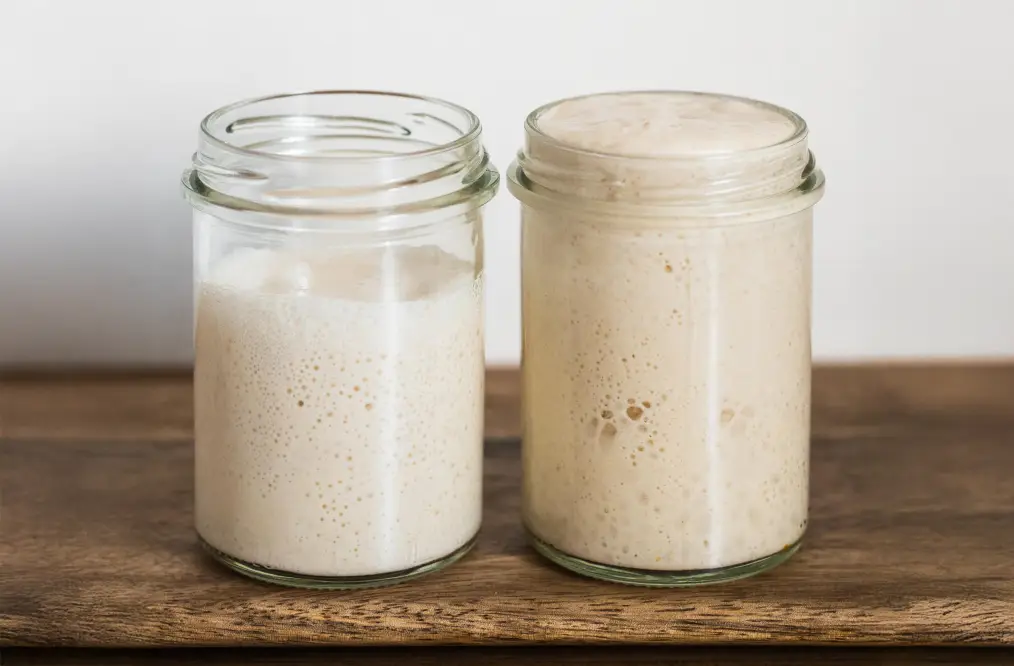
There is a moment in every new sourdough baker's journey where something clicks. You have been feeding a paste of flour and water for a week, watching it bubble and rise and smell increasingly strange, and then one morning it doubles in size before your eyes and smells like something genuinely delicious. That moment is not luck. It is biology — thousands of microorganisms doing exactly what they are built to do.
Understanding the science behind sourdough fermentation will not just satisfy your curiosity. It will make you a dramatically better baker. When you understand why dough behaves the way it does, troubleshooting stops being guesswork. You stop following a timer and start reading the dough itself.
This article covers the full picture: the microorganisms involved, the chemical reactions they drive, what they do to flavour and texture, and why time and temperature are the two variables that control almost everything. We have kept the technical detail accurate but written it for anyone — not just food scientists.
What Is Fermentation, Really?
The word "fermentation" gets used loosely in everyday cooking. In a strict scientific sense, fermentation is a metabolic process in which microorganisms convert carbohydrates — sugars and starches — into other compounds, releasing energy in the process. No oxygen is required. This makes it fundamentally different from the way your body burns fuel.
In sourdough, fermentation is carried out by two main groups of microorganisms working together: wild yeasts and lactic acid bacteria (LAB). Both live naturally on cereal grains, in flour, on your hands, and in the air. When you mix flour with water and leave it at room temperature, you create an environment where certain strains thrive and others do not survive. What you end up cultivating is not random — it is a stable, self-selecting community.
This community is often called a microbial ecosystem. The bacteria and yeast in a healthy sourdough starter are not simply coexisting — they are cooperating and competing in ways that have been refined over millennia of traditional bread-making.
The Two Key Players
Wild Yeast: The Gas Producers
When most people think of yeast in bread, they think of commercial baker's yeast — Saccharomyces cerevisiae in its dried, predictable, shelf-stable form. Sourdough uses wild relatives of this species alongside entirely different yeast genera.
The most commonly identified wild yeasts in mature sourdough starters include:
- Kazachstania humilis (formerly Candida humilis) — the dominant species in many wheat sourdoughs
- Saccharomyces cerevisiae — present in many starters, especially those fed frequently
- Kazachstania unispora and other Kazachstania species — common in rye and wholegrain starters
Wild yeasts consume simple sugars — primarily maltose, which is released when enzymes break down the flour's starch — and produce carbon dioxide gas and ethanol as by-products. The carbon dioxide is what makes dough rise. It gets trapped in the gluten network and expands during baking, giving sourdough its open, airy crumb.
What makes wild yeast different from commercial yeast is temperament. Commercial yeast is a single, highly optimised strain. Wild yeast communities are diverse and slower-acting. They produce a more complex flavour profile and they are strongly influenced by temperature — a characteristic that gives sourdough bakers far more control over the process than commercial yeast ever could.
Lactic Acid Bacteria: The Flavour Architects
Lactic acid bacteria are the other half of the sourdough equation, and arguably the more important half for flavour. The most significant species belong to the Lactobacillaceae family, particularly:
- Lactobacillus sanfranciscensis (now reclassified as Fructilactobacillus sanfranciscensis) — the most studied sourdough LAB, named after San Francisco sourdough
- Leuconostoc mesenteroides — common in early-stage starters
- Lactobacillus plantarum — a hardy, adaptable species found across many fermented foods
LAB consume sugars and produce lactic acid and acetic acid — the two organic acids that give sourdough its characteristic tang. They also produce flavour compounds including acetate esters, diacetyl, and a range of volatile molecules that contribute to the complex aroma of a well-fermented loaf.
The ratio of lactic acid to acetic acid is critical and is shaped by temperature and hydration:
- Lactic acid produces a mild, yoghurt-like sourness. It dominates at warmer temperatures (above 25°C) and in wetter doughs.
- Acetic acid (the acid in vinegar) produces a sharper, more assertive tang. It dominates at cooler temperatures and in stiffer doughs.
This is why a long, cold overnight proof in the fridge produces a more complex, sharply sour flavour than a warm room-temperature ferment. You are tilting the acid balance toward acetic acid simply by controlling temperature.
How the Fermentation Process Unfolds
Fermentation in sourdough does not happen all at once. It unfolds in a sequence of overlapping stages, each one setting the conditions for the next.
Stage 1: Enzymatic Breakdown (Autolyse and Early Mixing)
Before the microorganisms even get going properly, enzymes present in the flour itself begin breaking down the starch and proteins. The key enzymes here are:
- Amylases — break down starch chains into simpler sugars (primarily maltose) that yeast and bacteria can consume
- Proteases — break down some of the protein structure in the flour, which softens the dough and improves extensibility
This is one reason an autolyse — the technique of mixing just flour and water before adding the starter and salt — can improve the final loaf. You are giving enzymes a head start.
Stage 2: Initial Fermentation (Lag Phase)
When you add your active starter to the dough, the microorganisms do not immediately explode into activity. There is a short lag phase while they adapt to their new environment. The length of this phase depends on how active your starter is, how much of it you added, and the temperature of your dough.
At 25–28°C with a well-fed starter, this lag phase might be just 30–60 minutes. At 18°C, it could be several hours.
Stage 3: Bulk Fermentation (Exponential Growth)
This is the main event. Yeast and bacteria multiply rapidly, consuming sugars and producing CO₂ and acids. The dough increases in volume — typically by 50–100% for most sourdough formulas — and the gluten network strengthens through a combination of fermentation gases and the fold sequences you apply.
During bulk fermentation, several things happen simultaneously:
- CO₂ production inflates the gluten bubbles throughout the dough
- Acid production strengthens the gluten network (mildly) but will weaken it if fermentation goes too far
- Enzymatic activity continues to break down starches and proteins
- Flavour development accelerates — the volatile compounds responsible for sourdough's aroma are building up
Understanding bulk fermentation deeply will change your baking more than almost any other single piece of knowledge. We cover it in detail in our article on bulk fermentation.
Stage 4: Cold Proof (Retardation)
When shaped dough goes into the fridge overnight, fermentation does not stop — it slows dramatically. Yeast activity nearly halts below about 4°C, but LAB can continue working at lower temperatures than yeast can tolerate. This gap in activity is what makes the cold proof so useful for flavour: the bacteria keep developing acids while the dough structure is largely preserved.
A cold proof also makes the dough easier to score (because it is firmer) and can improve oven spring, as the yeast resumes activity rapidly when the dough hits a hot oven.
What Fermentation Does to Gluten
Gluten is the protein network that gives bread dough its structure and elasticity. It forms when two proteins found in wheat flour — glutenin and gliadin — hydrate and link together into long, elastic chains.
Fermentation interacts with gluten in ways that are still being studied, but the key effects are well understood:
Acid strengthens gluten — up to a point. Mild acidification (a pH of around 5–5.5) actually strengthens gluten bonds. This is one reason a properly fermented sourdough can hold its shape better than a non-fermented dough. However, if fermentation continues too long and the dough becomes very acidic (pH dropping below 4.5), the gluten begins to degrade. This is over-fermentation: the dough loses structure and becomes sticky, slack, and hard to work with.
Protease activity loosens the dough. The proteases in flour — and any proteases produced by LAB — break down some gluten proteins over time. At the right level, this is beneficial: it makes the dough more extensible and improves the final crumb. At too high a level, it destroys structure. Whole grain flours and rye have higher protease activity than white flour, which is why they require different handling.
For a deeper dive into how gluten behaves during shaping, see our guide on how to shape sourdough bread.
The Role of Temperature
Temperature is the single most powerful variable in sourdough fermentation. It controls:
- The speed of yeast activity — yeast is most active between 25–35°C and nearly inactive below 4°C
- The balance of lactic vs acetic acid — warmer temperatures favour lactic acid; cooler temperatures favour acetic acid
- Enzyme activity — amylase and protease activity increases with temperature up to a point, then denatures
- The relative activity of yeast vs LAB — yeasts and bacteria respond to temperature changes differently
This table gives a rough guide to temperature effects on fermentation:
| Temperature | Fermentation speed | Flavour profile |
|---|---|---|
| 4–8°C (fridge) | Very slow | Acetic-dominant, sharp tang |
| 18–20°C | Slow | Balanced, complex |
| 24–26°C | Moderate | Mild, slightly lactic |
| 28–32°C | Fast | Strongly lactic, milder tang |
| Above 35°C | Very fast / unstable | Overly lactic, risk of over-fermentation |
This is why bakers in warm climates often struggle with over-fermentation, and why bakers in cooler kitchens find their dough takes longer than a recipe says. A recipe that says "bulk ferment for 4 hours" was written for a specific kitchen temperature — yours may be entirely different.
The only reliable way to read fermentation is by watching the dough, not the clock. Learn to look for a 50–75% volume increase, a domed surface, bubbles at the edges, and a dough that jiggles when you shake the bowl. These signs tell you far more than the timer does.
What Fermentation Does to Flavour
The flavour of sourdough is the product of dozens of chemical compounds produced during fermentation. The main ones are:
Lactic acid — soft, milky sourness. The dominant acid in most sourdoughs fermented at room temperature.
Acetic acid — sharp, vinegary tang. More prominent in cold-proofed or stiff doughs.
Ethanol — produced by yeast alongside CO₂. Mostly bakes off during baking but contributes some fruity notes beforehand.
Diacetyl and acetoin — buttery, creamy notes. Produced by some LAB strains.
Esters — fruity, floral aromas. Produced by yeast and vary widely by wild yeast species.
Aldehydes and ketones — form during the Maillard reaction (the browning of the crust) and add caramel, nutty, and toasty notes.
Research published in journals including Food Microbiology has catalogued well over 300 volatile flavour compounds in sourdough, depending on the flour used, the fermentation time and temperature, and the microbial community in the starter. This is why sourdoughs from different starters, different bakers, and different regions taste so distinct from one another — and so distinct from commercial yeast bread.
What Fermentation Does to Nutrition
This is where the science gets interesting for anyone who has ever been told that bread is bad for them.
Phytic Acid Reduction
Whole grains contain phytic acid (phytate), a compound that binds minerals like iron, zinc, and calcium and prevents them from being absorbed. Research has shown that the acidic environment of sourdough fermentation significantly reduces phytic acid levels — making the minerals in sourdough more bioavailable than in non-fermented bread.
Improved Digestibility of Gluten
The long fermentation process breaks down some of the gluten proteins that cause digestive discomfort in sensitive (though not coeliac) individuals. Proteases work on these proteins over the many hours of fermentation. This does not make sourdough safe for people with coeliac disease — it remains a wheat product — but it may explain why many people who struggle with commercial bread digest sourdough more comfortably.
We cover this topic in much more detail in our article on whether sourdough is easier to digest.
Lower Glycaemic Impact
The organic acids produced during fermentation slow starch digestion and reduce the glycaemic index of the bread. Studies including one published in Acta Diabetologica have found that sourdough bread produces a more gradual blood glucose response than commercial yeast bread made from the same flour. This is an area of active ongoing research.
Why Your Starter Matters More Than You Think
A sourdough starter is not just a leavening agent. It is the microbial community that determines everything about the fermentation in your dough — the flavour, the speed of rise, the balance of acids, and the behaviour of the dough during shaping and baking.
A well-established, regularly fed starter contains a stable, adapted community of yeast and LAB that have evolved to thrive together in your specific flour and water. This is why starters that have been maintained for years tend to perform more consistently and develop more complex flavour than a starter that is only a few weeks old.
The relationship between a baker and their starter is genuinely symbiotic. You feed it; it performs for you. Miss a few weeks in the fridge without feeding and that community starts to weaken, which is why understanding how to look after your starter properly is just as important as understanding fermentation itself.
If you are just starting out, our complete step-by-step guide to making a sourdough starter from scratch covers everything you need to get going, including the signs to look for at each stage of development.
The Microbiology of Starter Stability
One of the remarkable things about a mature sourdough starter is how stable it is. You might expect a jar of flour and water left on your counter to be colonised by all sorts of unwanted organisms. In practice, a healthy starter resists contamination extremely well.
The reason is competitive exclusion. The LAB in your starter produce organic acids that lower the pH of the environment to around 3.5–4.5. Most spoilage organisms and pathogens cannot survive at this level of acidity. The yeast and LAB native to sourdough starters, on the other hand, are acid-tolerant — in many cases, acid-loving — and continue to thrive in conditions that eliminate their competition.
This is also why you should not panic when your starter develops a layer of liquid on top (commonly called "hooch") or changes colour slightly after a long time without feeding. These are signs of a stressed starter, not a dead one. The underlying microbial community is usually still viable. Our guide on how to revive a neglected sourdough starter walks you through exactly how to bring one back.
What Happens to Fermentation in the Oven
Fermentation does not end when the dough goes in the oven. There is one final stage — sometimes called oven spring — that happens in the first few minutes of baking when the dough hits high heat.
As the dough temperature rises rapidly, yeast activity initially accelerates before the yeast cells die at around 60°C. This brief burst of activity produces a final surge of CO₂ that expands the loaf rapidly. Simultaneously, the gases already trapped in the dough expand due to heat.
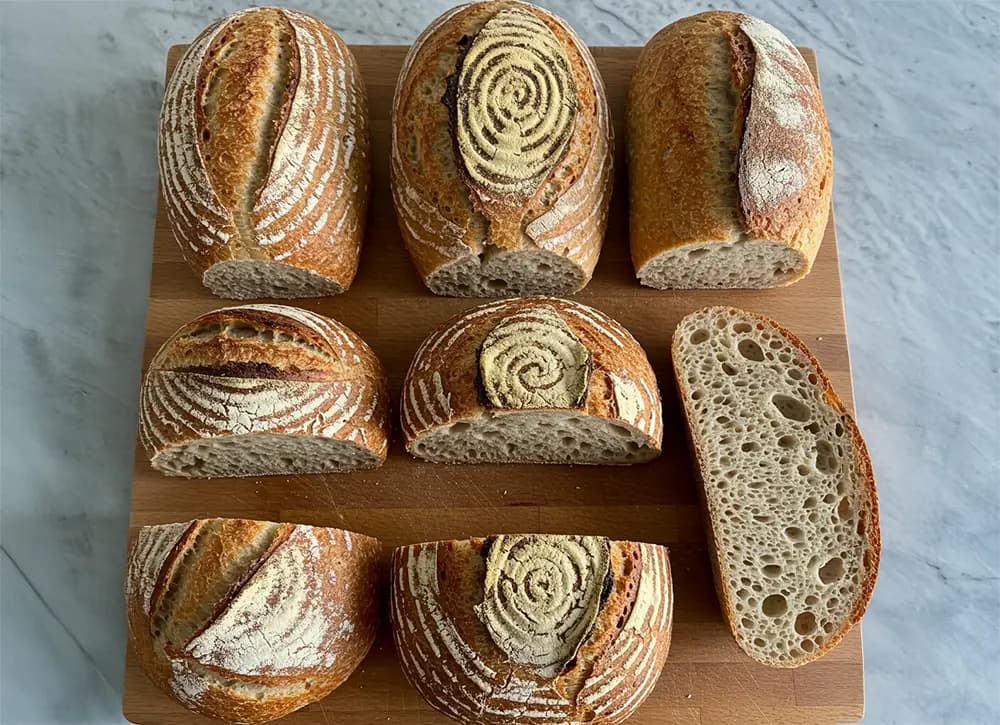
At around 60°C, starch gelatinises — it absorbs the water in the dough and sets the crumb structure. At around 75°C, the gluten network solidifies permanently. These two events together "fix" the structure of the loaf, and the crumb you cut into once the bread has cooled is the record of every fermentation decision you made over the previous 12–24 hours.
The crust forms last, as the outer surface of the loaf reaches the temperature of the oven and the Maillard reaction kicks in — browning sugars and amino acids into the hundreds of flavour compounds that give a sourdough crust its colour, crunch, and deep, roasted complexity.
Putting the Science to Work
Understanding fermentation science is not about memorising textbooks. It is about building a mental model that helps you make better decisions at every stage of the process.
When your dough is not rising, you can ask: is my starter truly active? Is my kitchen too cold? Did I add too much salt too close to the starter? (Salt inhibits microbial activity, which is why it is best incorporated after the starter is mixed in.)
When your bread tastes too mild, you can ask: did I ferment long enough? Was my dough too warm? Did I skip the cold proof?
When your dough is sticky and hard to shape, you can ask: did I over-ferment and allow the acids to degrade the gluten too far? Our article on why sourdough turns out sticky and hard to shape covers these scenarios in detail.
The science gives you a framework for answering these questions yourself — which is what separates a baker who follows recipes from a baker who truly understands what they are doing.
Learn Sourdough Fermentation Hands-On
Reading about fermentation is one thing. Feeling it — pressing your hands into properly fermented dough, smelling the difference between a starter at peak activity and one that has peaked and fallen, watching the oven spring happen in real time — is something else entirely.
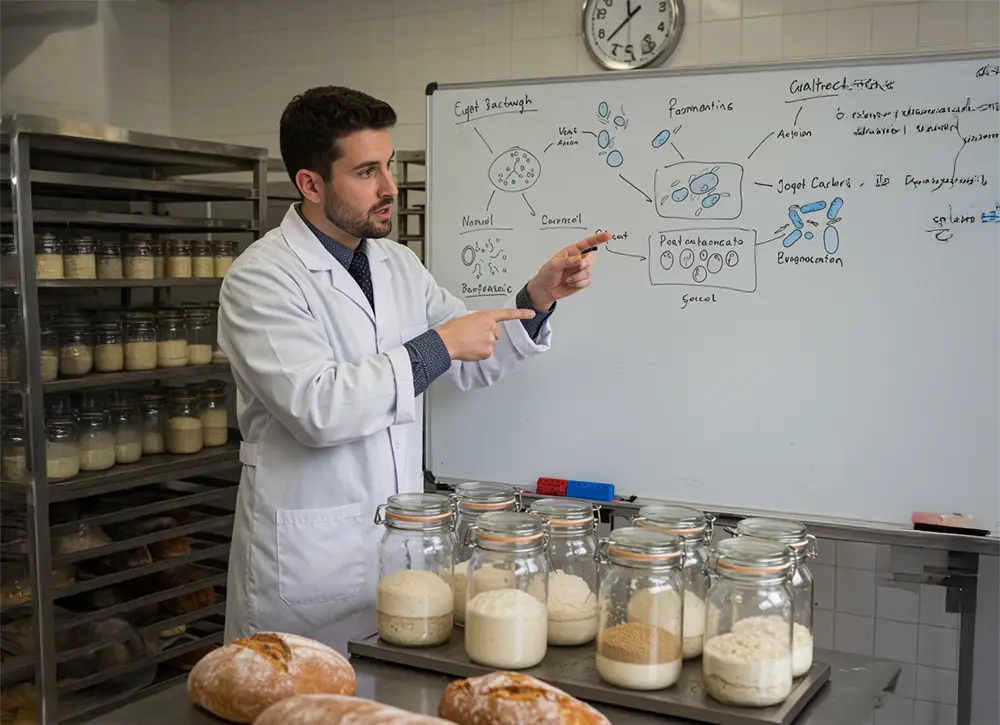
In our sourdough bread-making workshops, we cover the science behind fermentation in a way that connects directly to the bread you are making in front of you. You will mix, ferment, shape, and bake a loaf in a single session, and every step is explained in terms of what is actually happening at a microbial and structural level.
If you are not sure which workshop is right for you — we run sessions covering classic wheat sourdough, rye sourdough, and gluten-free sourdough — our workshop comparison guide will help you decide.
Summary: The Key Principles
Sourdough fermentation is driven by a stable community of wild yeast and lactic acid bacteria that live in your starter. Wild yeasts produce the CO₂ that makes dough rise. Lactic acid bacteria produce the organic acids that give sourdough its flavour, its nutritional advantages, and its resistance to spoilage.
Temperature is the variable that controls almost everything. Warmer conditions produce faster fermentation and milder, lactic flavour. Cooler conditions slow fermentation and shift the balance toward the sharper, more complex acetic acids.
Fermentation is not just about leavening. It changes the nutritional profile of the flour, reduces phytic acid, partially breaks down gluten proteins, and lowers the glycaemic response of the finished bread.
And the best part? None of this requires a laboratory or a science degree. It requires a starter, some flour, and the patience to watch what happens when you leave living organisms to do their work.
Ready to go deeper? Start with our Complete Beginner's Guide to Sourdough Bread for a full overview of the process, or explore sourdough hydration explained to understand how water content shapes both fermentation and the finished loaf.