
How to Get an Open Crumb in Sourdough
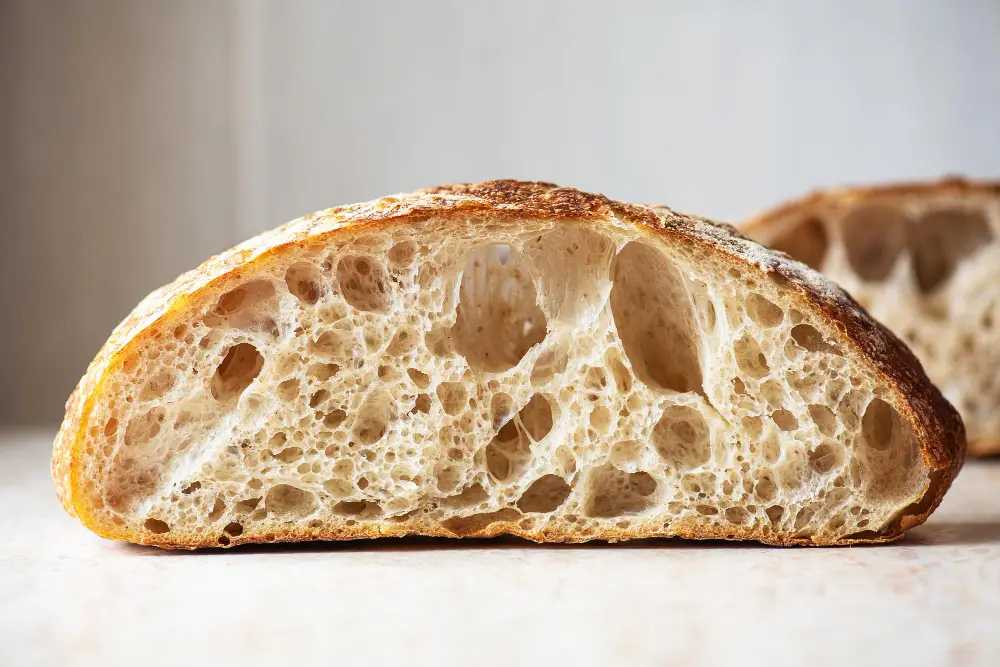
That big, glossy cross-section of sourdough with wide, irregular holes — you've seen it all over social media. It's called an open crumb, and it's one of the most satisfying things you can achieve as a home baker. It also happens to be one of the trickiest.
The good news is that an open crumb isn't luck. It's the result of a few specific decisions made at different stages of the bake. Get those right, and the holes follow. This guide walks you through exactly what those decisions are — and the mistakes that close the crumb down.
What Is an Open Crumb?
An open crumb refers to the internal structure of a sourdough loaf. A crumb is "open" when it has large, irregular air pockets spread throughout the interior. The walls between the holes should be thin, shiny, and slightly chewy.
The opposite is a tight or dense crumb — fine, uniform bubbles packed closely together. Neither is wrong, exactly. Tight crumbs work well in sandwich loaves where you need structure. But if you're after that classic artisan bakery look and feel, open crumb is the goal.
Sourdough crumb structure is closely tied to gluten network development and gas retention during fermentation. The more intact and extensible that gluten network is, the better it holds the bubbles produced by your starter.
The Four Factors That Control Crumb Openness
Open crumb isn't achieved at one single step. It's built across the entire process. These four factors have the biggest influence.
1. Fermentation Timing
Fermentation is where the air bubbles are made. Your wild yeast and bacteria produce carbon dioxide gas as they feed on the flour. The gluten network traps that gas, and — if everything else goes to plan — those bubbles become the holes in your crumb.
The tricky part is timing. Under-fermented dough doesn't have enough gas development, and the gluten is tight and inelastic. The result is a dense loaf with small, uneven holes. Over-fermented dough breaks down the gluten structure so thoroughly that it can't hold the gas at all. The dough becomes slack and sticky, and the loaf spreads flat in the oven.
The sweet spot is a bulk fermentation where the dough has grown by around 50–75%, feels airy and domed on top, and shows small bubbles on the surface and sides. The dough should jiggle when you shake the container, not slosh.
Temperature has an enormous effect on how quickly fermentation moves. At 24°C, bulk fermentation might take 4–5 hours. At 20°C, it could take 8–10 hours. Learn to read the dough rather than the clock.
For a detailed breakdown of bulk fermentation timing and what to look for, read our guide: Bulk Fermentation Explained.
2. Stretch and Fold Technique
Stretch and folds are performed during bulk fermentation to build gluten strength progressively without deflating the dough. They're one of the most important tools for achieving an open crumb.
During each set, you grab one side of the dough, stretch it upward until you feel resistance, then fold it over the centre. You rotate the bowl and repeat on all four sides. That's one set. Most bakers do four sets spaced roughly 30 minutes apart in the first two hours of bulk fermentation.
What stretch and folds actually do:
- They align the gluten strands into a stronger, more organised network
- They redistribute fermentation gases evenly through the dough
- They build the dough's ability to hold large gas bubbles without collapsing
- They add structure without kneading, which would knock the air out
By the final set, you should notice the dough is noticeably tighter, smoother, and holds its shape better when released. This is the gluten network developing.
A variation worth knowing is the coil fold, which is preferred by many bakers for wetter doughs. Instead of folding in the bowl, you lift the dough from underneath with wet hands, let the ends hang and fold under, then rotate and repeat. Coil folds are gentler on gas bubbles and suit high-hydration doughs particularly well.
3. Hydration Level
Higher hydration doughs tend to produce more open crumbs. This is because water makes the dough more extensible — the gluten network can stretch further without tearing, which means bubbles can grow larger before they burst.
Most classic sourdough recipes sit between 70–80% hydration. For a noticeably open crumb, many bakers aim for 75–80%. Going higher than 80% is possible, but it demands very strong gluten development and confident shaping skills. If the dough is too wet and your technique isn't there yet, the structure will collapse.
A note on flour: Higher protein flour holds more water and forms a stronger gluten network. Strong bread flour (12–13%+ protein) is better suited to high-hydration doughs than plain flour. The protein content matters more than the brand.
For more on this, see The Best Flour for Sourdough Bread.
4. Shaping Tension
Shaping is where many bakers unknowingly lose the open crumb they've worked all day to build.
The goal of shaping is to create surface tension across the outside of the loaf. This tension holds the structure during the final proof and gives the loaf height and direction in the oven. But shaping too aggressively — pulling too hard, folding too many times, or degassing the dough — destroys the bubbles you've built during fermentation.
The aim is minimal but purposeful shaping. You want to create tension, not compress the dough. Two or three smooth, confident movements are better than ten tentative ones.
Key shaping principles for open crumb:
- Pre-shape gently. A light round on the bench is enough. Let it rest for 20–30 minutes before final shaping.
- Final shape with decisive movements. Drag the dough toward you across the bench to build surface tension without flipping or folding repeatedly.
- Once shaped, the dough should look taut and smooth on top. You should be able to see the tension in the surface.
- Don't flour your bench too heavily. Some friction between the dough and the surface is what creates the tension.
For step-by-step shaping technique including boule and batard shapes, see How to Shape Sourdough Bread.
Does Scoring Affect the Crumb?
Yes — but indirectly. Scoring is about controlling where the loaf expands in the oven. A well-placed score lets the loaf open along a defined line, which gives the interior room to expand freely. Without a good score, the crust can restrict the rise and compress the crumb.
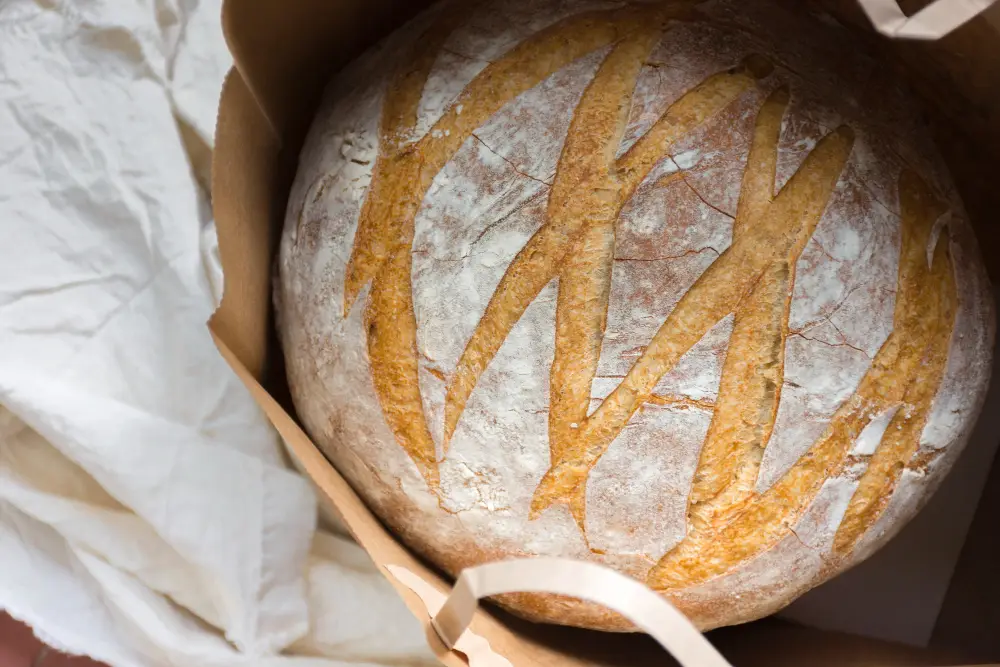
A single deep score (typically at 30–45 degrees to the surface) is the most effective for maximising oven spring and crumb openness. Decorative scoring patterns look beautiful but can reduce the depth of expansion if they're too shallow or numerous.
See Scoring Sourdough: Patterns, Tools, and Technique for the full breakdown.
Why Steam Matters for Crumb Openness
Steam in the first 20 minutes of baking keeps the crust soft and pliable. A soft crust lets the loaf expand freely before setting. If the crust hardens too early, it acts like a shell and restricts the internal rise — which compresses the crumb.
Baking in a preheated Dutch oven traps steam from the dough itself, creating the ideal environment for an open, well-risen crumb. After the first 20 minutes, remove the lid to let the crust colour and crisp.
More on this in Dutch Oven Sourdough: Why Steam Matters.
Common Mistakes That Close the Crumb
Even when bakers understand the theory, a few consistent mistakes show up again and again.
Using a weak or young starter
A starter that isn't at peak activity doesn't produce enough gas to create an open crumb. Before you try to troubleshoot hydration or technique, make sure your starter is doubling reliably within 4–8 hours of feeding and smells pleasantly tangy. An active starter is the foundation everything else depends on.
Cold, slow fermentation without adjustment
Retarding the dough overnight in the fridge is a popular technique — and it works well — but it changes how fermentation behaves. If you're already doing a full bulk fermentation at room temperature and then also doing a long cold proof, the dough can over-ferment and the structure breaks down. Match your total fermentation time to your dough's actual activity, not a rigid schedule.
Aggressive degassing during shaping
Pressing, folding, and re-rolling during shaping destroys gas bubbles directly. Once the dough is bulk fermented, treat it gently. Every time you press down on it, you're losing the work your starter spent hours doing.
Under-developed gluten structure
If you skip the stretch and folds or rush them, the gluten network won't be strong enough to hold large bubbles. Weak gluten means the gas escapes rather than being trapped. Take the full time with your folds, especially in the first hour of bulk fermentation.
Scoring too shallow
A shallow score seals up quickly in the oven heat and doesn't give the loaf enough room to burst. Use a sharp lame or razor blade and aim for at least 1–1.5 cm depth. A dull blade drags and tears rather than cutting cleanly, which also restricts the ear.
A Quick Reference: Open Crumb Checklist
| Stage | What to aim for |
|---|---|
| Starter | Active, doubling within 4–8 hours of feeding |
| Hydration | 75–80% for most bakers aiming for open crumb |
| Flour | Strong bread flour with 12%+ protein |
| Bulk fermentation | 50–75% rise, jiggly, surface bubbles visible |
| Stretch and folds | 3–4 sets in the first 2 hours, spaced 30 mins apart |
| Pre-shape | Gentle round, minimal degassing, 20–30 min bench rest |
| Final shape | Confident, minimal movements, good surface tension |
| Proof | Cold or room temp until dough springs back slowly when poked |
| Scoring | Deep (1–1.5 cm), sharp blade, 30–45 degree angle |
| Baking | Preheated Dutch oven, lid on for first 20 mins |
How Long Does It Take to Get Consistently Open Crumb?
Honestly? It takes practice. Most bakers get a noticeably more open crumb within 5–10 bakes once they start paying attention to these factors intentionally. The biggest leaps usually come from:
- Getting fermentation timing right (this takes the longest to dial in)
- Building confidence with shaping so it's fast and decisive
- Switching to strong bread flour if you've been using plain flour
Research on home baking shows that hands-on instruction significantly accelerates skill development compared to learning from written guides alone — which makes sense when you consider how much of sourdough is about feeling the dough rather than following rules.
Learn It Hands-On at a Workshop
Reading about gluten tension and fermentation timing only gets you so far. Feeling a well-fermented dough in your hands — and understanding what it's supposed to feel like — is a different kind of learning altogether.
At The Sourdough Code's Classic Sourdough Workshop, you'll work through the full process from an active starter to a shaped, scored loaf ready for the oven. Our bakers will walk you through bulk fermentation timing, stretch and fold technique, and shaping — the three things that have the biggest impact on crumb openness.
Find out what to expect at a workshop →
Not sure which workshop is right for you? Compare the Classic, Rye, and Gluten-Free workshops here →
Frequently Asked Questions
Why does my sourdough have big holes at the top and dense crumb at the bottom?
This usually means the dough was under-proofed. The large holes at the top come from the starter's gas forcing its way upward during baking, while the dense bottom means the gluten structure wasn't developed enough to hold bubbles throughout. Focus on adequate bulk fermentation and more thorough stretch and folds.
Does a higher hydration dough always give a more open crumb?
Not automatically — hydration gives the potential for open crumb, but you still need the gluten structure to support it. A high-hydration dough with weak gluten development will just spread and be dense. Build your gluten through stretch and folds before relying on hydration alone.
Can I get an open crumb with whole wheat or rye flour?
More whole grain flour in your dough generally closes the crumb down, because the bran particles physically cut through the gluten strands and puncture developing bubbles. You can still get a relatively open crumb with up to 20–30% whole wheat by extending fermentation slightly and handling the dough very gently. Beyond that, a tighter crumb is normal and expected.
My crumb looks open before baking but comes out dense — what happened?
This is almost always a shaping or oven issue. Either the shaping deflated too many bubbles, the dough over-proofed between shaping and baking, or the oven wasn't hot enough. Make sure your Dutch oven is fully preheated (at least 30 minutes at 230–250°C) before the dough goes in.
For the complete sourdough process from start to finish, see our guide: How to Make Classic Sourdough Bread: A Complete Guide.