
Do You Need a Banneton? Sourdough Proofing Basket Guide
You've followed the recipe. Your dough has fermented beautifully. Now you need to proof it — and someone online has told you that you must use a banneton. But do you really?
The short answer: no, you don't need one. But once you understand what a banneton actually does, you'll probably want one anyway.
This guide covers everything — what a banneton is, how it works, when it's worth buying, what you can use instead, and how to keep it in good shape for years of baking.
What Is a Banneton?
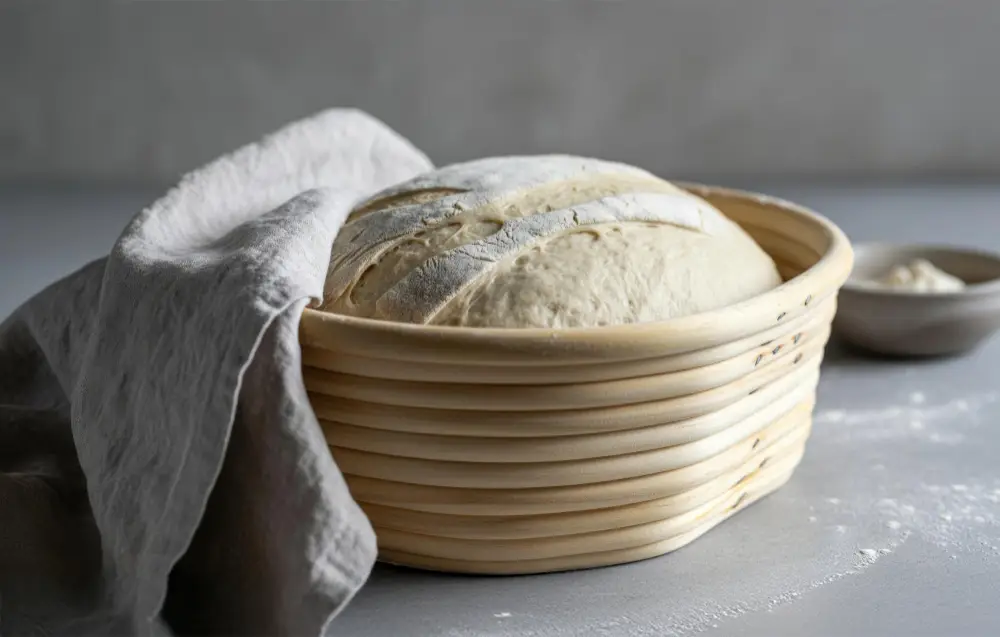
A banneton (pronounced ban-eh-TON) is a proofing basket used to support sourdough during its final rise before baking. It's also called a proofing basket, a brotform (the German term), or simply a bread basket.
Most bannetons are made from rattan cane, though you'll also find them made from:
- Cane with a linen liner — the liner gives a smooth crust without the signature spiral rings
- Unlined rattan — produces the classic flour-dusted ring pattern on your loaf
- Wood pulp — a budget-friendly option that works well but is less durable
- Wicker and woven materials — decorative but less consistent for baking purposes
They come in two main shapes: round (boule) and oval (batard). The size you need depends on your dough weight — a 750g–900g dough fits well in a standard 9-inch round banneton.
What Does a Banneton Actually Do?
A banneton serves three key purposes during the final proof:
1. It Holds the Dough's Shape
Sourdough dough — especially at higher hydration — is slack. Without support, it will spread outward rather than rise upward. A banneton holds the loaf in shape so it bakes tall, not flat.
This is the banneton's most important job. A well-shaped loaf isn't just about looks — it affects how evenly the bread bakes, how the crust forms, and how the scoring opens up.
2. It Creates the Right Surface Texture
The rattan cane absorbs moisture from the outer surface of the dough as it proofs. A slightly drier, tighter skin on the outside of the dough is what allows your scoring to open cleanly and gives you a better crust.
If the surface stays too moist, the dough can stick to your baking vessel and tear when you turn it out. It's also much harder to score cleanly.
3. It Helps with Cold Proofing (Retarding)
Most experienced bakers proof their sourdough overnight in the fridge — a technique called retarding. The banneton goes straight into the fridge, and the dough can be baked straight from cold, which improves flavour, crust colour, and makes scoring easier.
A banneton makes cold proofing much more practical. The dough holds its shape in the basket even through a long, cold overnight rest.
Do You Actually Need One?
Not strictly, no. A banneton is a tool that makes sourdough easier and more consistent — but bakers have been making excellent sourdough without them for centuries.
The real question is: what problem are you trying to solve?
| Your situation | Our recommendation |
|---|---|
| You're just starting out and want to keep costs low | Try a floured bowl first |
| Your loaves keep spreading flat | A banneton will help significantly |
| You're doing overnight cold proofs regularly | A banneton makes this much easier |
| You want the spiral ring pattern on your crust | You'll need an unlined rattan banneton |
| You're baking often (weekly or more) | Worth the investment |
If you're baking sourdough regularly and struggling with flat, spreading loaves, a banneton is one of the most impactful pieces of equipment you can add to your kit. You can shop our bannetons here, or pick one up as part of our Premium Sourdough Kit or Deluxe Bread Starter Kit if you're setting up from scratch.
Banneton Alternatives That Actually Work
A Floured Bowl
The simplest substitute. Line a medium bowl with a clean kitchen cloth (not terry cloth — the loops will stick), dust it generously with flour, and use it exactly as you'd use a banneton.
The dough won't have the same surface-drying effect, and you'll lose the ring pattern, but the shape support is there. This works surprisingly well for a first attempt.
A Floured Linen or Cotton Cloth (Couche)
A couche is a heavy linen cloth used by professional bakers to proof baguettes and batards. You can use a piece of heavy linen or canvas in the same way — dust it heavily with rice flour, nestle the shaped dough inside folds of the cloth, and proof it there.
This works well for oval shapes but less so for round loaves.
A Loaf Tin
If you're making a pan loaf rather than a free-form sourdough, a loaf tin does the same job. The walls of the tin provide all the shape support you need. This is a great option for beginners who aren't ready to manage free-form shaping.
A Colander or Sieve
In a pinch, a metal colander lined with a floured cloth can work as a makeshift proofing basket. The holes allow some airflow, which helps with surface drying. It's not ideal, but it's better than nothing.
How to Use a Banneton: Step by Step
Before the First Use
New bannetons need to be seasoned before use:
- Lightly mist the inside of the basket with water
- Dust generously with rice flour (preferred — it doesn't absorb moisture the way wheat flour does)
- Work the flour into the cane with your fingers
- Let it dry completely before using
This creates a base layer that prevents sticking on your first bake.
During Proofing
- Dust the inside of the banneton with rice flour. Be generous — especially in the spiral grooves of an unlined basket.
- Place your shaped dough seam-side up into the basket.
- Cover with a shower cap, plastic bag, or damp cloth to prevent the surface drying out.
- Proof at room temperature or in the fridge as your recipe requires.
Tip: Rice flour is far better than wheat flour for dusting a banneton. Wheat flour can turn sticky as it absorbs moisture from the dough, causing loaves to tear when turned out. Rice flour stays dry and powdery. Many bakers use a 50/50 mix of rice flour and plain flour.
Turning Out the Dough
When you're ready to bake, turn the dough directly from the banneton onto a piece of baking paper or into your preheated Dutch oven. Hold the banneton close to the surface and tip it firmly in one motion — don't hesitate.
If it sticks, gently work around the edges with a bowl scraper before trying again.
Banneton Sizes: Which One Do You Need?
| Dough Weight | Banneton Size |
|---|---|
| 500g–700g | 7–8 inch round |
| 750g–950g | 9 inch round or 10 inch oval |
| 1kg+ | 10–11 inch round |
When in doubt, go slightly larger. A dough that has room to expand slightly is better than one crammed into a too-small basket.
How to Clean and Care for Your Banneton
After Each Use
- Do not wash with soap and water. Rattan is porous — it will take a long time to dry and can develop mould if it stays damp.
- Tap out any loose flour and dough over the bin or sink.
- Leave the banneton in a warm spot to dry completely — overnight is ideal.
- Once dry, brush out any remaining debris with a stiff brush.
If Dough Has Dried Inside the Cane
If dough has stuck and dried in the grooves:
- Let it dry completely (don't try to scrape it out while wet — it just smears)
- Use a stiff brush or old toothbrush to work out the dried dough
- If necessary, briefly expose it to a low oven (around 120°C/250°F) for 10–15 minutes to kill any residual bacteria, then brush clean
Storing Your Banneton
Store it somewhere with good airflow. A kitchen cupboard with the door ajar is fine. Avoid sealed plastic bags or airtight containers — trapped moisture leads to mould.
If you won't be baking for a while, a light dusting of rice flour before storing helps maintain the seasoning.
When to Replace a Banneton
A well-cared-for rattan banneton can last for years — sometimes decades. Replace it if:
- The rattan starts to break apart and pieces of cane end up in your dough
- Mould has grown deep into the material and won't come out
- The shape has distorted significantly
Otherwise, a seasoned banneton that's been used dozens of times often performs better than a new one, because the accumulated flour in the cane provides excellent non-stick properties.
Lined vs Unlined Bannetons: Which Should You Choose?
Unlined Rattan
- Gives the classic spiral ring pattern on the crust
- Better airflow around the dough — good for surface drying
- Requires careful flouring to prevent sticking
- Slightly more fiddly for beginners
Linen-Lined
- Produces a smooth crust without the rings
- Easier to use — the linen is more forgiving than bare rattan
- The liner is removable and can be hand-washed
- A good choice if you want a cleaner look or prefer not to wrestle with flouring every groove
There's no performance difference between the two in terms of how your bread bakes. It's mostly about the aesthetic result and personal preference.
Banneton Tips from the Baking Bench
Use rice flour, not wheat flour. This is the single most common reason bannetons cause problems. Rice flour doesn't absorb moisture, so it stays slippery and dry. Wheat flour can get gummy and cause the dough to stick.
Proof seam-side up. When you place shaped dough into the banneton, the seam (where you closed the shaping) goes up. When you turn it out, the seam goes down and gets hidden by the base.
Don't skip the overnight dry. After baking, let the banneton dry completely before putting it away. This is the most important thing you can do to extend its life.
Cold proofing is easier with a banneton. If you want to bake straight from the fridge in the morning, the banneton makes this easy. Shape your dough in the evening, cover, and refrigerate. Bake it cold the next day — no waiting for it to come to temperature first.
Ready to Bake? Put It Into Practice
A banneton is a small investment that makes a noticeable difference — particularly if you've been struggling with flat, spreading loaves or sticky surfaces that tear when you score them.
We stock reliable rattan bannetons in both round and oval shapes in our equipment store. If you're setting up your kit from scratch, both our Premium Sourdough Kit and our Deluxe Bread Starter Kit include a banneton along with everything else you need to get baking.
And if you'd rather learn hands-on with an experienced guide walking you through every step — including shaping, proofing, and scoring — our sourdough workshops are a great way to build real confidence fast. Find out which workshop is right for you.