
Building a Rye Sourdough Starter
If you've ever baked with a standard wheat sourdough starter, you'll know it can be unpredictable. A rye sourdough starter is different — and in most ways, better. Rye flour is packed with the nutrients and natural sugars that wild yeast and bacteria love, which means your starter gets more active, more quickly.
Whether you're starting from scratch or converting your existing wheat starter, this guide walks you through the process of building a rye sourdough starter that's strong, reliable, and ready to bake with.
Why Use Rye Flour for Your Sourdough Starter?
Most bakers keep a wheat starter because that's what most recipes call for. But rye flour has some real advantages when it comes to fermentation.
Rye contains more pentosans — complex carbohydrates that absorb water and create a gel-like structure — as well as higher levels of amylase enzymes, which break down starch into the sugars that yeast feeds on. The result is a starter that ferments faster, develops more complex flavours, and stays active even when you're not feeding it on a strict schedule.
Here's why bakers choose rye for their starter:
- Faster fermentation: The extra nutrients in rye mean your starter rises more quickly and predictably.
- More resilience: A rye starter bounces back faster after being refrigerated or neglected.
- Deeper flavour: The earthy, slightly tangy character of rye adds complexity to any loaf — not just rye bread.
- Works across recipes: You can use a rye starter to leaven wheat, spelt, or gluten-free loaves. It's a versatile workhorse.
What You'll Need
Before you begin, gather these supplies:
- Whole rye flour (also labelled as wholemeal rye or dark rye) — whole grain flour contains more wild yeast and bacteria than light rye
- Non-chlorinated water — tap water that has been left to sit for 30 minutes, filtered water, or bottled water (chlorine can inhibit fermentation; see our guide on water quality for sourdough for more detail)
- A clean glass jar — at least 500ml capacity so there's room for growth
- Kitchen scales — accuracy matters here; use grams
- A rubber band or piece of tape — to mark the starter level so you can track its rise
Option 1: Building a Rye Starter from Scratch
Creating a rye starter from scratch takes 5–7 days. The process involves introducing wild yeast and bacteria from the flour and the environment, then feeding them regularly until the culture is stable.
The method follows the same pattern each day: you keep a small portion of what you have and feed it with fresh rye flour and water in equal weights. Daily discarding prevents the accumulation of acids that would make the environment too hostile for yeast, and ensures the culture is always being refreshed with new food. For ideas on what to do with the discarded portions, see our article on sourdough discard recipes.
What Happens Each Day
Days 1–2: Mix equal weights of whole rye flour and water in a clean jar. Cover loosely and leave at room temperature. You may see nothing on Day 1 — that's expected. By Day 2, small bubbles can begin to appear, and the smell may be quite unpleasant at this stage. This is caused by less desirable bacteria that are active early in the process. Don't worry — this phase passes.
Day 3: Discard most of the mixture, keeping just a small amount, and feed with fresh flour and water in equal weights. By this point, the smell may still be odd but bubbling should be more visible.
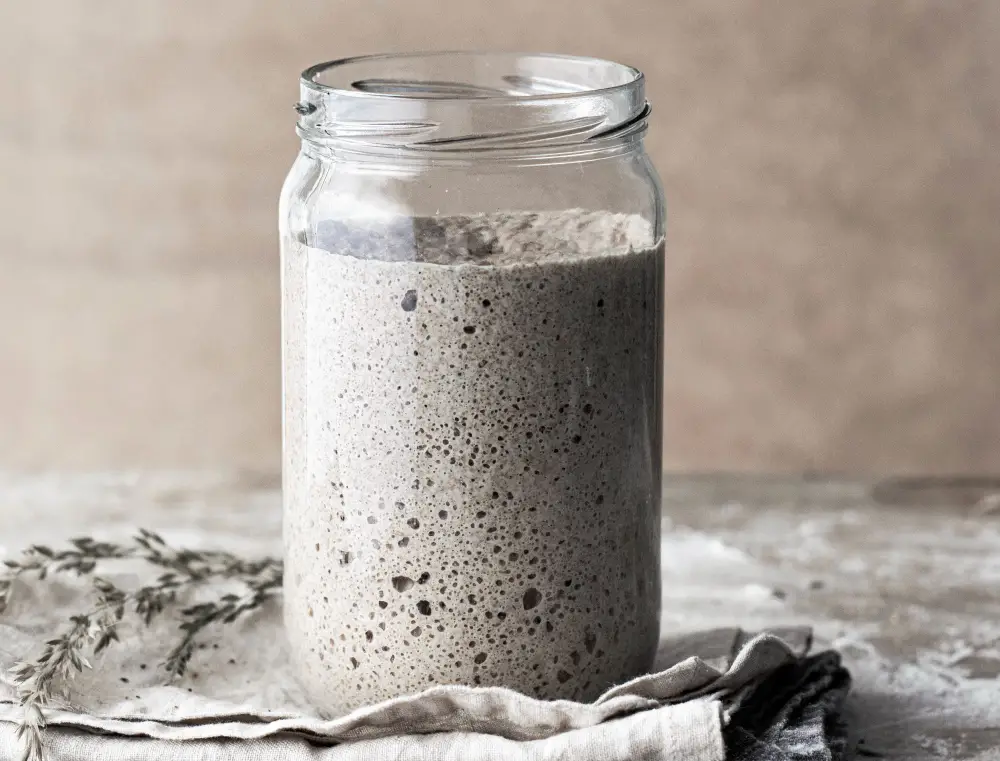
Days 4–5: Feed once daily using the same approach. You should notice more consistent bubbling, a surface that rises and falls between feedings, and a smell that is gradually shifting from unpleasant to pleasantly tangy and yeasty.
Day 6: Once your starter is reliably rising and falling between feedings, move to two feeds per day — roughly every 12 hours. This builds strength and regularity.
Day 7: Test for readiness (see below).
The Readiness Test
After 5–7 days of regular feeding, your starter should be ready to bake with. Here's how to check:
- The float test: Drop a small spoonful of starter into a glass of water. If it floats, it's gassy and active enough to leaven bread. If it sinks, give it another day or two of feeding.
- The timing test: Mark the level after a feed and watch it double in size within 4–8 hours, then fall back down.
- The smell test: It should smell pleasantly sour and yeasty — like a mild vinegar mixed with fresh bread.
For a more detailed breakdown of what to look for, read our guide on how to know when your sourdough starter is ready to bake with.
Option 2: Converting Your Wheat Starter to Rye
If you already have a healthy wheat starter, converting it to rye is simpler and faster than starting from scratch. The existing yeast and bacteria just need to adapt to the new flour source.
The conversion is straightforward: instead of feeding your existing starter with wheat flour, you switch to whole rye flour and continue your normal feeding routine. Over three to four days of rye-only feedings, the microbial community gradually shifts toward one that thrives on rye. Within that window, you'll notice the starter becoming more active — rising faster and developing that characteristic deep, earthy rye aroma.
Can You Keep Both?
Absolutely. Many bakers maintain two starters side by side — one wheat and one rye. This gives you flexibility across different recipes. The rye starter can also be used to boost the activity of a sluggish wheat starter if you ever need to.
Feeding Ratios for a Rye Starter
Rye starters are typically maintained at equal weights of starter, flour, and water — a 1:1:1 ratio. This gives reliable results for everyday baking.
Adjusting the ratio changes the timing:
- A smaller proportion of starter to fresh flour and water means a slower, gentler rise — useful if you want the starter to peak overnight.
- A larger proportion of starter means a faster rise — useful if you need it ready within a few hours.
Learning which ratio gives you a peak at the right time for your baking schedule is one of those practical calibrations that becomes intuitive after a few bakes.
Light Rye vs Whole Rye: Does It Matter?
Whole rye flour (also called dark rye or wholemeal rye) is the best choice for building and maintaining your starter. It contains the bran and germ, which are rich in wild yeast, bacteria, and the enzymes that drive fermentation.
Light rye flour has had most of the bran removed, making it less nutritious for your starter and resulting in slower, less predictable activity.
Once your starter is established, you can experiment with light rye flour — but for the most active, resilient starter, stick to whole rye.
For a full breakdown of rye flour types and what each one does, read our guide on rye flour for sourdough: light, medium, dark, and whole.
Storing Your Rye Starter
Room Temperature (Active Use)
If you're baking several times a week, keep your starter at room temperature and feed it once or twice daily. A rye starter at room temperature will need more frequent feeding than a wheat starter — it works faster and burns through its food supply more quickly.
Refrigerator Storage (Less Frequent Baking)
If you bake once a week or less, store your starter in the fridge. Feed it, let it sit at room temperature for an hour or two to get active, then seal it and refrigerate. When you're ready to bake, take it out the night before and give it one or two feeds to wake it back up.
A rye starter is particularly forgiving in the fridge. Its extra resilience means it can go two to three weeks without attention and still come back strong.
Troubleshooting Your Rye Starter
My starter isn't rising
The most common cause is temperature. Below 18°C, fermentation slows dramatically. Try a warmer spot in your kitchen. Also check that you're using whole rye flour, not light rye — the difference in activity is significant.
My starter smells strongly of alcohol
This is a sign of over-fermentation — your starter has eaten all its food and is producing alcohol as a by-product. Feed it more frequently or increase the flour-to-starter ratio in your feeding.
There's a liquid on top
This grey or dark liquid is called "hooch" — a mixture of water and alcohol that separates when the starter is hungry. It's harmless. Pour it off or stir it back in, then feed your starter. It's a sign you need to feed more often or increase the amount of flour per feed.
My starter is very runny
Rye starters naturally have a looser consistency than wheat starters, due to the pentosans absorbing water differently. If yours is extremely runny, try slightly reducing the water in your feedings until it reaches a consistency you can work with.
For more troubleshooting help, our main sourdough troubleshooting guide covers a wide range of problems across all starter types.
Using Your Rye Starter in Recipes
A healthy rye starter can be used in almost any sourdough recipe. Here are a few things to keep in mind:
- Timing: Rye starters tend to peak faster than wheat starters, so plan your bake around a shorter window after feeding — typically 4–6 hours rather than 6–10.
- Flavour impact: Using a rye starter will add a subtle earthiness and extra depth to any loaf, including white wheat bread. Most bakers find this a pleasant bonus.
- Hydration adjustments: Rye flour absorbs more water than wheat flour. If you're substituting a rye starter into a wheat recipe, your dough may feel slightly thicker — you can add a small amount of extra water to compensate.
To put your new starter to work, head over to our complete guide on how to make sourdough rye bread, which walks through the full process from starter to finished loaf.
You'll also find plenty of inspiration in our collection of classic sourdough rye recipes from around the world — from Scandinavian rugbrød to German vollkornbrot.
Ready to Bake Rye in Person?
Building a starter at home is deeply satisfying — but if you want to skip the guesswork and learn the process hands-on, our Rye Sourdough Workshop covers everything from starter care to shaping and baking your first rye loaf, all in a single session.
Not sure whether the Rye Workshop is the right fit? Our comparison guide — Classic vs Rye vs Gluten-Free: Which Workshop Is Right for You? — will help you decide.
A rye sourdough starter is one of the most rewarding things you can build in your kitchen. Once it's established, it's reliable, resilient, and full of character — everything you want in a baking partner.