
Classic Sourdough Rye Recipes from Around the World
Rye bread has fed northern and eastern Europe for centuries. Long before wheat dominated bakeries, rye was the grain that kept families alive through harsh winters. It grew in poor soil, survived cold climates, and — crucially — it made extraordinary bread.
Today, traditional rye sourdough recipes are enjoying a revival. Home bakers across the world are rediscovering what Scandinavian and German bakers have known for generations: slow-fermented rye bread has a depth of flavour, a satisfying density, and a shelf life that modern white loaves simply cannot match.
This guide walks you through four of the most celebrated traditional rye breads in the world — Danish rugbrød, German Vollkornbrot, Finnish ruisleipä, and Russian Borodinsky. For each one, you'll find background on the bread's heritage, what makes it unique, and what goes into a traditional loaf.
Before you begin baking any of these, make sure you have a healthy rye starter ready to go. If you're still building one, our guide to building a rye sourdough starter walks you through the whole process. For a broader look at working with rye flour, the complete guide to sourdough rye bread is the best place to start.
Why Rye Sourdough and Traditional Recipes Go Hand in Hand
Rye flour and sourdough fermentation were made for each other. Rye contains very little gluten and high levels of pentosans — complex sugars that absorb water and give rye dough its sticky, dense character. This means the conventional yeast-and-knead approach doesn't work well with rye. Sourdough's slow, acidic fermentation is what brings rye to life.
The lactic acid produced during fermentation inhibits amylase activity in the rye, which would otherwise break down the dough's structure and leave you with a gummy, collapsed loaf. Research from the American Association of Cereal Chemists confirms that sourdough fermentation is essential for producing a stable, well-structured rye bread.
Every recipe below relies on this principle. The sourdough starter isn't just for flavour — it's doing structural work that yeast alone cannot.
If rye dough feels unfamiliar in your hands, read our article on why rye dough handles differently before you begin. It will save you a lot of confusion.
1. Danish Rugbrød — The Everyday Loaf
What Is Rugbrød?
Rugbrød (pronounced "roo-broh") is arguably the most iconic bread in Denmark. It is a dense, moist, dark loaf packed with whole rye grains, seeds, and a pronounced sour flavour. Danes eat it daily, sliced thin and topped with butter, cheese, smoked fish, or cold meats — a style of open sandwich known as smørrebrød.
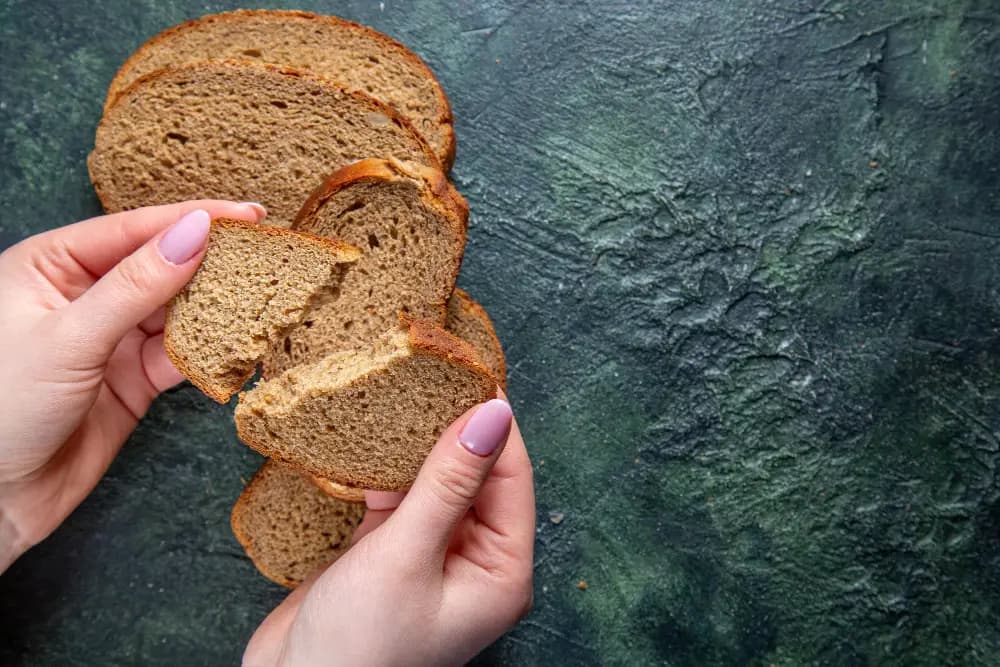
A good rugbrød should be firm but not dry, deeply flavoured but not overwhelming, and it should slice cleanly without crumbling. It keeps well for up to a week, improving in flavour as the days go on.
What Goes Into a Rugbrød
- Whole rye flour — the structural base of the dough
- Rye berries or cracked rye — soaked overnight to soften, giving texture and chew
- Seeds — sunflower, pumpkin, linseed, and sesame are all traditional, often combined
- Rye sourdough starter — active and fed within 12 hours
- Salt
- Water
- Dark beer or coffee — optional, but adds richness and colour
Different families and bakeries have their own proportions. The ratio of whole grains to flour is one of the most variable elements, and it has a significant effect on the final density and moisture of the loaf.
How Rugbrød Is Made
The soaked grains and seeds are mixed through a thick rye-flour dough, which is then pressed into a loaf tin and left to prove. Because rye lacks the gluten structure of wheat, the loaf is always baked in a tin — it cannot hold a freeform shape. Proving times are longer than most wheat breads, and the loaf bakes at a moderate temperature for an extended period. The single most important rule with rugbrød is patience: the loaf must rest for at least 12 hours after baking, ideally 24, before cutting. Slicing too early produces a gummy, unset crumb that will never recover.
The wetter the dough, the more open and moist the crumb tends to be. Finding the right hydration level for your specific flour blend is one of the calibrations that develops with experience.
2. German Vollkornbrot — The Whole Grain Powerhouse
What Is Vollkornbrot?
Vollkornbrot translates literally to "whole grain bread." It is Germany's answer to dense, nutritious, long-lasting rye bread — and it has been a staple of the German table for hundreds of years.
Germany's bread culture is listed as UNESCO Intangible Cultural Heritage, reflecting just how central bread — and particularly rye bread — is to German identity. There are over 3,000 registered bread varieties in Germany, and a large proportion are based on rye.
Vollkornbrot is extremely dense, made almost entirely from whole rye grain with minimal added ingredients. It has an earthy, mildly sour flavour and a firm texture that holds up well to rich toppings like mature cheese, cured meats, and pickled vegetables.
What Goes Into a Vollkornbrot
- Whole rye flour — used as the binding agent
- Cooked whole rye berries — soaked and simmered, they form the bulk of the loaf and give it its substantial bite
- Rye sourdough starter — mature, with strong flavour development
- Salt
- Water
- Caraway seeds — traditional and highly recommended for flavour
The ratio of cooked whole grains to flour is high — this is genuinely a bread that is more grain than flour, and its texture reflects that.
How Vollkornbrot Is Made
The whole rye berries are soaked overnight and then briefly cooked before being folded into the rye dough. The resulting mixture is less like a conventional bread dough and more like a thick, grainy porridge. It is pressed into a deep tin and proved slowly over many hours. Baking takes considerably longer than most breads, and — like all dense rye loaves — Vollkornbrot must rest for at least 24 hours after baking before slicing.
The crust is thick and firm; the interior is dense, slightly chewy, and deeply flavoured. The caraway seeds scattered through the dough and pressed into the top are not just decorative — their anise-like flavour is an essential part of the bread's character.
3. Finnish Ruisleipä — The Sourdough Ring
What Is Ruisleipä?
Finland has one of the highest rates of rye bread consumption in the world. Ruisleipä (pronounced "roo-is-lay-pah") is the country's most traditional form — a flat, round, slightly crisp sourdough rye loaf with a distinctive hole in the centre. Historically, the hole was used to thread the loaves onto poles or sticks, allowing them to hang and dry in Finnish farmhouses through the winter months.
Modern ruisleipä is still made in the same round shape, but it is eaten fresh rather than dried. The texture is dense and chewy with a pleasantly sour flavour and a slightly crispier exterior than the loaf-tin breads of Denmark and Germany.
According to Visit Finland, ruisleipä is considered a cornerstone of Finnish food culture and remains one of the most consumed foods in the country.
What Goes Into a Ruisleipä
- Whole rye flour — the only flour used; no wheat at all
- Rye sourdough starter — ideally a slightly older, tangier starter for more pronounced sourness
- Salt
- Warm water
The simplicity of the ingredient list is part of what makes ruisleipä so striking. There are no seeds, no additions — just rye, water, salt, and fermentation. The flavour comes entirely from the grain and the starter.
How Ruisleipä Is Made
Unlike most rye breads, ruisleipä is not baked in a tin. The higher flour-to-water ratio produces a stiffer dough that can hold a rough freeform shape. After mixing, the dough is divided, shaped into flat rounds, and a hole is cut through the centre using a round cutter or the rim of a glass.
The rounds are pricked all over with a fork before baking — a traditional step that helps steam escape evenly during baking and prevents uneven puffing. Ruisleipä bakes at high heat and is done when the crust is firm and the loaf sounds hollow when tapped.
It is best eaten fresh on baking day while the crust retains some crispness, though it can be revived briefly in a warm oven the following day.
4. Russian Borodinsky Bread — Dark, Sweet, and Aromatic
What Is Borodinsky Bread?
Borodinsky bread is one of Russia's most beloved breads — a very dark, deeply flavoured rye loaf flavoured with malt extract and coriander seeds. Its origins are murky (a popular folk story links it to the Battle of Borodino in 1812), but it has been a staple of Russian bakers since at least the nineteenth century.
What makes Borodinsky distinct is its use of red rye malt, which adds a roasted, slightly sweet, almost caramel quality to the bread. Combined with the sharpness of the sourdough starter and the fragrance of coriander, Borodinsky has a flavour profile unlike anything else in this list.
It is often sold with whole coriander seeds pressed into the top, which toast slightly during baking and add a gentle crunch.
What Goes Into a Borodinsky
- Whole rye flour — the base
- Red rye malt (fermented rye malt) — essential for colour and flavour; available from homebrew suppliers
- Rye sourdough starter — active and mature
- Molasses or dark treacle — adds sweetness and depth of flavour
- Ground coriander — stirred through the dough
- Whole coriander seeds — pressed into the top before baking
- Salt
- Water
Red rye malt is the ingredient that cannot be substituted. It is produced by sprouting rye, then kiln-roasting it at high temperature, which creates the characteristic roasted, slightly sweet flavour and the very dark colour. Without it, the bread lacks its defining qualities.
How Borodinsky Is Made
The malt is steeped in boiling water to create a malt tea before being mixed into the dough — a step that draws out its colour and flavour fully. The resulting dough is thick, dark, and richly aromatic. It proves in a tin and bakes at a high initial temperature before the heat is reduced for the longer baking period.
Like all tin-baked rye breads, Borodinsky must rest for at least 12 hours after baking before slicing. The coriander seeds on top make it immediately recognisable and add an aromatic note that pairs beautifully with the sweetness of the malt and the tang of the sourdough.
Choosing the Right Flour for These Recipes
All four of these breads rely on whole rye flour for their character and structure. The type of rye you choose will affect flavour, colour, and how much water the dough absorbs. For a detailed breakdown of light, medium, dark, and whole rye flours — and which to use for which bread — see our guide to rye flour types for sourdough.
What These Breads Have in Common
Four different countries, four very different loaves — but they all share the same foundations:
- A mature sourdough starter with enough acid development to stabilise the rye
- Low or no kneading — rye develops its structure through fermentation, not gluten development
- Long resting times after baking to allow the crumb to set properly
- Simple, honest ingredients that let the fermentation do the talking
If you have been baking classic sourdough wheat bread and want to try something with deeper flavour and longer shelf life, any of these loaves is a natural next step.
Ready to Bake Rye Sourdough With Expert Guidance?
Rye sourdough is deeply rewarding, but it does behave differently to wheat-based dough. If you want to learn hands-on with guidance from experienced bakers — including the techniques behind these traditional loaves — our Rye Sourdough Workshop is designed exactly for that.
Over three hours, you'll work directly with rye dough, build confidence with its unique handling, and leave with a loaf you've made yourself. Find out which workshop suits you best: Classic vs Rye vs Gluten-Free — Which Workshop Is Right for You?
Part of our Complete Guide to Sourdough Rye Bread. Also in this series: Rye Flour Types for Sourdough · Why Rye Dough Handles Differently · Building a Rye Sourdough Starter