
Why Rye Dough Handles Differently (And How to Work With It)
If you've ever tried to work with rye dough after baking wheat-based sourdough, the experience can feel like a trap. The dough is dense, sticky, and refuses to hold its shape no matter how much you try to stretch and fold it. You might wonder if you've done something wrong.
You haven't. Rye just plays by completely different rules.
Understanding why rye dough behaves the way it does will save you a lot of frustration — and produce much better bread. This article breaks down the science in plain language so you can work with rye's quirks instead of fighting them.
This is part of our Complete Guide to Sourdough Rye Bread, which covers everything you need to go from curious to confident with rye.
The Core Reason: Rye Has Very Little Gluten
The biggest difference between rye and wheat comes down to gluten — or more accurately, the lack of it.
Wheat flour is high in the proteins gliadin and glutenin. When you mix wheat flour with water and work the dough, these proteins link together to form gluten. Gluten is what gives wheat dough its strength, elasticity, and ability to trap gas bubbles during fermentation. It's the reason you can stretch a piece of wheat dough without it tearing.
Rye flour contains those same proteins, but in much lower quantities. According to the Whole Grains Council, rye has a significantly different protein structure compared to wheat, which means its proteins don't form the same strong gluten network. Even when you knead rye dough, you can't develop meaningful gluten strength.
The result? Rye dough has almost no elasticity. It doesn't spring back when you poke it. It won't stretch without tearing. And it certainly won't hold the kind of tight, structured shape that a boule or batard requires.
This is not a problem to fix — it's just how rye works. Your technique needs to adapt accordingly.
The Real Culprit: Pentosans
Here's where rye gets genuinely interesting. While rye lacks gluten, it contains a group of complex carbohydrates called pentosans (also known as arabinoxylans) that wheat has in much smaller amounts.
Research published in the journal Food Chemistry has shown that pentosans in rye can absorb water at a rate of up to ten times their own weight. That's a remarkable amount. When you hydrate rye flour, the pentosans swell and form a thick, gel-like network that gives rye dough its distinctive sticky, dense texture.
This gel structure is actually doing something important — it's providing the structural support that gluten would normally offer in wheat dough. But it behaves very differently under your hands.
What Pentosans Mean in Practice
- The dough will be sticky no matter what you do. Adding more flour to counter the stickiness is the most common mistake rye bakers make. It doesn't help — it just makes the bread drier and denser.
- The dough structure is fragile. You can't stretch and fold rye the way you would wheat. Aggressive handling breaks down the gel network.
- The dough holds its shape in a tin, not on a bench. Most rye loaves are baked in a loaf tin specifically because of this. The tin provides the structure the dough can't provide for itself.
- Higher hydration is normal. Rye doughs, particularly those made with dark rye or whole rye flour, typically need more water than their wheat counterparts. The pentosans demand it.
Why You Can't Stretch and Fold Rye Like Wheat
Stretch and fold is a core technique in wheat sourdough because it builds gluten strength without degassing the dough. You can do it multiple times during bulk fermentation to develop structure gradually.
With rye, this doesn't work — and trying to force it can actually damage the dough.
Because rye relies on its pentosan gel rather than gluten for structure, aggressive manipulation disrupts that gel network without creating any alternative structure to replace it. The dough becomes even stickier and loses what little integrity it had.
For low-rye blends (say, 20–30% rye), gentle stretch and folds are still fine. But as your rye percentage increases above 50%, you should move toward minimal handling. Mix thoroughly to ensure even hydration, then leave the dough alone. There's no stretching, no folding, no shaping in the traditional sense.
For 100% rye loaves, the process looks more like mixing a thick batter than handling a dough. You scrape it into a tin, smooth the top with wet hands, and let fermentation do the rest.
How Fermentation Works Differently in Rye
Rye ferments faster than wheat. This is partly because rye has more naturally occurring wild yeasts and bacteria on its bran, and partly because the pentosans break down more readily at fermentation temperatures. The result is a more active, faster fermentation.
This speed matters because over-fermented rye dough is difficult to rescue. Where an over-proofed wheat loaf might come out flat, an over-fermented rye loaf can become gummy, wet, and structurally collapsed. The pentosan gel breaks down completely once the dough goes too far.
Signs Rye Dough Is Ready
- The surface shows small bubbles and looks slightly domed
- There are small cracks or fissures at the edges
- The dough has risen noticeably in the tin (not dramatically — expect 30–50% volume increase, not a doubling)
- It looks matte rather than shiny
The traditional German and Scandinavian rule of thumb is to bake as soon as you see cracks forming on the surface of the dough. These recipes have been honed over centuries for good reason — German rye bread culture, which the UNESCO Intangible Cultural Heritage programme has recognised as part of German food traditions, relies on this kind of timing knowledge.
The Role of Acidity in Rye Baking
Acidity is important in all sourdough baking, but it's essential in rye.
Rye contains a group of enzymes called amylases, which break down starches into sugars. During fermentation, these enzymes are very active. The problem is that they continue to work even during baking, right up until the internal temperature of the loaf reaches around 75–80°C. If the amylases aren't deactivated quickly enough, they break down too much of the starch structure inside the loaf — and you end up with a gummy, sticky crumb.
Acidity slows down amylase activity. A properly sour rye dough, built with an active rye starter, significantly reduces the risk of a gummy crumb. This is why bakers who specialise in rye emphasise starter health and build time so strongly — getting the acidity right is the single most important step in producing a rye loaf with a clean, sliceable crumb.
This is also why rye sourdough performs better than commercial yeast rye bread. Wild fermentation naturally develops the acidity rye needs.
Practical Tips for Working With Rye Dough
Use wet hands, not flour
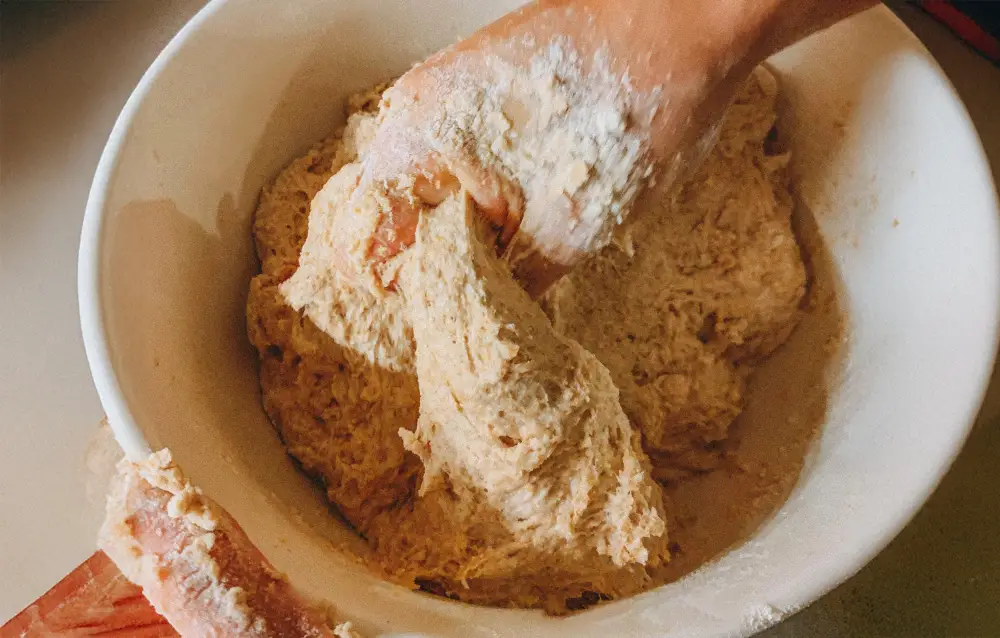
Flouring your bench or your hands when working with rye dough doesn't work. The dough just absorbs the flour and becomes stiffer, not less sticky. Wet hands are your best friend. Keep a bowl of water nearby and wet your hands before touching the dough.
Accept the stickiness
Rye dough is meant to stick to your hands, your scraper, and your bowl. If it doesn't, something is wrong. Trust the process and work quickly.
Choose the right tin
Because rye dough can't hold a free-form shape, a good loaf tin is not optional — it's essential. Grease it well or line it with baking parchment. A pullman tin (the rectangular type with a lid) works particularly well for dense, high-percentage rye loaves, producing the neat slices you see in traditional Scandinavian breads.
Don't skip the final proof
After the dough is in the tin, it still needs time to ferment and develop flavour. Depending on your kitchen temperature, this could be anywhere from 1 hour to 4 hours. Don't rush it — underpinned rye bread will be dense and overly compact.
Bake in a hot oven, low and slow finish
Start your rye loaf at a high temperature (around 230–250°C) for the first 10–15 minutes to drive oven spring and set the crust. Then reduce to 190–200°C and bake for the remainder of the time. A 1kg rye loaf typically needs 60–80 minutes total.
Rest before slicing — seriously
This is the most overlooked step in rye baking. Rye bread needs at least 12–24 hours after baking before you slice it. During this resting period, the starch structure continues to set and the crumb firms up. Slicing too early will give you a gummy, wet-looking interior even if the loaf is perfectly baked.
How Rye Percentage Affects Handling
Not all rye bread is 100% rye. Many bakers use rye as a percentage of a larger wheat-based dough to add flavour, complexity, and nutrition without giving up the workability of wheat. Here's how handling changes as you increase the rye percentage:
| Rye Percentage | Handling Notes |
|---|---|
| 10–20% | Handles much like a wheat dough. Slight stickiness. Stretch and fold works normally. |
| 30–50% | Noticeably stickier. Reduce stretch-and-folds to 2–3, handle gently. Consider a light tin or banneton. |
| 60–80% | Must bake in a tin. Minimal handling. Mix well, then leave it alone. |
| 90–100% | Batter-like consistency. Wet hands only. Scrape into tin. No shaping at all. |
Understanding how the flour blend you're using changes the dough is key — for a deeper look at rye flour types and what each one brings to the dough, read our guide on Rye Flour for Sourdough: Light, Medium, Dark, and Whole.
Common Mistakes With Rye Dough
Adding too much flour
As mentioned above, this is the number one error. The dough is sticky by design. More flour makes it denser and drier without improving workability.
Over-handling the dough
Treat high-percentage rye dough gently. Every time you fold or manipulate it, you're disrupting the gel structure. More handling does not equal better bread with rye.
Fermenting too long
Rye ferments quickly. Watch the dough, not the clock. Surface bubbles and cracks are your cues.
Slicing too soon
We've said it once, but it bears repeating. Twelve to twenty-four hours. Be patient.
The Flavour Payoff Is Worth It
All of this might sound complicated, but the payoff is real. Rye sourdough has a depth of flavour — earthy, slightly tangy, with malty undertones — that wheat bread simply can't replicate. The dense crumb holds up beautifully to strong toppings like smoked fish, aged cheese, and pickles. It also keeps well for days, sometimes improving over time as the crust softens and the flavours develop.
To explore the range of what rye sourdough can produce, take a look at our article on Classic Sourdough Rye Recipes from Around the World, which covers everything from Danish rugbrød to Finnish ruisleipä.
And if you're ready to build your own rye starter, our guide on Building a Rye Sourdough Starter walks you through the process step by step.
Ready to Bake Rye With Expert Guidance?
Working with rye dough for the first time can be disorienting, even with a good recipe. Having someone guide you through the process in person — showing you what the dough should feel like at each stage, how to read the fermentation cues, and how to troubleshoot on the fly — makes a real difference.
Our Rye Sourdough Workshop does exactly that. In three hands-on hours, you'll mix, handle, and tin a real rye loaf from scratch, go home with your bread, and leave with the confidence to repeat it on your own.
Not sure which of our workshops is the best fit for you? Our workshop comparison guide breaks down the Classic, Rye, and Gluten-Free options side by side.
Or if you'd like to understand the full scope of what the workshop experience involves, read What to Expect at a Sourdough Bread-Making Workshop.