
Can You Really Learn Sourdough in 3 Hours?
Three hours sounds like a tight window to learn something that bakers spend years perfecting. Sourdough has a reputation for being finicky, slow, and demanding — so it is fair to wonder whether a single workshop can actually move the needle.
The short answer is yes. But it helps to understand why it works before you decide to book a spot.
Why Sourdough Has a Reputation for Being Hard to Learn
Sourdough is not technically complicated. The ingredients are flour, water, and salt. The science is well understood. Yet many home bakers find the process confusing, especially in the beginning.
The problem is usually one of three things:
No feedback loop. When you learn from a recipe alone, you get instructions but no real-time feedback. You shape the dough, walk away, and find out hours later whether you got it right.
Too much waiting. A standard sourdough bake can span 24 to 48 hours from starter feed to finished loaf. That means a single mistake early in the process does not show up until it is too late to fix it.
Too many variables at once. Temperature, hydration, starter activity, shaping tension, scoring depth — beginners are trying to manage all of these at the same time, with no reference point for what "right" actually feels and looks like.
These are problems with how most people try to learn sourdough, not problems with sourdough itself. And they are exactly the problems a well-designed workshop is built to solve.
How a 3-Hour Workshop Covers the Whole Process
The most common objection goes like this: "But sourdough takes 24 hours. How can you learn it in 3?"
This is a fair question, and the answer comes down to how the workshop is structured.
A bulk fermentation alone can take 4 to 12 hours depending on temperature. A cold proof can run overnight. You obviously cannot watch dough ferment in real time inside a 3-hour session.
What you can do — and what the workshop does — is have multiple doughs prepared at different stages before students arrive.
Working with doughs at every stage of the process
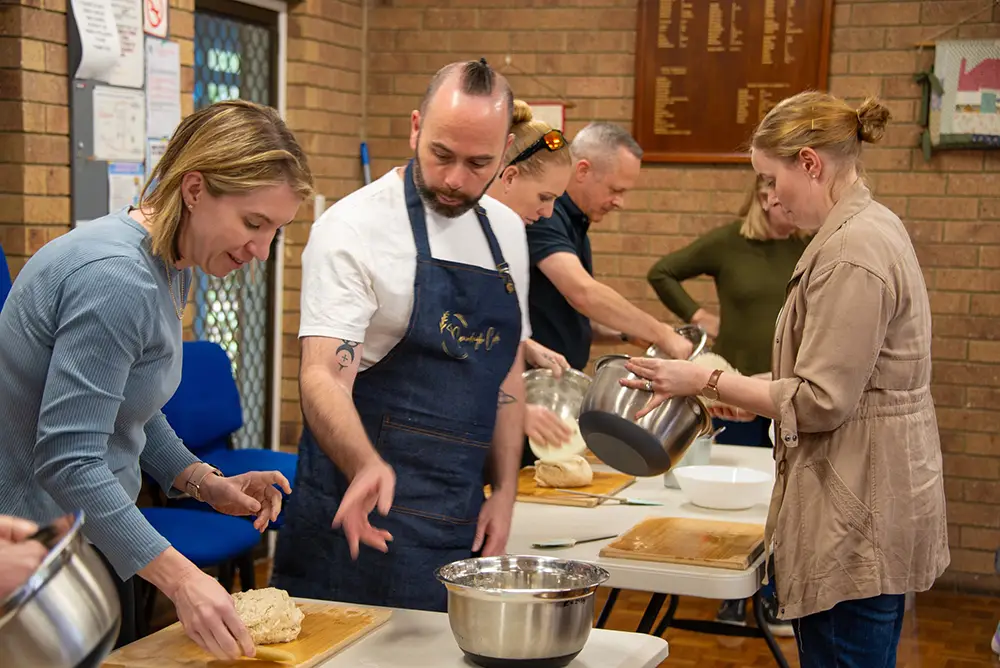
When you walk into the workshop, you will not be waiting around. Doughs are already underway at staggered points in the process, so every stage is live and hands-on from the moment the session starts.
You will see and handle:
- Fresh dough right after mixing, so you understand what correct hydration and consistency feel like from the start
- Bulk-fermented dough that has gone through stretch-and-fold cycles, showing you exactly how the texture and structure change during fermentation
- Shaped and proofed dough ready to score and bake, so you get the feel of a properly developed loaf before you ever pick up a lame
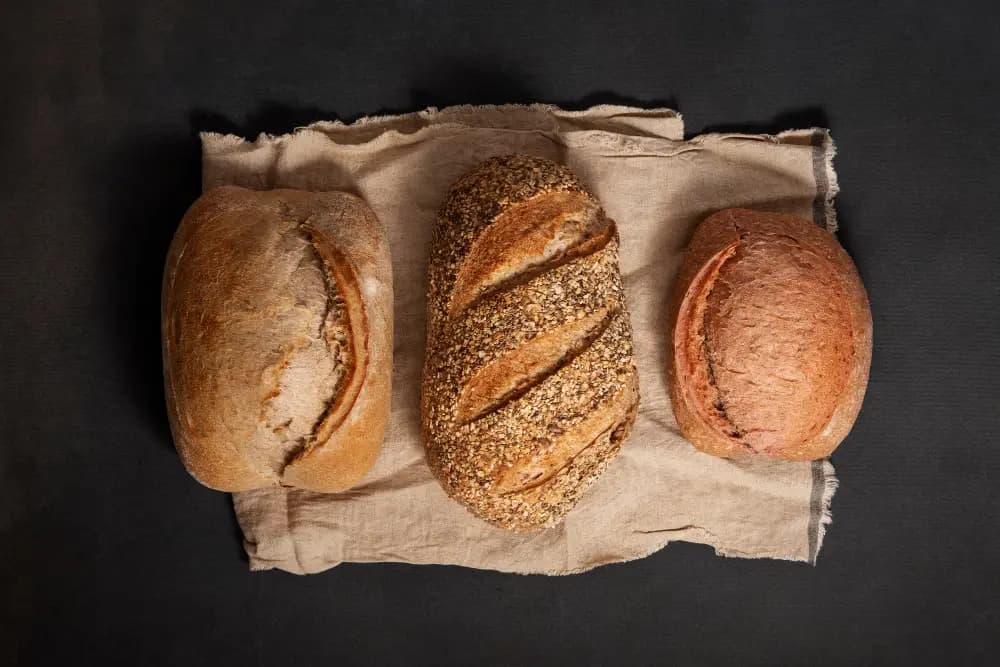
- A finished loaf baked during the session, so you experience the full arc of the process — including the moment it comes out of the oven
This staggered approach means the workshop covers the entire process in 3 hours without skipping or fast-forwarding a single step. You work with the dough at each critical stage rather than reading about it or watching a video.
Hands-on the whole time
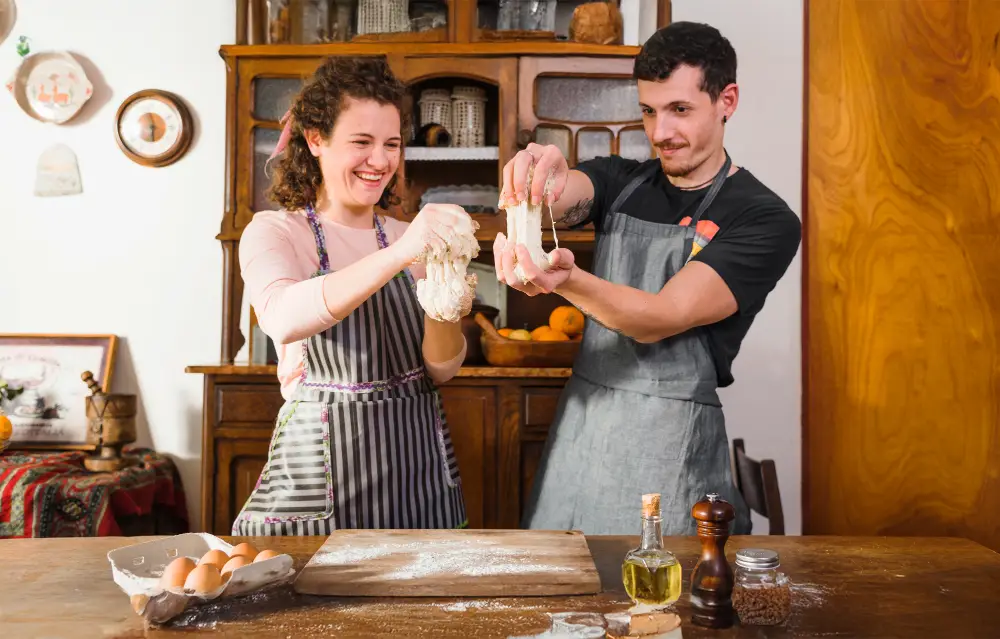
There is no sitting through a lecture. From mixing to shaping to scoring, you are doing the work yourself, with an instructor right there to correct your technique in real time.
This matters because sourdough is a physical skill as much as it is a technical one. Knowing that bulk fermentation is complete when the dough has increased by 50 to 75 per cent and feels airy is one thing. Feeling it in your hands is another. Three hours of hands-on practice is worth more than hours of reading, precisely because you are building muscle memory alongside knowledge.
What You Will Actually Learn in the Session
By the time you leave, you will have covered:
Starter health and readiness
You will learn how to read your starter — not just the float test, but visual and smell cues that tell you whether it is ready to bake with. See our guide on how to know when your sourdough starter is ready for a full breakdown.
Mixing and hydration
Why hydration percentages matter, what different hydrations look and feel like in the bowl, and how to adjust for your flour and environment.
Stretch and fold technique
The method that builds gluten structure during bulk fermentation without intensive kneading. You will perform this yourself on the fresh dough and see the difference it makes on the bulk-fermented dough.
Shaping
Boule and batard shaping, including how to create surface tension without degassing the dough. Shaping is where most home bakers go wrong — this is one of the highest-value parts of the session.
Scoring
Blade angle, depth, and how your scoring pattern affects oven spring. You will score a proofed loaf yourself before it goes into the oven.
Baking
Why steam is critical in the first phase of baking, how a Dutch oven creates that steam environment, and what to listen and look for as the loaf bakes. If you want to understand the science behind this, read our article on Dutch oven sourdough and why steam matters.
What You Take Home
At the end of the session you leave with:
- A loaf you scored and helped bake yourself
- A live sourdough starter, ready to feed and use at home
- A recipe card and process guide to follow for your first home bake
- Ongoing access to support so you are not starting from scratch if things go sideways at home
That last point is important. The workshop does not end when you walk out the door.
What Happens After the Workshop?
Three hours gives you a strong foundation. What happens in the weeks after the workshop is where that foundation gets built on.
The most common pattern we see: students go home, bake their first loaf, and have one or two things they want to refine — usually shaping tension or fermentation timing. With a recipe guide in hand and support available, most people bake a loaf they are genuinely proud of within their first two attempts at home.
That said, sourdough is a craft. The more you bake, the better your intuition becomes. Three hours accelerates that curve dramatically — it does not skip it entirely.
Is the Workshop Right for You?
If you are a complete beginner
The workshop is designed with you in mind. No experience is assumed. You will leave with everything you need to bake independently at home — a starter, a process, and the hands-on experience to make sense of it.
Read what to expect at a sourdough bread-making workshop for a full walkthrough of the experience.
If you have tried sourdough and struggled
This is probably where the workshop adds the most value. If you have baked a few loaves and hit a wall — dense crumb, poor rise, dough that will not cooperate — you likely have a technique issue that is impossible to diagnose from a recipe alone. Getting your hands in the dough with an instructor watching changes that.
If you want to choose between Classic, Rye, or Gluten-Free
Each workshop covers the same core process but focuses on a different bread style. Read our comparison guide — Classic vs Rye vs Gluten-Free: which sourdough workshop is right for you? — to find the best fit.
Frequently Asked Questions
Do I need to bring anything?
No. All equipment, ingredients, and materials are provided. Just show up ready to get your hands floury.
What if I do not have any equipment at home?
The workshop covers what you actually need — and what you can skip. Our ingredients and equipment guide goes into more detail, but the short version is that you need far less than most beginner guides suggest.
Can I do the workshop as a gift?
Yes — a workshop voucher is one of the most popular gifts we sell, particularly around Christmas and Mother's Day. Read more about sourdough as a gift.
What if I have dietary requirements?
If you are gluten-free or baking for someone who is, our dedicated Gluten-Free Sourdough Workshop covers the unique process, flour blends, and techniques specific to GF baking.
The Bottom Line
Can you learn sourdough in 3 hours? You can learn enough to bake confidently at home — which is more than most people manage after months of solo attempts.
The workshop is not a shortcut. It is a faster, better way to build the foundation that all good sourdough baking rests on: knowing what the dough should feel like at every stage, understanding why each step matters, and having the confidence to trust your hands and adjust when something feels off.
Book your place in the next workshop and bake your first proper loaf sooner than you think.